Who Audits Arsenal? Inside High-Stakes Battle for Accountability
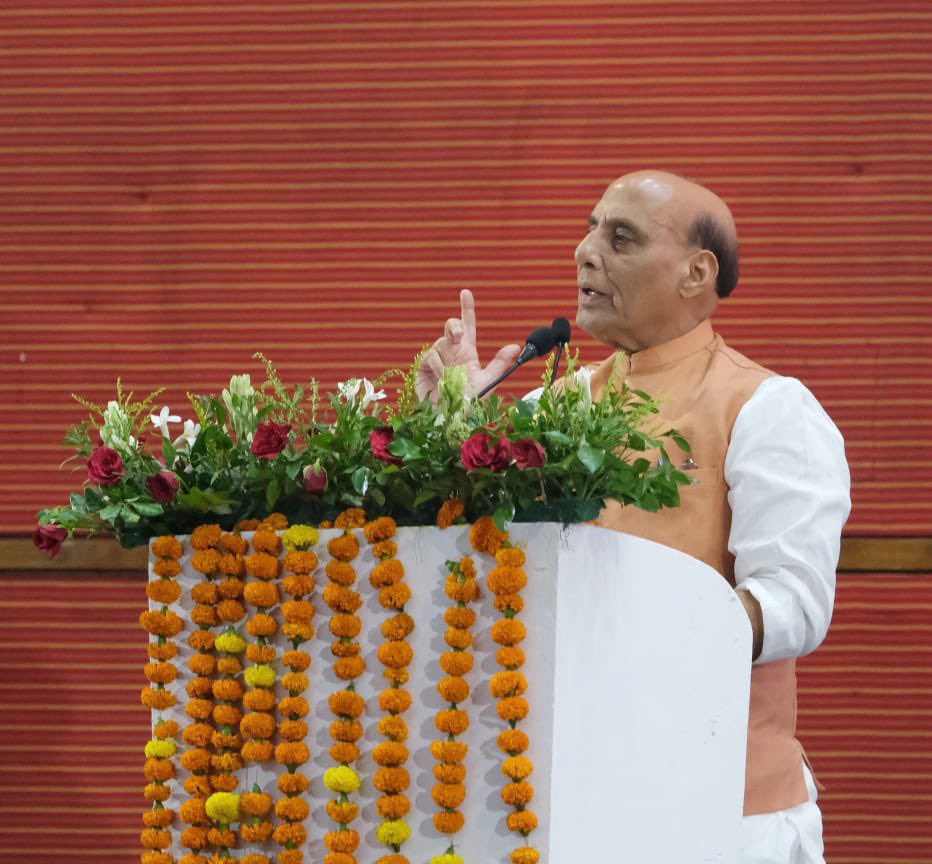
Image credit X.com @rajnathsingh
Guarding the Guardians: The Delicate Art of Identifying High-Risk Areas in Defence Expenditure for CAG Audit
By P. SESH KUMAR
New Delhi, November 30, 2025 — India’s defence establishment stands on a vast, expensive, and ever-moving terrain where national security imperatives frequently collide with public financial accountability. The annual defence budget now crosses ₹6.2 lakh crore, with procurement pipelines stretching years into the future, pension liabilities forming a permanent fiscal mountain, logistics and infrastructure demanding relentless funding, and modernisation needs accelerating like never before.
In this landscape, the Comptroller and Auditor General (CAG) is expected to perform a task both essential and paradoxical: identify high-risk subjects for audit, shine the light where taxpayer money is most vulnerable, and yet never compromise the secrecy that is intrinsic to protecting the nation’s borders and strategic capabilities.
This is where the real challenge begins. For the CAG, defence audit is not merely another part of the annual audit cycle but a tightrope walk—between transparency and confidentiality, between the right to know and the need to protect, between the public purse and the sovereign imperative.
Identifying high-risk areas becomes a craft of judgement, experience, and contextual awareness rather than a mere data-driven selection exercise. Every choice has consequences, and every omission has costs.
The backdrop to these dilemmas is decades of global experience that show defence spending is uniquely prone to opacity, cost overruns, vendor influence, delays, gold-plating, and misaligned priorities. Large capital procurements often run on long gestation cycles; complex foreign collaborations add layers of secrecy; and evolving threat perceptions frequently justify emergency purchases that bypass standard competitive processes.
In this environment, a purely financial risk-based approach may not capture the deeper vulnerabilities of technology obsolescence, procurement fragmentation, contract failures, or logistics mismanagement. Hence the CAG’s identification of high-risk audit subjects requires a hybrid lens—combining fiscal analysis, operational relevance, procurement maturity, and sensitivity of information handled.
The Hard Truth Behind the Defence Acquisition Procedure Reforms
The first challenge is the historical tension between secrecy and scrutiny. Classified procurements, intelligence-linked expenditures, strategic infrastructure, and nuclear-related programmes often fall in a grey space where only limited audit trails exist.
The CAG has traditionally navigated this through special audit mechanisms, restricted access cells, and sealed or redacted report segments shared only with PAC sub-committees. But even this framework is under strain because modern warfare increasingly blends dual-use technologies, private vendors, foreign OEMs, and real-time procurement imperatives.
The boundary between what is “secret” and what is merely “opaque” has become dangerously blurred. If the CAG restricts its audit scope too tightly due to secrecy claims, high-risk areas like offsets, sustainment contracts, ammunition management, cybersecurity, UAV acquisition, and emergency procurement could slip into a zone with limited oversight.
The second challenge appears in identifying which subjects deserve priority. The “shelf of audit topics” requires a rationale beyond mere expenditure size.
A procurement of ₹500 crore in electronic warfare may carry ten times the risk of a ₹5,000-crore replenishment order for standard ammunition. A project like the construction of border roads or advanced landing grounds may look straightforward on paper but hide logistic delays, contractor disputes, weather risks, and alignment conflicts that make it an audit hotspot.
Hence the CAG’s internal risk-matrix should often emphasise elements such as single-vendor situations, repeated extensions, deviations from Defence Procurement Procedure (DPP/DAP), vendor blacklisting histories, perpetual cost overruns, technology-denial vulnerabilities, and excessive dependence on foreign OEMs.
A robust, forward-looking shelf of topics would naturally include areas such as long-term capital acquisitions like fighter jets, submarines, UAVs, helicopters, and missile systems where cost escalation, delivery slippage, and opaque contracting are endemic.
Logistics chains—including spares procurement, maintenance contracts, fuel management, ammunition stocking, and ordnance factory supply systems—form another critical domain where inefficiency often hides behind military urgency.
Defence pensions, now consuming over a quarter of the entire defence budget, present actuarial, verification, and disbursement risks, especially with legacy records and transitioning systems. The Armed Forces Medical Services and its procurement of high-value medical equipment, emergency purchases from private vendors, and hospital construction projects often reveal inconsistencies and overruns.
Border Roads Organisation, cantonment infrastructure, military housing, and land management constitute another rich seam of audit risks where delays, design changes, environmental constraints, and contractor influence can inflate costs.
Even cybersecurity, IT systems, and defence communications—which are increasingly outsourced—call for a vigilant audit eye given the stakes involved.
However, selecting such topics becomes contentious because every audit can be portrayed as either strengthening national defence or undermining it. Ministries often respond with broad claims of “classified procurement” or “operational sensitivity” to avoid disclosure even where the matter relates to pricing, procedural compliance, or contract execution rather than weapon performance.
The CAG’s challenge is to pierce through the culture of over-classification without trespassing into the doctrinal or strategic domain. Audit must ask: is the secrecy genuinely national security–linked, or is it shielding inefficiency, vendor capture, or bureaucratic discretion?
These dilemmas are not unique to India. The UK National Audit Office (NAO) has long grappled with the opacity of the Ministry of Defence’s Equipment Plan, where multi-year procurement commitments routinely breach cost forecasts. NAO employs a selective disclosure model-auditing full details in-camera while presenting sanitised, non-sensitive summaries in public reports.
The US Government Accountability Office (GAO) follows a similar approach: it has access to classified programmes, including nuclear forces and missile defence, but releases only declassified portions to Congress and the public. GAO’s success lies in its robust algorithmic risk-assessment framework that flags cost growth, schedule slippage, technology maturity gaps, and governance vulnerabilities in major defence acquisition programmes (MDAPs).
Meanwhile, the Canadian OAG and the Australian ANAO maintain structured secrecy-compliant audit cells that interface with the Defence establishment under strict information protocols.
The benchmark challenge for India is to evolve a similar architecture where secrecy is respected but not exploited. The CAG’s identification of high-risk subjects must flow from structured intelligence-patterns of repeated deviations in DAP procurement, entities with history of blacklisting or litigation, gaps in quality assurance, anomalies in DRDO project outcomes, deficiencies exposed in Parliamentary Standing Committee reports, red flags emerging from internal audit observations, and persistent delays in delivery from DPSUs.
Equally, the CAG must prioritise domains that are chronically under-reported in the public domain: life-cycle sustainment costs, training simulators, high-value IT systems, marine engineering maintenance, drone procurement, AI-enabled surveillance systems, special operations equipment, and unexplained cost escalations in defence land management.
Above all, the CAG must guard against becoming too risk-averse. Excessive deference to secrecy may leave large pockets of defence spending effectively unaudited and unauditable. The public has a right to know that funds meant for soldiers, for combat readiness, and for national security are not leaking through inefficiency, inflated contracts, or procedural arbitrariness.
The CAG’s stance must be firm but responsible: secure yet searching, respectful yet assertive, discreet yet uncompromising on accountability. That is the fine balance that SAIs across the world have learnt to strike.
In the end, the imperative is clear. National security and secrecy are non-negotiable, but so is accountability in a democracy. India cannot afford procurement black holes, logistic breakdowns, stalled projects, or ballooning budgets shielded by a culture of silence.
The CAG’s ability to identify and audit high-risk areas is central to the credibility of both defence governance and public trust. The nation’s guardians deserve a guardian too, and that guardian must be empowered, informed, and fearless without being reckless.
(This is an opinion piece, and views expressed are those of the author only)
Retendering Under Scrutiny: CAG Advisories and Global Lessons
Follow The Raisina Hills on WhatsApp, Instagram, YouTube, Facebook, and LinkedIn




About The Author