‘When Light Is Called Pollution’ – A Rejoinder for the Ages
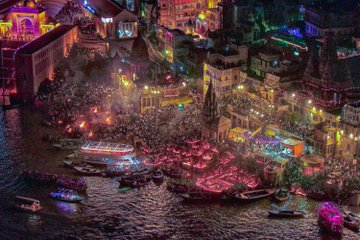
Dev Deepavali celebrated in Varanasi this year. (Image credit X.com)
Light a small diya—not for religion, but as a reminder that before we debate light pollution, we must first understand the value of light itself.
By P SESH KUMAR
New Delhi, November 15, 2025 — Every year, as Diwali approaches, a familiar chorus rises: “All this lighting causes light pollution! Why so many lamps? What is the point?”
It’s almost as if the one festival built around illumination, symbolism, and civilizational memory must annually defend itself before a self-appointed jury of eco-warriors who surface precisely for these five days—and then vanish for the rest of the year.
Let’s get one thing straight.
A row or thousands of them—for that matter—of earthen lamps, each fuelled by a spoon of oil, burning softly for a few hours in an Indian courtyard, has about as much environmental impact as a candlelit dinner at a boutique café. But the symbolism?
That is priceless.
Diwali is not a floodlight. It is a statement of hope, a celebration of victory over darkness, a civilizational act of memory that has survived thousands of years.
Yet strangely, nobody raises an eyebrow when urban India enthusiastically imports foreign festivals wholesale.
The Selective Sensitivity Syndrome
Bakrid
No environmental custodian writes anguished essays about the mass slaughter of millions of animals in a single day—an act sanctified by religious tradition, yes, but undeniably involving blood, water usage, disposal issues, and bio-waste on an unimaginable scale.
Diya-lighting is lectured.
Large-scale animal execution? Silent approval in the name of “don’t interfere with culture.”
Halloween
Across malls and corporate offices, Indians gleefully buy plastic masks, synthetic wigs, and disposable decorations—almost all non-biodegradable. Nobody calls it “garbage pollution” or “imported cultural noise.” The celebration is fun, sure. But it produces exponentially more waste than Diwali lamps ever could.
Christmas
Loud revelry, massive lighting displays, decorative waste, and endless parties spill into streets across metros. No crusader stands outside with placards reading “Stop the sound pollution!” or “Ban decorative LEDs!” Instead, it’s all celebrated with season’s greetings and Instagram filters.
But Diwali?
Suddenly the nation discovers a doctorate in astrophysics, light intensity, and earth-hour philosophy.
The Real Issue Isn’t Pollution — It’s Perception
The difference is subtle but telling. Imported festivals are seen as fashionable. Indian festivals are seen as excessive. Lighting a diya becomes “wasteful,” while lighting up entire shopping complexes for Christmas becomes “festive spirit.”
A lantern on Diwali becomes “light pollution,” but a 20-foot Halloween pumpkin installation becomes “global culture.” The problem, really, is this embarrassing colonial hangover where anything Indian must pass an environmental morality test, while Western festivals get a free pass stamped “cute.”
A Diya Is Not Just Oil and Wick — It Is Identity
A diya is minimalism. A diya is biodegradable. A diya is warmth, memory, and heritage.
And above all, a diya is a reminder that the smallest flame can defeat the deepest darkness—a line so universal that even neuroscience today confirms how ritualized light reduces anxiety and enhances community bonding.
Mass celebration is the real cause for discomfort—probably. Those who call it “meaningless” perhaps forget that meaning is the one thing civilisations create for themselves—not import from billboard ads.
A Suggestion for Perspective
Instead of policing selective festivals, a better approach is simple: Respect every tradition, examine every practice, and apply the same standards to all.
If you celebrate one, don’t mock another. If you critique one, critique all with equal courage. And if you can’t do any of that, then light a small diya anyway. Not for religion—but as a reminder that before we debate light pollution, we must learn to recognise the value of light itself.Follow The Raisina Hills on WhatsApp, Instagram, YouTube, Facebook, and LinkedIn




About The Author