What Ails India’s Opposition? Dynasty, Division, and Drift
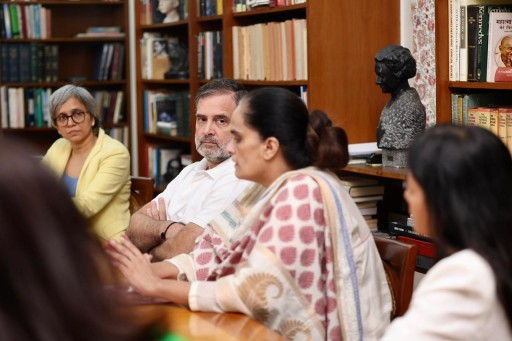
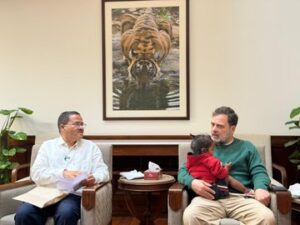
Former Congress president Rahul Gandhi with Delhi mothers who are protesting air pollution. (Image INC India)
As the BJP keeps winning state after state, India’s Opposition remains trapped in dynastic control, stale ideas and moral exhaustion—turning unity into a political liability
By NIRENDRA DEV
New Delhi, January 2, 2026 — India’s Opposition faces a deeper crisis than electoral defeat. It faces a crisis of credibility—one that no alliance, slogan or protest can conceal.
Even after a marginal decline in the BJP’s Lok Sabha tally in 2024, the ruling party has gone on to win Haryana, Maharashtra, Delhi and Bihar, reinforcing a central question: what exactly is wrong with the Opposition?
The answer lies not in Electronic Voting Machines or imagined conspiracies—but in dynasty politics, zero accountability, and intellectual stagnation.
The Dynasty Trap
Almost every major Opposition party is dynastic to its core.
The Congress remains structurally captive to the Nehru–Gandhi family, with little effort to nurture a non-dynastic successor. Regional parties mirror the same model: the Samajwadi Party, DMK, Trinamool Congress, RJD and others operate as family enterprises, not democratic institutions.
Rahul Gandhi resigned as Congress president after the 2019 defeat, yet the family’s grip never loosened. In 2023, the party elected Mallikarjun Kharge, then 82—widely seen as a stopgap and, worse, a rubber-stamp president.
When Shashi Tharoor sought to contest for the post, the family ensured he lost. This culture sends a devastating message to voters: merit is optional, loyalty is mandatory.
INDI Alliance: Unity Without Credibility
The so-called INDI Alliance has only magnified the Opposition’s problems. Instead of appearing as a credible alternative, it has become a coalition of contradictions, carrying political cost both collectively and individually.
Voters ask a simple question: What is the alternative?
The answer—often unspoken—is a return to the pre-2014 status quo. That memory includes corruption scandals, policy paralysis and coalition chaos. The Congress, DMK and Trinamool Congress were all tainted by allegations during the UPA era. In Bihar, the RJD—once synonymous with corruption—was decisively rejected again in 2025.
Renaming alliances does not erase history. Voters are not in kindergarten.
Hindutva: Bigger Than the BJP
One uncomfortable truth the Opposition refuses to confront is that Hindutva has outgrown the BJP.
The abrogation of Article 370 and the Ram Temple at Ayodhya are widely seen by voters as part of Narendra Modi’s long-promised “achhe din” package. Modi’s assertion—“Do not be apologetic about Hindutva”—has been electorally endorsed, booth after booth.
Today, even regional parties practise soft Hindutva, a reality unthinkable two decades ago. Politics has shifted organically; the Opposition has not.
Performance vs Paralysis
The Modi government has successfully projected itself as a doer—from Swachh Bharat and infrastructure expansion to surgical strikes and administrative centralisation.
In contrast, the Manmohan Singh era is remembered—fairly or not—for policy paralysis and remote control governance. The Opposition has failed for over a decade to break free from that image trap.
Leadership Vacuum and Image Problem
Leadership matters—and the contrast is stark.
Modi has been in public office since 2001, with no corruption charge sticking despite aggressive campaigns like “Chowkidar chor hai”. Today, the allegation has shifted to “vote chori”—a rhetorical retreat.
Opposition leaders struggle with credibility: Akhilesh Yadav is still associated with lawlessness in Uttar Pradesh. Mamata Banerjee’s rule is increasingly seen as syndicate-driven and disorderly. The DMK is openly dynastic. Congress governments are better known for infighting than governance.
As for Rahul Gandhi, he has not run a government, a ministry, or even his party effectively. Under his influence, the Congress has suffered repeated desertions and nearly 90 electoral defeats. There is little novelty in his ideas—only repetition of grievance.
Blaming Voters Won’t Save the Opposition
After all this, blaming voters—or machines—for defeat is not just counterproductive; it is self-destructive.
The survival of India’s Opposition depends not on artificial unity, but on rebuilding credibility, dismantling dynasties, and offering a future—not a rewind.
Until then, the BJP’s dominance may not just continue—it may deepen.
(This is an opinion piece. Views are those of the author’s own.)
Follow The Raisina Hills on WhatsApp, Instagram, YouTube, Facebook, and LinkedIn




About The Author