West Bengal: Power, Violence and the Cold Arithmetic of 2026
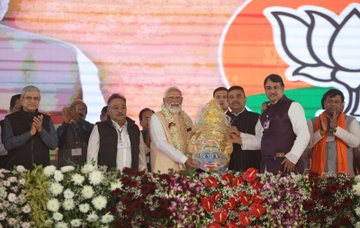
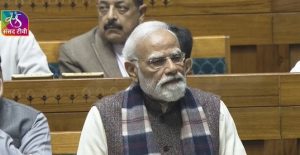
Prime Minister Narendra Modi addressed a public meeting in Malda, West Bengal (Image Modi on X)
A fictional political missive captures the deeper truths shaping West Bengal elections 2026—where identity collides with governance and numbers trump narratives.
By NIRENDRA DEV
New Delhi, January 17, 2026 — Imagine a letter written not by a ruler, nor by an opposition leader, but by the idea of power itself—addressed to West Bengal and its long, turbulent political memory. Such an imaginative missive would not flatter. It would warn.
West Bengal’s elections have never been short on passion. What they have often lacked is honesty about how power actually works. Beneath slogans, poetry, and ideological nostalgia lies a harsher truth: Bengal is governed less by sentiment than by arithmetic.
The state’s modern political journey—from Left dominance to Trinamool Congress supremacy—has followed a familiar pattern. Parties rise on the promise of emancipation, only to entrench themselves through fear, patronage, and control of local economies. The Left perfected this model through cadre discipline and electoral management. The Trinamool did not dismantle it; it inherited and sharpened it through syndicates, cash transfers, and street-level coercion.
Violence, once justified as revolutionary necessity, has become routine. Electoral intimidation is no longer an aberration but a mechanism. Governance failures are tolerated as long as benefits flow uninterrupted. For vast sections of voters, ideology matters less than survival.
Yet the real key to Bengal lies not only in muscle or money, but in demography. Nearly 160 of the state’s 294 Assembly seats are decisively influenced by Muslim voters—often clustered in specific districts rather than dispersed. In Murshidabad, Malda, North Dinajpur, and South 24 Parganas, voting is collective, not fragmented. Where minority votes consolidate, outcomes are predetermined.
This is where challengers repeatedly falter. Large-scale consolidation of Hindu votes, while politically significant, does not automatically translate into power. Without breakthroughs in minority-influenced belts or fractures in vote blocs, electoral gains remain capped. The fall of heavyweight leaders in parliamentary seats has repeatedly demonstrated that arithmetic defeats rhetoric.
The persistence of identity politics only deepens this trap. Appeals rooted in grievance, symbolism, or cultural assertion mobilise emotion—but they rarely reorder numbers. Meanwhile, organisational strength, booth management, and welfare delivery quietly decide elections.
Bengal 2026 will not be a referendum on speeches or personalities. It will be a test of whether any challenger can break the logic of consolidation, weaken entrenched networks, and present governance as materially superior—not morally louder.
History is unsentimental. Demography sets limits. Mathematics delivers verdicts. The rest is noise.
(This is an opinion piece. Views expressed are personal)
Follow The Raisina Hills on WhatsApp, Instagram, YouTube, Facebook, and LinkedIn




About The Author