West Asia in Chaos: Digital Money Begins Flight to Hong Kong
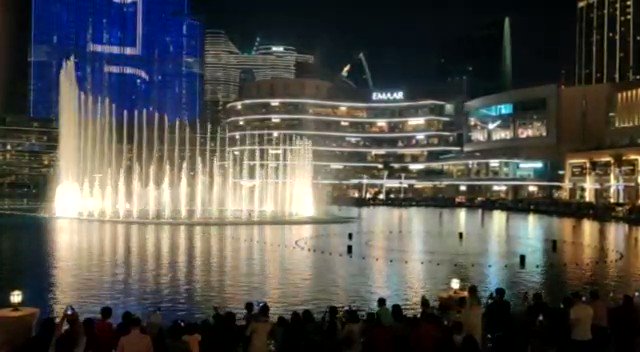
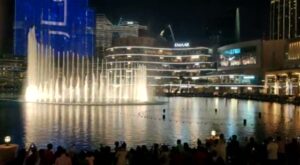
Nightlife in Dubai (Image X.com)
As Gulf airspace shuts and oil uncertainty deepens, analysts warn digital capital is already moving from Dubai, Riyadh and Bahrain toward Hong Kong and Southeast Asian hubs.
By NIRENDRA DEV
New Delhi, March 1, 2026 — The Middle East is convulsing. Joint US and Israeli military strikes have eliminated Iran’s entire senior defence leadership, killed Supreme Leader Ayatollah Ali Khamenei and his daughter, son-in-law and grandson, and sent shockwaves through global energy markets that experts describe as the gravest disruption in decades.
Experts say global energy markets now face one of their gravest shocks in decades. The region targeted accounts for approximately 20 per cent of global oil supplies. While there are so far no confirmed reports of damage to oil and gas infrastructure from Iranian retaliatory strikes, the threat and uncertainty alone are already sufficient to severely impact flows.
Crucially, there have been no reported disruptions so far to shipping through the Strait of Hormuz — the narrow waterway between Iran and Oman that handles nearly 20 million barrels per day of crude oil and refined products. But analysts note that the scale of disruption will ultimately be determined by how long the conflict runs. The longer it continues, the greater the pressure on that chokepoint.
Dubai In the Line of Fire
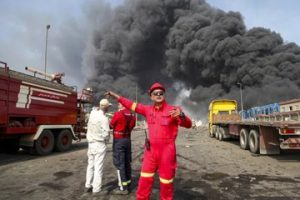
Debris from a drone intercepted by Dubai’s military caused a fire at one of the berths of Jebel Ali Port — a known frequent stop for US Navy vessels in the Gulf. Dubai Civil Defence teams responded immediately. The incident underscored that even the Gulf’s most commercially vital nodes are not beyond reach.
Former military officers and geo-strategic analysts with experience in the Gulf region have outlined the escalation scenarios now actively in play. Iran, they say, is likely to pursue a multi-front response: Targeting of Israel and Israeli citizens abroad. Attacks on US bases and naval assets — some already carried out successfully. Strikes on US allies including Jordan, Qatar, the UAE and Pakistan — though Pakistan has not been attacked as of the time of writing. Employment of proxy forces to target Israeli and Western assets across the Mediterranean, Persian Gulf and Red Sea. Cyberattacks on US networks. Homeland attacks inside the United States carried out by aligned proxies or lone-wolf adversaries.
Indian missions in multiple countries issued advisories urging Indian nationals to stay indoors, avoid proximity to military installations, and heed emergency alerts from local authorities. Advisories were issued by Indian embassies in Israel, Iran, Saudi Arabia, the UAE, Qatar, Bahrain, Kuwait, Iraq, Oman and Jordan.
Digital Money in Flight
The aviation sector was an immediate casualty, with Gulf and wider West Asian airspace either closed or on the verge of closure. But analysts watching capital flows say the consequences reach further.
A Delhi-based analyst told this correspondent: “Dubai and the larger Middle East and West Asia airspace is presently closed or about to close. Hence the digital money ought to flow in and out.”
He also stated that “prospects brighten that digital money from the Middle East will start moving towards Hong Kong or other hubs in Southeast Asia — and even to the United States — from Dubai, Saudi Arabia and Bahrain.”
“This is expected more in fear, or in panic, or a combination of both,” the expert added.
The flight of financial capital from the Gulf toward Hong Kong and Southeast Asian hubs would mark a significant structural shift — accelerating a reorientation of Middle Eastern wealth that had been underway gradually but could now accelerate sharply under crisis conditions.
Iran’s Interim Supreme Leader: Who Is Ayatollah Alireza Arafi?
Following Khamenei’s death, Iranian media announced the appointment of Ayatollah Alireza Arafi as interim Supreme Leader — marking a critical transition in Tehran’s political and religious hierarchy.
Born in 1959 in Maybod, Yazd province, Arafi is a senior Shia cleric and prominent figure within Iran’s religious establishment. He currently serves as Deputy of the Assembly of Experts, sits on the Guardian Council, and directs Iran’s Islamic Seminary system — overseeing religious education nationwide. He previously headed Al-Mustafa International University, which trains clerics both domestically and abroad.
Arafi began his classical religious education in Iran and moved to Qom in 1970, completing advanced studies in philosophy, ethics and theology. Fluent in Arabic and English, he is known for advocating the use of modern technology — including artificial intelligence — to spread Iran’s ideological message internationally. His appointment signals that the Islamic Republic intends to project continuity, not rupture, at its theological core.
Beyond Hormuz: Can Iran Destroy the Gulf’s Oil Infrastructure?
Follow The Raisina Hills on WhatsApp, Instagram, YouTube, Facebook, and LinkedIn




About The Author