Venezuela Oil Geopolitics: Next 72 Hours Could Rewire Geopolitics

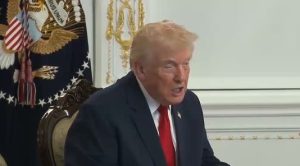
U.S. President Donald J. Trump released what appears to be the first picture of Venezuelan President Nicolás Maduro. (Image Trump on X)
As US pressure peaks on Caracas, control over Venezuela’s oil may decide the future of energy markets, Iran strategy, and American global dominance
By TRH Foreign Affairs Desk
New Delhi, January 3, 2026 — The next 72 hours may prove decisive not just for Venezuela, but for the global balance of power.
According to geopolitics analyst Ibrahim Majed, what is unfolding around Caracas is not about democracy promotion or human rights protection. It is about something far more consequential: control over the world’s largest proven oil reserves and the strategic leverage that comes with it.
If the United States succeeds in imposing effective control over Venezuela, Majed argues in a long post on X, it will mark a historic inflection point in global geopolitics. Such an outcome would reassert American dominance over energy flows, trade routes, and regional alignments—at a time when US power is being contested simultaneously by China, Russia, and Iran.
Venezuela as the Energy Keystone
Venezuela’s significance lies not only in its oil wealth, but in the type of oil it possesses. Its vast reserves of heavy crude are uniquely suited to complement US refining capacity. Securing influence over these reserves would sharply reduce Washington’s vulnerability to energy disruptions in the Persian Gulf.
Majed notes that with Venezuelan oil under its strategic influence, the US would be better insulated against supply shocks in the event of a confrontation with Iran. Gulf infrastructure attacks, shipping disruptions in the Strait of Hormuz, or even partial shutdowns would carry a lower economic cost for Washington.
In practical terms, this buffer would make military pressure against Iran more politically, economically, and strategically manageable.
The Petrodollar and Power Projection
Beyond immediate energy security, Venezuela represents something deeper: leverage over global oil pricing and flows. Control here strengthens the dollar’s central role in energy markets, reinforcing the petrodollar system that underpins US financial power.
Majed stresses that this is why Venezuela cannot be seen as a regional issue alone. It becomes a strategic precedent—a demonstration that economic coercion, political engineering, and, if necessary, force can be used to restructure sovereign states and realign the global order.
If successful, it signals that Washington still has the capacity to reshape outcomes despite a multipolar world.
The Risk of Overreach
But the alternative scenario is equally consequential, added Majed.
If the United States becomes entangled in Venezuela and faces sustained internal or regional resistance, the calculus changes dramatically. “A prolonged crisis would drain US political capital, stretch military and economic resources, and weaken its ability to project power elsewhere—particularly in the Middle East,” argued Majed.
Majed points out that such an outcome would also complicate Israeli strategic planning, which remains closely tied to US regional leverage and deterrence credibility.
In that case, Venezuela would not become a symbol of renewed American dominance—but of its limits.
Beyond Caracas
What happens in Venezuela, Majed concludes, will not stay in Latin America. It will shape the future of energy control, define how far American power can still reach, and determine the trajectory of geopolitical confrontation—from Tehran to the Persian Gulf and beyond.
The next 72 hours, then, are not about one country’s fate. They are about the architecture of global power in the years ahead.
Follow The Raisina Hills on WhatsApp, Instagram, YouTube, Facebook, and LinkedIn




About The Author