VBSA Bill 2025: The One-Regulator Temptation and the Reset
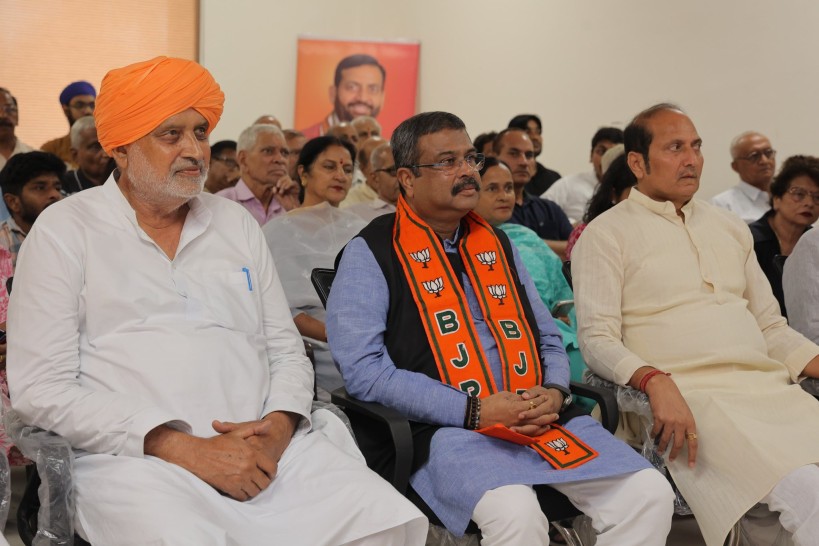
Image credit X.com @dharmendrapradhan
As the VBSA Bill 2025 promises to end regulatory chaos in Indian higher education, its centralising instincts, federal tensions, and transition risks raise a crucial question: will reform empower students—or turn them into collateral damage?
By P. SESH KUMAR
New Delhi, January 7, 2026 — The Viksit Bharat Shiksha Adhishthan (VBSA) Bill, 2025 arrives with a seductive promise: end regulatory clutter, simplify oversight, and usher Indian higher education into a clean, technology-enabled, “one-helmsman” era. By repealing the UGC, AICTE and NCTE Acts, the Bill seeks to fold decades of fragmented regulation into a single architecture built around accreditation, disclosure, and graded autonomy.
But behind the elegance of a single regulator lies a high-stakes redesign of power—one that could reshape universities, redraw Centre–State equations, and determine whether students experience reform as liberation or as prolonged uncertainty.
Why the One-Regulator Idea Keeps Returning
India’s higher-education regulation has long resembled a crowded control room. Universities answer to the UGC, technical programmes to AICTE, teacher education to NCTE—often simultaneously. The result has been duplicated compliance, conflicting approvals, and litigation that resolves questions years after students have paid fees and invested their futures.
The National Education Policy (NEP) 2020 acknowledged this dysfunction and proposed a bold fix: unify regulation (excluding medicine and law), separate funding from regulation, and move towards “light but tight” oversight that rewards performance rather than paperwork.
The VBSA Bill is the State’s attempt to convert that blueprint into law.
The Deemed University Reset: Closing a Door Forever
One of the Bill’s most consequential moves is also its most political: it ends the legal pathway for creating new “deemed-to-be universities.” With the repeal of the UGC Act, Section 3—the statutory doorway through which dozens of institutions gained deemed status in the 2000s—simply vanishes.
Existing deemed universities are not abolished; they are migrated into the new legal universe and treated as universities under the VBSA framework. But the message is unmistakable: an era that expanded rapidly—and controversially—is being permanently closed.
This is not academic housekeeping. A 2009 committee had recommended withdrawing deemed status from many institutions, triggering years of litigation and Supreme Court intervention. VBSA attempts to cauterise that wound by removing the category itself.
Degree-Granting Colleges—and Delhi’s Invisible Gate
The Bill introduces a modern-sounding reform: top-rated accredited colleges may be authorised to award degrees. But there is a catch that alters the power equation.
Such authorisation—and its revocation—requires prior approval of the Central Government.
What is presented as autonomy earned through quality risks becoming autonomy dispensed through permission. If degree-granting power is meant to be an escalator for excellence, Delhi now controls the switch.
Medical and Professional Education: Stability with Friction
For medical students in deemed universities, the Bill offers reassurance with caveats. Professional programmes regulated by bodies like the National Medical Commission (NMC) remain outside VBSA’s direct control. MBBS and postgraduate medical education continue under existing norms.
Yet institutional identity will still shift. The “deemed” label fades; governance frameworks change. While degree recognition should remain intact, transitional confusion—branding, statutes, and regulator coordination—is inevitable unless clarified early and publicly.
Engineering education faces a more direct transition, as AICTE’s functions are absorbed into the new regime, raising the stakes for smooth standard-setting and accreditation continuity.
Where Reform Risks Becoming Recentralisation
VBSA’s architecture carries four structural stress points.
First, funding as leverage. Critics note that NEP 2020 envisioned an arm’s-length grants mechanism. VBSA, by contrast, places strong policy-direction powers with the Centre, with bodies bound by Central instructions—and the Centre acting as final arbiter of what counts as “policy.”
Second, autonomy by approval. When both granting and withdrawing autonomy require prior Central consent, independence becomes conditional rather than earned.
Third, accreditation as a single point of failure. The entire system hinges on accrediting capacity and integrity. Delays or capture here will convert reform into a queue.
Fourth, reform by repeal. Though the Bill sensibly provides continuity through savings clauses, institutions may face years of dual-language compliance as old standards survive inside new structures.
The Silent Contract: Schemes, Fellowships, Trust
Regulators do more than enforce rules; they run scholarships, inclusion programmes, research centres, and fellowships. As reporting has already shown, reviews of UGC schemes ahead of VBSA have triggered anxiety among beneficiaries.
When regulators change, trust is renegotiated. Students and researchers fear that schemes may quietly shrink, shift, or disappear.
Federal Reality Meets Delhi’s Dream
Education sits in the Concurrent List. While the Union wields Entry 66—standards in higher education—that lever can quietly become a steering wheel.
VBSA’s design, which binds bodies to Central policy directions and gives Delhi final interpretive authority, raises an unavoidable question for States: is this coordination—or command?
A compelling idea circulating in academic circles deserves serious attention: a GST-Council-like federal forum for higher education regulation. Without such a safety valve, every friction point—funding, norms, autonomy—risks becoming a Centre–State dispute, with universities paying the price.
What VBSA Can Fix—If Done Right
The strongest case for VBSA is real. It can eliminate the UGC–AICTE–NCTE ping-pong that has plagued technical and teacher education, reduced institutions to litigation zones, and left students trapped in regulatory grey areas.
International best practice—from England’s risk-based Office for Students to Australia’s TEQSA—shows that merger alone is not reform. What matters is regulatory philosophy: risk-based oversight, transparency, predictable intervention, and public disclosure that protects students more than inspectors do.
The Way Forward: Don’t Make Students the Shock Absorbers
VBSA is not a bad Bill. It is a high-voltage reform that needs insulation.
First, the government must issue a binding, student-facing transition charter, programme-by-programme, guaranteeing degree validity and recognition for all current cohorts.
Second, degree-granting autonomy for colleges must be rule-bound, time-bound, and appealable, not discretionary.
Third, accreditation capacity must precede autonomy promises.
Finally, policy-direction powers must be used sparingly and transparently. Once universities believe permissions and funding move with political weather, reform will deliver compliance—not excellence.
VBSA can reduce confusion created by a fragmented past. But if simplification slides into overreach, India will replace one problem with another.
India does not need just one regulator.
It needs one coherent system—and a federal conscience to match.
(This is an opinion piece. Views expressed are author’s own)
Degrees of Pain: Gender and Mental Health in Higher Education
Follow The Raisina Hills on WhatsApp, Instagram, YouTube, Facebook, and LinkedIn




About The Author