US–Russia Oil Tanker Seizure and the Venezuela-Linked Clash
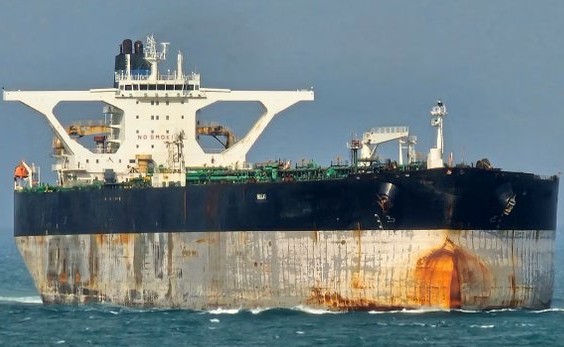
The US special forces captured oil tanker Bella 1—now renamed Marinera—250 miles off Ireland coast. (Image X.com)
As the United States seizes Venezuela-linked oil tankers under sanctions, Moscow lashes out—raising questions about enforcement, sovereignty, and the future of US-Russia tensions.
By TRH World Desk
New Delhi, January 7, 2026 — In a striking demonstration of its willingness to enforce sanctions against Venezuela’s oil trade, the United States has seized two oil tankers linked to Caracas in recent days, triggering sharp condemnations from Moscow and raising geopolitical temperatures far beyond energy markets.
The vessels—formerly the Bella 1 and Sophia—were targeted by US forces as part of an aggressive campaign to choke off sanctioned Venezuelan oil exports. The Bella 1, reflagged under Russian registry as the Marinera and tracked across the North Atlantic, was intercepted after a weeks-long pursuit, despite assertions that it was sailing under Russian colours.
Republican strategist Adolfo Franco, speaking to Al Arabiya News, framed the operation as enforcement of sanctions rather than a step toward military confrontation between Presidents Putin and Trump. Franco stressed that Russia, embroiled in its costly war in Ukraine, lacks the strategic bandwidth to escalate at sea while managing threats closer to home. For him, the tanker seizures reflect a sanctions regime finally backed by enforcement muscle.
That positioning, however, belies the furious reaction from Moscow. The Russian government has denounced the seizure of the Marinera as a breach of international maritime law, decrying the US action as tantamount to piracy on the high seas. Russian officials argue that a vessel legitimately flying their flag cannot be subjected to force in international waters—a claim that underscores Russia’s effort to frame the incident not as law enforcement, but as transgression.
Washington, for its part, insists the seizures are lawful, rooted in sanctions issued against the vessels for their roles in moving Venezuelan oil despite longstanding trade restrictions. US commanders have publicly stated the action enforces a blockade of sanctioned oil flows tied to Venezuela’s embattled regime—a blockade defined and backed by federal warrants.
Those two narratives—the enforcement case and the sovereignty challenge—point to a broader diplomatic risk: sanctions are no longer window dressing. They have become an active, kinetic instrument of US foreign policy.
For Russia, these tankers are far more than hulks of steel. They are symbols of resistance to an American sanctions regime that Moscow sees as illegitimate and overreaching. The very fact that the Marinera changed flags mid-voyage—from Guyana to Russia—before its capture illustrates how vessels in the so-called “shadow fleet” frequently exploit legal ambiguities to evade enforcement.
Yet Franco’s assessment that a direct military clash between the United States and Russia is unlikely reflects current strategic calculations: Russia’s attention remains riveted on Ukraine, and its ability to elevate a naval dispute into a crisis with the US is constrained by competing priorities. In that sense, sanctions enforcement has emerged as a proxy battlefield where muscle is shown without triggering outright war.
But avoiding war is not the same as avoiding friction. These tanker seizures risk making energy sanctions a flash point in a broader geopolitical struggle. If the US continues to pursue and capture sanctioned vessels in distant waters, the legal, diplomatic, and economic reverberations will widen per analysts. Moscow’s public outrage could harden positions in other arenas—from cyber to space—where the two powers already spar.
For now, the message from Washington appears clear: the United States will back its sanctions with action, and it expects the world to comply or watch sanctioned oil flows dry up. For Moscow, the challenge will be demonstrating that its global posture can withstand such pressure without yielding strategic ground.
That clash of postures—enforcement versus sovereignty, blockade versus freedom of navigation—is shaping a new kind of geopolitical tension, one where tankers and oil diplomacy matter as much as tanks and missiles.
Follow The Raisina Hills on WhatsApp, Instagram, YouTube, Facebook, and LinkedIn




About The Author