


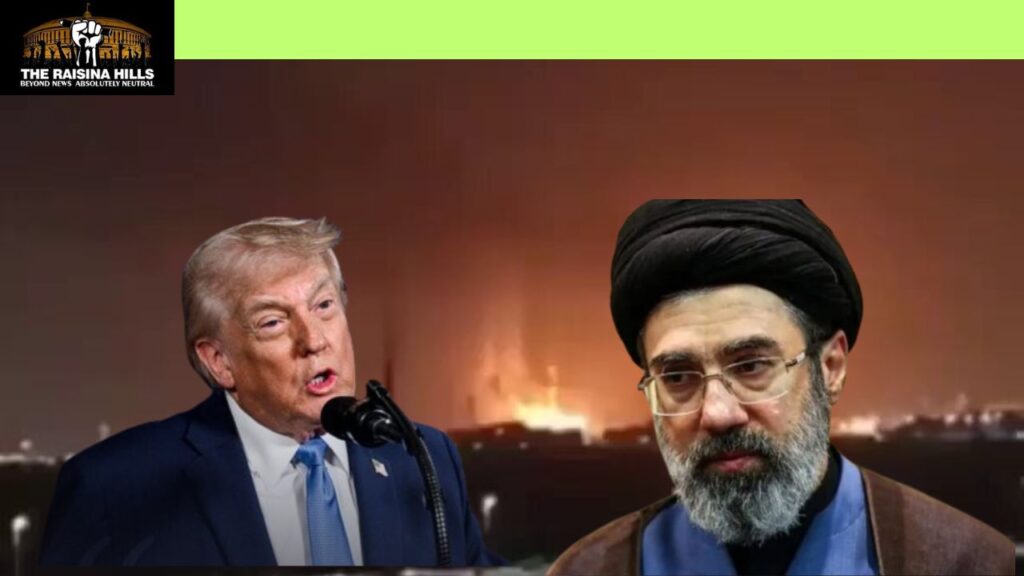
Former US official Len Khodorkovsky says any deal with Iran must curb Tehran’s regional influence, warning that an agreement alone does not define success.
By TRH World Desk
New Delhi, May 6, 2026 — Amid ongoing uncertainty over a possible agreement between Washington and Tehran, former US Deputy Assistant Secretary of State Len Khodorkovsky has cautioned that the success of any deal will depend not on its existence, but on its substance.
Speaking to Al Arabiya English, Khodorkovsky said both sides may attempt to frame a potential agreement as a victory but warned that such claims could be misleading without meaningful long-term outcomes.
“Victory looks very different right now if you are in Tehran and Washington… there is no clarity at the moment,” he said, referring to ongoing speculation around a reported 14-point proposal circulating in the media.
Khodorkovsky emphasized that simply reaching a deal should not be seen as the ultimate objective for the United States or its regional allies. “A deal in and of itself is not the objective,” he said, adding that Washington’s priority is to secure a framework that prevents Iran from projecting power beyond its borders.
The remarks highlight a broader strategic concern within US policy circles—that any agreement must go beyond short-term de-escalation and instead ensure long-term regional stability.
“I think what the United States is after, and certainly our friends in the region are after, is some sort of long-term arrangement that guarantees that the Islamic Republic is no longer able to project its power beyond its borders,” Khodorkovsky said.
His comments come as analysts debate whether both sides could claim victory if an agreement is reached. Iran has demonstrated resilience under prolonged economic sanctions and military pressure, raising questions about what concessions it may be willing to accept.
Khodorkovsky stressed that the final judgment would depend on the details of any negotiated terms. “The devil is always in the details,” he said, cautioning that a poorly structured agreement could lead to renewed tensions rather than lasting peace.
“I don’t think saying that we have a deal is necessarily a definition of success. The substance is going to tell us whether this is a win, a loss, or more confusion that leads to the next chapter of conflict,” he added.
The evolving situation underscores the fragile nature of US-Iran negotiations, where competing narratives of victory may emerge even as underlying strategic concerns remain unresolved.
Rising Oil Prices, Not War, May Decide US Voters: Dubke Warns
Follow The Raisina Hills on WhatsApp, Instagram, YouTube, Facebook, and LinkedIn




