


Defence analyst Marina Miron tells Al Jazeera the missing airman’s survival training is his best asset — but not speaking Persian could prove fatal to his chances of safe recovery.
By TRH World Desk
New Delhi, April 5, 2026 — A defence researcher at King’s College London is warning that both the United States and Iran are locked in a critical 72-hour race to locate the second crew member of a downed F-15E Strike Eagle — a window she says carries profound military and political consequences for both sides.
Iran shot down the F-15E Strike Eagle — the first U.S. jet downed by enemy fire since the conflict began — with one of the two-person crew already rescued by U.S. special forces. A frantic search for the second crew member remains ongoing.
Marina Miron, a defence studies researcher at King’s College London, speaking to Al Jazeera, laid out the brutal calculus facing the missing airman — and the forces hunting for him.
“It seems like the pilot is still alive,” Miron said, “and therefore it would be expected, given the fact that U.S. air crew members and special forces undergo survival, evasion, resistance and escape training, that he will try to blend with the terrain and to survive as long as possible.”
That training — known in military parlance as SERE — is the missing airman’s most immediate lifeline. But Miron identified a profound tension at the heart of the rescue operation.
“If he hides well and conceals his location — because the U.S. is operating from the air — it needs constant intelligence and surveillance in order to be able to locate him,” she said. In other words, the very instinct to stay hidden from Iranian forces may make it harder for American rescue teams to find him.
The Language Barrier That Could Decide His Fate
Beyond terrain and tactics, Miron flagged a vulnerability that has gone largely unreported: the language barrier. “The pilot doesn’t speak Persian,” she told Al Jazeera, “which means that it will be difficult for him to negotiate with the Iranians, should he be captured by civilians or should he be found by civilians.”
That scenario is not hypothetical. Iranian state television urged civilians in the area to locate the crew and called on locals to “shoot them if you see them,” while a regional governor offered a public bounty to anyone who could hand the airman over to law enforcement.
A local affiliate of Iran’s state TV channel broadcast an announcement offering a prize for anyone able to “capture the enemy pilot or pilots alive and hand them over to the police.”
The combination of an armed, motivated civilian population and a downed airman unable to communicate in the local language creates conditions Miron describes as deeply dangerous.
‘Trump’s Ratings Worse Than Nixon’: Blow to Vance’s 2028 Hopes
A 72-Hour Military and Political Window
Miron’s most urgent warning centres on the shrinking timeline. “Right now we have this critical window of up to 72 hours where both sides are trying to get hold of the pilot — for both military and political purposes,” she said.
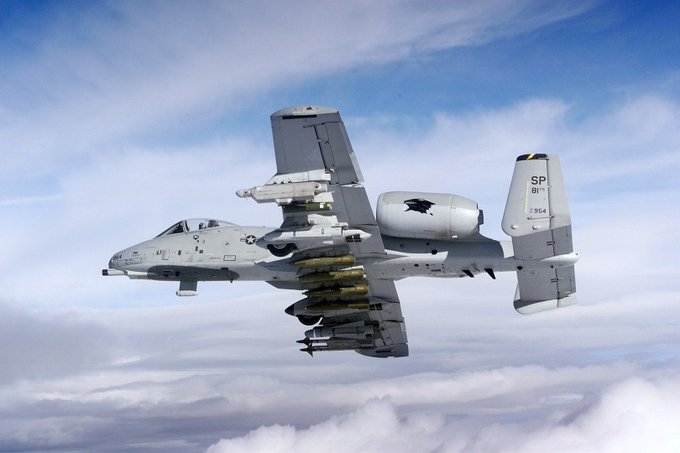
The military dimension is obvious: Israel cancelled planned strikes in Iran so as not to hamper the search and rescue effort, and is helping the U.S. with intelligence to locate the second crew member. Iran also struck two Black Hawk helicopters and the A-10 Thunderbolt attack aircraft that were participating in the search, injuring crew members, before the A-10 made it to Kuwaiti airspace where its pilot ejected safely.
The political dimension may be equally consequential. A captured American aviator would hand Tehran its most powerful propaganda asset of the war — a living symbol to display on state television at the precise moment the Trump administration has been insisting that Iran has been “completely decimated” and can “do nothing” to stop U.S. forces.
The incident marks the first time a U.S. aircraft has been shot down over Iran during the conflict, directly contradicting repeated White House and Pentagon assurances of total U.S. air superiority.
Less than 48 hours before the shoot-down, U.S. President Trump had told Americans that Iran has “no anti-aircraft equipment” and that their radar is “100% annihilated.”
Background: The Downed F-15E
The F-15E Strike Eagle is believed to be from the 494th Fighter Squadron, 48th Fighter Wing, based at RAF Lakenheath in the United Kingdom. An F-15E typically carries both a pilot and a weapons systems officer. The shoot-down marks the first time a manned U.S. aircraft has been brought down by enemy fire during Operation Epic Fury.
The last time a U.S. fighter jet was shot down in combat was an A-10 Thunderbolt II during the 2003 invasion of Iraq — meaning this is the first such incident in over two decades.
For Miron, the fundamental lesson is stark: survival training, intelligence overhead, and speed are the only things standing between the missing airman and capture. The clock is running.
US Jet Downed Over Iran Signals Dangerous Escalation: Analyst
Follow The Raisina Hills on WhatsApp, Instagram, YouTube, Facebook, and LinkedIn




