UGC Row: Ad Hominem Politics Hijacks Higher Education Debate?
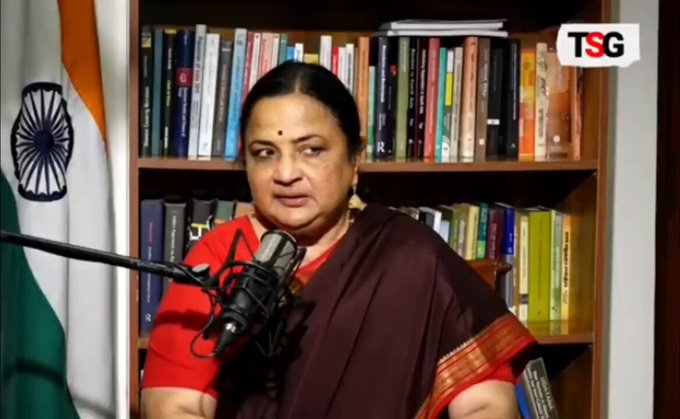
JNU VC Santishrree Pandit's remarks in a podcast set off protests on campus (Image Video grab)
Critics Say Opposition to UGC Promotion of Equity Regulations 2026 Is Being Branded ‘Anti-Dalit’ Without Addressing Core Concerns
By RAVI SHANKER KAPOOR
New Delhi, February 27, 2026 — The controversy surrounding the UGC Promotion of Equity Regulations 2026 is rapidly escalating into a battle not merely over policy, but over identity and intent.
Supporters of the new University Grants Commission framework argue that the regulations are designed to promote inclusivity and ensure equitable representation in higher education institutions. Critics, however, claim that the debate has been derailed by what they describe as “argumentum ad hominem” — attacking the individual rather than engaging with the substance of the argument.
According to detractors, questioning the UGC regulations is increasingly being portrayed as hostility toward Dalits, Other Backward Classes (OBCs), and Scheduled Tribes (STs). Some opponents allege that critics are being given labels such as “savarna” defenders of privilege instead of having their policy concerns addressed.
The larger question emerging from this row is whether higher education reform is being debated on merit — or reduced to caste binaries.
Caste, Reform and Historical Context
The ideological fault lines have also revived debates over India’s reform movements and constitutional values. Figures such as Raja Ram Mohan Roy, Swami Dayanand Saraswati, and Ishwar Chandra Vidyasagar are frequently invoked in arguments about social reform and caste uplift. Historians note that nineteenth-century socio-religious reform movements were influenced by Enlightenment ideals of liberty, equality, and individual rights.
Similarly, discussions around the framing of the Indian Constitution often reference B. R. Ambedkar and Mahatma Gandhi — highlighting ideological tensions but also collaboration in shaping constitutional democracy.
Proponents of this historical framing argue that reform and social justice have never been confined to a single caste identity. Critics of the UGC regulations insist that reducing contemporary policy debates to caste hostility oversimplifies a far more complex reality.
Ideology vs Policy?
Supporters of the regulations, including several Left-leaning academics and activists, maintain that structural inequities in higher education require robust regulatory intervention. They contend that opposition often masks discomfort with redistributive justice.
On the other hand, critics allege that branding dissent as caste antagonism stifles legitimate academic and constitutional debate. They argue that higher education policy must withstand scrutiny grounded in reason, data, and institutional autonomy — not rhetorical labelling.
The debate has now expanded beyond campuses into the broader political arena, with some commentators alleging that the Modi government’s stance may inadvertently deepen ideological polarization.
The Core Question
Is the UGC Promotion of Equity Regulations 2026 a necessary corrective to entrenched inequalities — or is the discourse around it sliding into identity-driven confrontation?
As India navigates sensitive questions of representation, merit, and constitutional morality, the manner in which this debate unfolds could shape not just higher education policy, but the tenor of public reasoning itself.
(This is an opinion piece. Views expressed are author’s own. The article comes in collaboration with The Hindu Chronicle.)
UGC Regulations: Are ‘Andhabhaktas’ Finally Questioning Modi?
Follow The Raisina Hills on WhatsApp, Instagram, YouTube, Facebook, and LinkedIn




About The Author