UGC Regulations Stir: Is the Outrage Built on a False Narrative?
As protests brew over ‘discrimination’ fears, the real issue is not a new law—but a regulatory shift that tightens accountability in higher education
By RAJESHWAR JAISWAL
Patna, January 27, 2026 — A political storm is gathering around the University Grants Commission (UGC), fuelled by claims that the Centre has quietly pushed through a “new Bill” to alter the social balance of higher education. The premise itself is flawed—and the confusion is no accident.
What the UGC has issued are regulations, not a Bill. There is no new law passed by Parliament, no stealth legislation. The “Promotion of Equity in Higher Education Institutions Regulations, 2026” flow directly from the UGC Act, 1956, under powers long vested in the Commission. Regulations operate within an existing law; Bills create new law. Conflating the two is either ignorance—or deliberate narrative-building.
The regulations aim to strengthen grievance redressal mechanisms and prevent discrimination across campuses. Crucially, for the first time, protections explicitly extend beyond SC and ST students to include OBCs, EWS, minorities, persons with disabilities, and transgender persons. Every institution is now mandated to establish a time-bound, transparent complaints process, backed by data reporting and institutional accountability. The old “management will look into it” culture is over.
This is precisely what has rattled parts of the academic establishment.
Much of the outrage is framed as a defence of “merit”, a familiar rallying cry whenever accountability expands. Yet merit has never been diluted by grievance redressal. What is challenged is unchecked discretion—the ability of institutions and faculty to suppress complaints without consequence.
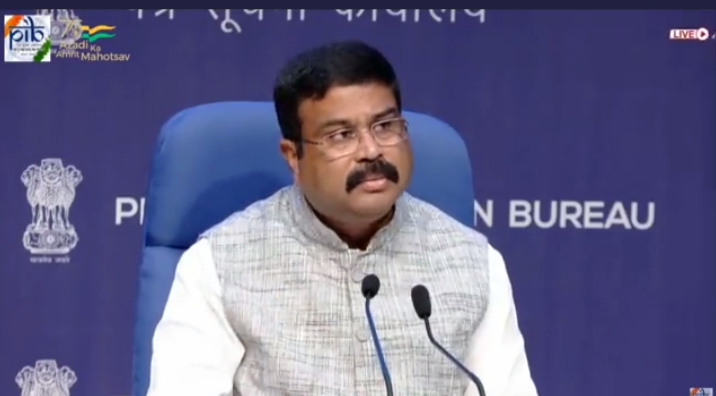
Education Minister Dharmendra Pradhan has categorically addressed fears of misuse and discrimination. “Main bahut vinamrata se aashvast karna chahta hoon—kisi ka koi utpeedan nahi hone diya jayega. Koi bhedbhaav nahi hoga. Discrimination ke naam par misuse ka adhikar kisi ko nahi milega,” he said. He underlined that UGC, the Government of India, and state governments are jointly responsible, and assured that every provision operates strictly within the Constitution and under Supreme Court oversight.
Another strand of misinformation targets the role of a Parliamentary Standing Committee chaired by Congress leader Digvijaya Singh. Committees do not legislate; they review and recommend. The final authority to frame and notify regulations rests with the UGC—not Parliament, and not any political party.
So why the uproar? Because these rules shift power. They introduce traceability, reporting, and consequences. For institutions accustomed to opacity, that is disruptive.
The truth is simple: this is not a paper reform—it is a behavioural one. And that is why the noise is so loud.
(This is an opinion piece. Views expressed are the author’s own.)
UGC Regulations Row: Why a Reform Triggered a Political Storm
Follow The Raisina Hills on WhatsApp, Instagram, YouTube, Facebook, and LinkedIn




About The Author