UGC Equity Regulations 2026: When ‘Equity’ Turns Into Ideology
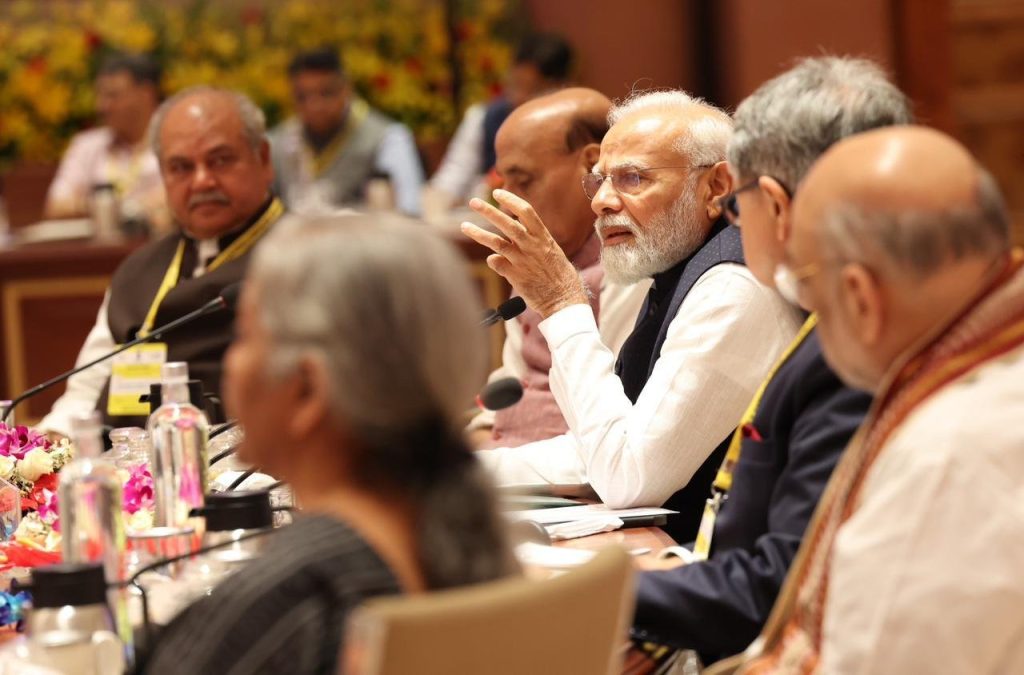
Image credit X.com @PMOIndia
Why critics say the new UGC rules replace equality with coercion and threaten academic freedom
By RAVI SHANKER KAPOOR
New Delhi, February 10, 2026 — The University Grants Commission (Promotion of Equity in Higher Education Institutions) Regulations, 2026 have triggered an intense ideological and political debate. To their critics, these regulations are not merely flawed—they are morally indefensible and rooted in Leftwing theories that prioritise outcomes over opportunities, ideology over justice, and coercion over equality.
At the heart of the controversy lies the concept of equity itself. Equity, as propagated in Leftwing discourse, is not about equal opportunity but about equal outcomes. Outcomes, however, can never be made equal without institutionalised preference. Such preference may be defensible—temporarily—for communities like Scheduled Castes and Scheduled Tribes that faced centuries of codified discrimination. Extending this logic indefinitely, or to broad categories of “social and educational backwardness” as initiated by the Mandal framework, fundamentally distorts the idea of justice.
Revenge Is Not Justice
Historical oppression cannot become a licence for present-day role reversal. Justice is not achieved by inverting hierarchies. By that logic, past injustices anywhere could legitimise fresh oppression today. Civilisation progresses by dismantling discrimination, not by rebranding it.
Supporters of the UGC regulations often resort to whataboutery—a tactic that evades accountability. When cases like that of Vishnu Tiwari are cited, who spent two decades in prison under false charges invoked through the Scheduled Castes and Scheduled Tribes (Prevention of Atrocities) Act, 1989, the response is predictable: atrocities against Dalits and tribals are far worse. This is not an argument; it is an abdication of responsibility. If one section of society is mistreated, the solution is to end that mistreatment—not to legitimise fresh injustice against another.
Statecraft: Why Left-Wing Ideas Still Run India—Even Under Modi
Branding Dissent as Prejudice
Equally troubling is the widespread use of argumentum ad hominem. Opposition to the UGC Regulations is routinely branded as anti-Dalit. This intellectual dishonesty shuts down debate. Disagreement with a policy does not amount to hostility towards a community. Yet, pro-regulation activists have made dissent synonymous with moral delinquency.
The regulations themselves betray a troubling presumption. They define caste-based discrimination as discrimination faced only by SCs, STs, and OBCs—implicitly declaring upper-caste individuals as perpetual oppressors and never potential victims. Such framing is neither sociologically sound nor morally defensible.
A Recipe for Fear and Abuse
Perhaps the gravest flaw in the UGC Equity Regulations is the complete absence of safeguards against false or malicious complaints. There are no penalties for willful misrepresentation. In such a framework, any allegation—however baseless—becomes a weapon. The result is predictable: blackmail, extortion, and a climate of fear.
Upper-caste students and faculty would exist under permanent suspicion, with academic disagreement or refusal to comply with unreasonable demands becoming grounds for accusations. This will have a chilling effect on free speech, which is already under strain in Indian universities.
Far from reducing caste consciousness, the regulations risk entrenching caste identities more deeply within campuses. Ironically, this comes from a saffron dispensation that repeatedly urges Hindu unity. One is compelled to ask: whatever happened to “Bantenge to katenge”?
Orwellian ‘Equity Squads’
The proposal to establish “Equity Squads” across institutions reads like an Orwellian parody. In a system already struggling with institutional probity, these bodies are likely to become instruments of intimidation rather than justice. Comparable mechanisms are hard to find even in the most ideologically polarised universities of the West.
Even more alarming is the lack of protection for those falsely accused. While accusers face no consequences, the accused are left to navigate reputational damage and institutional pressure without recourse.
A Dangerous Precedent
The UGC Equity Regulations, 2026 do not promise harmony or fairness. They threaten to replace equality with ideology, justice with vengeance, and debate with fear. Those who drafted these rules have normalised a worldview where accusation substitutes evidence and identity trumps individual rights.
The Ministry of Education must answer why such a divisive and dangerous framework was imposed on India’s higher education system. Policies that deepen fault lines and silence dissent do not build nations—they corrode them.
(This is an opinion piece. Views expressed here belong to the author. This article has been brought in collaboration with The Hindu Chronicle.)
SC Stops UGC Rule—A Caste Line Too Far in India’s Universities
Follow The Raisina Hills on WhatsApp, Instagram, YouTube, Facebook, and LinkedIn




About The Author