UAE’s $1-Billion Casino Bet Sparks Islamic Finance Backlash
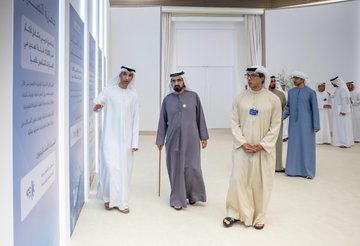
UAE boosts infra for trade infrastructure (Image Sheikh Mohammad on X)
As the UAE courts gambling revenue to diversify beyond fossil fuels, Islamic finance experts warn the move undermines the country’s new halal-industry strategy and erodes trust in its role as a regional standard-setter.
By S JHA
New Delhi, December 7, 2025 — The United Arab Emirates’ accelerating push into gambling is drawing sharp criticism from Islamic finance professionals, who say the move undercuts the country’s own commitments to halal industry norms even as Dubai and Abu Dhabi position themselves as global Islamic-finance hubs.
On LinkedIn, Vladimir Malenko, an Islamic wealth manager, said the UAE’s gambling revenue is projected to hit $1 billion, a figure that “puzzled” him given that the Cabinet approved the UAE Strategy for Islamic Finance and Halal Industry in 2025. “Isn’t maysir haram?” he asked.
The controversy comes as the UAE—aiming to reduce dependence on fossil fuel income—makes a dramatic pivot toward tourism, entertainment and non-oil economic drivers. A flagship example is Wynn Al Marjan Island in Ras Al Khaimah (RAK), expected to derive almost 90% of its revenue from gamblers, according to Wynn Resorts. Gambling zones, analysts say, are being folded into the UAE’s wider post-oil diversification push in the run-up to 2030.
Malenko noted that RAK’s entry puts the UAE alongside Lebanon, Egypt, Morocco, Malaysia and Tunisia as Muslim-majority states that legally operate casinos. Others added Kazakhstan and Kyrgyzstan to the list.
Yet much of the debate centres on whether the UAE has found a “loophole.” Artur Krivov of Kazakhstan’s International Development Agency recounted a UAE banker’s argument that gambling may be permissible on “artificial ground created by man, not God-given land.”
Islamic finance specialist Stella Khalis said authorities are pushing casinos “outside the main territory of the UAE—onto islands or special tourist zones—framed as something for tourists, not for Muslim citizens.” The structure, she argued, reflects “economic expediency and a different legal framework,” even though maysir remains clearly forbidden.
Such distinctions, critics warned, risk damaging the UAE’s credibility. “How can they be trusted to standardise Islamic finance?” asked commentator Arif H. “This creates mistrust and the end result is people stick with conventional interest-based finance.”
Others stressed the ethical dilemma of revenue sources. “Casinos can be even for aliens and ghosts—the issue is where the revenue goes,” said Khamzat Asabaev, CEO of SoftSmile. “Haram revenue is a poisoned apple. It cannot be part of the common wealth.”
Malenko added that gamblers often choose destinations based on convenience: “Many prefer Minsk over Sochi or Kaliningrad due to shorter flight times.”
With the UAE racing to reinvent its economy after oil, the question remains whether its new casino strategy can coexist with its ambitions to lead in Islamic finance—or whether the two are fundamentally incompatible.
Follow The Raisina Hills on WhatsApp, Instagram, YouTube, Facebook, and LinkedIn




About The Author