Trump–Zelenskyy at Mar-a-Lago: ‘Makings of a Deal’ on Ukraine

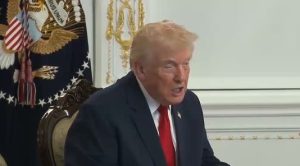
Trump Zelenskyy peace deal talks at Mar-a-Lago signal progress but expose hard truths on Donbas (Image The White House)
As Donald Trump claims 90% convergence on a 20-point peace plan with Kyiv, territorial fault lines in Donbas and Europe’s security burden loom large.
By TRH Foreign Affairs Desk
New Delhi, December 29, 2025 — The optics were deliberate. The messaging was unmistakable. At Mar-a-Lago, far from the conventional corridors of Washington diplomacy, US President Donald Trump hosted Ukrainian President Volodymyr Zelenskyy. Both sides described the meeting as a substantive. Discussion went on for nearly two-and-a-half-hour on ending the war in Ukraine. Trump’s verdict was emphatic: there are “the makings of a deal.”
Yet beneath the optimism lies a fragile equation. Trump’s assertion that Kyiv and Washington are “90% agreed” on a 20-point peace plan underscores real momentum. Zelenskyy’s emphasis on security guarantees suggests Ukraine is no longer negotiating abstract principles but hard commitments—who protects Ukraine, how, and at what cost. Trump’s answer, however, signals a strategic pivot: Europe, he said, will “take over a big part of it.”
That statement alone reshapes the post-war security architecture. For years, European leaders have rhetorically backed Ukraine while leaning heavily on US military and financial muscle.
Trump’s approach appears transactional but consistent—Washington will broker, Europe will shoulder.
The real test, though, lies in geography. Donbas remains, in Trump’s words, a “very tough question.” His blunt acknowledgment that “some of that land has been taken, and some of that land is maybe up for grabs” marks a departure from the absolutist language that has dominated Western discourse. It is also where peace plans historically falter. Territorial compromise may be pragmatic, but it is politically radioactive for Kyiv and morally unsettling for Europe.
Trump’s confidence that Vladimir Putin is serious about peace—“I think they both are”—will be greeted with scepticism in many capitals, especially after fresh Russian strikes on Kyiv. Still, Trump’s argument is brutally simple: too many people are dying, and endless war is not a strategy.
If peace comes “in a few weeks,” as Trump suggests, it will not be because the questions were easy—but because the costs of avoiding them finally outweighed the risks of confronting them.
Follow The Raisina Hills on WhatsApp, Instagram, YouTube, Facebook, and LinkedIn




About The Author