


By RAVI SHANKER KAPOOR
Trump Must Beware Tehran’s Delaying Tactics — And Pakistan’s Role in Them
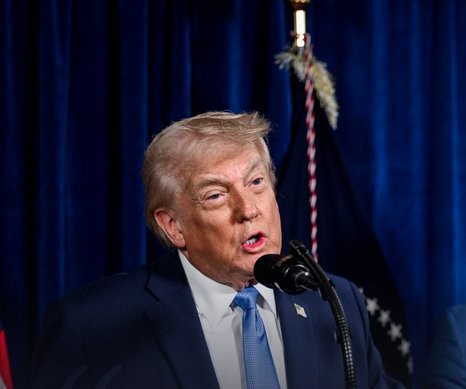
New Delhi, June 14, 2026 — Suspense over the US-Iran memorandum of understanding (MoU) does not seem to be ending, even though US President Donald Trump says it is scheduled to be signed on Sunday. Predictably, the Islamic Revolutionary Guard Corps (IRGC), the hardline force that calls the shots in Iran, says “the memorandum has not yet been finalized.” This is typical of the clerical regime’s dilatory tactics, which the Trump administration should be wary of.
CNN quoted a US official as saying that if the MoU is signed, it would kick off a new 60-day period of negotiations on the agreement. This means that the mullahs in Tehran could get another two months to discuss the delivery of nuclear material to the United States or any other party approved by it.
It remains to be seen whether the MoU is signed in the first place. If that happens, it seems highly unlikely that the IRGC and the ayatollahs will genuinely agree to abandon their nuclear programme. For the clerical regime, the projection of power and ideological influence has long been central to its identity and strategic outlook.
Trump, in alliance with Israel, attacked Iran because he believes Tehran poses a grave threat to regional and global security. The combination of Trump and Israeli Prime Minister Benjamin Netanyahu has proved to be a formidable challenge for the Iranian regime. Supporters of this approach argue that both leaders have been willing to confront Tehran more directly than many of their predecessors.
Yet Trump appears to have been blindsided by developments closer to home. In January, Pakistan signed an MoU with a firm linked to World Liberty Financial, the crypto business that has ties to Trump’s family. The agreement aims to “explore innovation in digital finance, particularly the use of stablecoins for cross-border transactions.”
World Liberty Financial co-founder Zachary Witkoff, son of Trump’s special envoy Steve Witkoff, signed the deal with Pakistan’s Finance Minister Muhammad Aurangzeb. According to Politico, the agreement followed roughly a year of discussions between individuals connected to Donald Trump Jr. and Pakistani officials. Among them was Texas investor Gentry Beach, a former close friend of Donald Trump Jr., who travelled to Pakistan in January 2025 and met Prime Minister Shehbaz Sharif and senior government officials.
White House spokesperson Anna Kelly has downplayed these dealings, asserting: “Pakistan has been an important partner countering ISIS-K since the start of this administration.” She added: “President Trump’s assets are managed in a trust managed by his children, and all of his actions are guided by what is best for the American people—POLITICO’s insinuations of otherwise are a false, sloppy innuendo.”
That may be true, but the dealings nevertheless raise questions about potential conflicts of interest. Does President Trump’s newfound soft corner for Pakistan, a state long accused of tolerating or enabling jihadist networks, have anything to do with its ties to his family and associates? Trump rejected military aid to Pakistan during his first term, arguing that Islamabad was not doing enough to combat terrorism. Pakistan has not fundamentally changed since then, so why has Washington’s posture?
Pakistan has recently positioned itself as a peacemaker, claiming to be helping broker understanding between the belligerents. But has it been an honest broker, as Germany under Otto von Bismarck sought to be during the Congress of Berlin in 1878? That appears doubtful. There is a distinct possibility that Pakistan may have helped prolong negotiations, allowing Tehran additional time to manoeuvre.
There is also the possibility that even after signing an MoU, Iran could delay the transfer of nuclear material or implementation of key commitments. Tehran may seek to frustrate the Trump administration and test the patience of its MAGA support base in the hope of weakening American resolve.
Iranian commanders understand that, despite their rhetoric, they are no match militarily for the combined strength of the United States and Israel. Recent military operations demonstrated the vulnerability of Iran’s command structure and strategic assets.
Pakistan could play a role in facilitating further delays. Therefore, the United States must approach any peace agreement with extreme caution. The peace quagmire can be every bit as dangerous as the war quagmire.
(This is an opinion piece. Views expressed are that of the author’s. Article brought in association with The Hindu Chronicle.)
Regime Change: The Trump Book That Even Trump Was Waiting For — With Dread
Follow The Raisina Hills on WhatsApp, Instagram, YouTube, Facebook, and LinkedIn




