Trump 2.0’s China Military Report Signs Calm with Loaded Guns

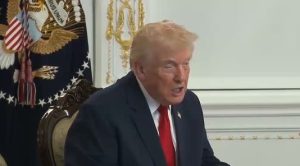
US President Donald Trump with Chinese President Xi Jinping. (Image video grab)
The Pentagon’s latest China report sounds conciliatory, but beneath the diplomatic language lies the same strategic verdict: Beijing remains the central threat to US security.
By TRH Foreign Affairs Desk
New Delhi, December 24, 2025 — Trump 2.0’s first annual US Department of Defense report on China has landed—and its tone is striking. Gone is the sharp-edged rhetoric of “systemic rivalry.” In its place is an unusually soothing preface that speaks of stronger US–China relations, expanded military-to-military communication, de-escalation, and “peaceful intentions.” The language is unmistakably political, clearly designed to signal reassurance to Beijing.
Yet this softness should not be mistaken for strategic retreat.
Behind the conciliatory phrasing lies a familiar and unchanged assessment: China is the pacing threat to American power in the Indo-Pacific. The report’s diplomatic overture sits uneasily alongside the hard realities of force posture, deterrence planning, and alliance strengthening that continue uninterrupted.
This contradiction is best understood in the context of the US National Security Strategy, which—under both Democratic and Republican administrations—has consistently named China as the only power with the intent and capability to reshape the international order. That document, still operative, identifies Beijing’s military modernisation, coercive diplomacy, and expansionist behaviour as long-term dangers to US interests and allies.
The new Pentagon language reframes, rather than reverses, this assessment. Washington now insists it does not seek to “strangle, dominate, or humiliate” China—phrases carefully chosen to counter Beijing’s long-running grievance narrative. But the core objective remains denial: preventing any single power from dominating the Indo-Pacific.
The emphasis on deterrence “through strength, not confrontation” is a familiar American formula. It allows the US to keep expanding naval presence, missile defence, and alliance integration with Japan, Australia, India, and the Philippines—while claiming the moral high ground of restraint.
In effect, Trump 2.0 is attempting a dual-track strategy: de-risk rhetoric, not readiness. Dialogue without dilution. Peaceful language paired with overwhelming force.
Beijing may welcome the softer tone. But it will read the deployments, budgets, and war-gaming far more carefully than the words.
China’s ‘Peaceful Rise’? A Timeline Written in Blood and Bullying
Follow The Raisina Hills on WhatsApp, Instagram, YouTube, Facebook, and LinkedIn




About The Author