Tax Tightens, Capital Pauses: Tiger Global Case and Startups
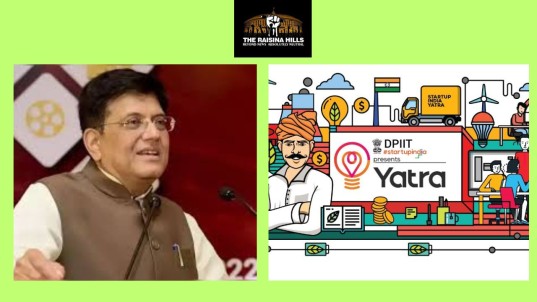
Union Minister Piyush Goyal & Indian startups ! (Image credit X.com)
The Tiger Global tax case impact on startups is forcing investors to reprice risk, rethink exits, and quietly mark down deal valuations
By P. SESH KUMAR
New Delhi, January 17, 2026 — The government’s carefully calibrated move to reopen assessment proceedings against Tiger Global following the Supreme Court’s Flipkart ruling has sent a quiet but unmistakable ripple through India’s start-up and private equity ecosystem.
This is, not forgetting, according to many international investment watchers, the inevitable and undeniable adverse outlook for and consequential impact on external foreign investment climate. Some tax officers may like to call it a favourite ‘bogey’ invented by such experts. It is not the reopening itself that worries investors—mature markets reopen cases all the time—but the signal it sends in a landscape where deal valuations, exit assumptions, and fund models are built on predictability rather than post-facto reinterpretation.
According to Mint, the Centre is proceeding with caution, conscious of the reputational landmines that accompany high-profile tax disputes involving foreign investors, even as it seeks to operationalise the Supreme Court’s verdict.
That caution itself tells a story. It reflects an awareness that the Tiger Global episode does not exist in isolation—it sits at the intersection of India’s ambition to be a start-up powerhouse and its parallel determination to shut the door on treaty-shopping structures.
For India’s start-up ecosystem, the anxiety begins at the valuation table. Venture capital and private equity investments are priced not merely on growth projections but on exit certainty. The Walmart–Flipkart deal of 2018, which triggered the Tiger Global tax dispute, was long treated as a textbook example of a clean offshore exit. When the Supreme Court later held that the Mauritius route was effectively a tax-avoidance conduit, it unsettled a foundational assumption: that treaty-compliant exits would remain insulated from retrospective scrutiny. The Economic Times captured the market’s unease bluntly, noting that the ruling could force global funds to reassess how India exits are structured and priced.
The immediate consequence is not an exodus of capital but a recalibration of risk. Funds are beginning to factor in tax litigation risk premiums into their India models. That inevitably pushes valuations down, particularly at later stages where exits—IPOs or strategic sales—are central to the investment thesis. In a competitive funding environment, this hurts founders first. Lower valuations mean greater dilution, tougher terms, and a higher bar for follow-on funding. Ironically, the very start-ups India wants to nurture end up bearing the indirect cost of tax uncertainty aimed at global investors.
The reopening of the Tiger Global assessment sharpens this concern. Even though the government appears to have signalled that proceedings may be stayed if appeals are filed, the message to dealmakers is unmistakable: no exit is ever truly “settled” until the tax dust has fully settled. Business Standard highlighted that the Supreme Court’s reasoning effectively weakens the comfort earlier drawn from Tax Residency Certificates, making substance-over-form analysis a live risk even years after a transaction
This has structural implications for how foreign funds engage with India. One visible shift is towards onshore simplification. Funds are increasingly asking whether the complexity of multi-jurisdictional holding structures is worth the potential exposure. Some may choose direct India vehicles despite higher headline tax rates, simply to buy certainty. Others may demand indemnities, escrow arrangements, or tax gross-up clauses from founders and promoters—costs that were rarely discussed so openly a decade ago.
There is also a chilling effect on the “big exit narrative” that fuels start-up optimism. Flipkart was not just a deal; it was a signal that India could produce global-scale exits. When such landmark exits later become tax cautionary tales, the psychological impact travels faster than any legal clarification. LiveLaw’s sharp headline—calling the transaction “designed for tax avoidance”—may play well in courtrooms, but in investment committees it translates into a single question: Could this happen to us too? Would this not become a ‘precedent’?
To be fair, the government’s present restraint matters. Mint notes that authorities are deliberately avoiding aggressive enforcement optics, aware of India’s post-Vodafone scars and the explicit political commitment made in 2021 to end retrospective tax adventurism. That restraint could yet soften market reactions, especially if future assessments are handled transparently and resolved within predictable timelines. But restraint in process cannot fully compensate for ambiguity in principle.
The larger question for the start-up ecosystem is whether India can clearly separate abusive treaty shopping from legitimate reliance on existing law. Without that clarity, every successful exit risks being re-examined through the lens of intent rather than rules. Over time, that nudges capital towards jurisdictions where exits are boring—and boring, in tax terms, is a virtue.
The Tiger Global reopening thus becomes more than a tax story. It is a stress test of India’s promise that it can be both a tough tax enforcer and a safe long-term investment destination. If the balance tilts too far towards suspicion, valuations will quietly adjust downward and capital will quietly price in delay and dispute. No press release will announce that shift-but founders will feel it term sheet by term sheet.
In the end, India’s start-up success depends not just on innovation and scale, but on trust in the system that governs success. The Tiger Global chapter has not closed yet. How the government handles this next phase will determine whether it becomes a footnote in tax reform-or a cautionary legend retold in every boardroom discussing an India exit.
(This is an opinion piece. Views expressed are author’s own)
Need to De-risk Investment in Startups: Principal Scientific Advisor
Follow The Raisina Hills on WhatsApp, Instagram, YouTube, Facebook, and LinkedIn




About The Author