Substantive Motion Against Rahul: Showdown or Overreach?
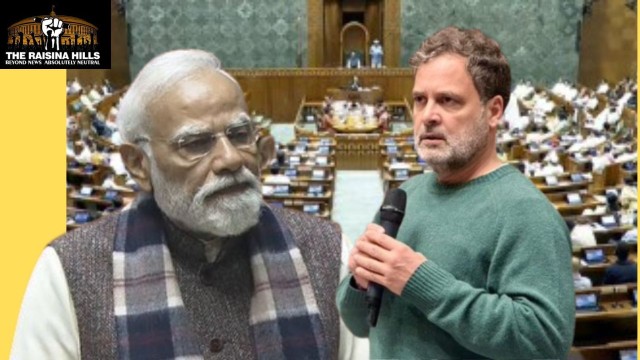
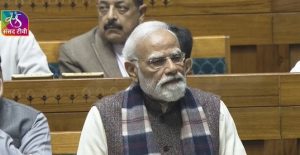
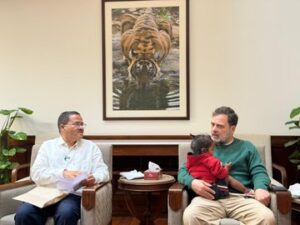
Prime Minister Narendra Modi and loP Rahul Gandhi. (Image X.com)
As BJP MP Nishikant Dubey Moves Action, The Raisina Hills’ Manish Anand Warns of Legal Replay and Political Risk
By TRH Political Desk
New Delhi, February 12, 2026 — As the first part of Parliament’s Budget Session edges toward adjournment, a dramatic twist has reshaped the political narrative. BJP MP Nishikant Dubey has moved a Substantive Motion against Rahul Gandhi, seeking action that could potentially bar the Congress leader Rahul Gandhi from Lok Sabha membership.
In a special monologue on The Raisina Hills, Manish Anand, a senior political commentator, said: “If the Speaker admits this substantive motion, it opens the door for debate and voting. But the idea of a lifetime ban from the Lok Sabha itself raises constitutional and procedural questions, because a Lok Sabha term is inherently limited to five years.”
Nearly three and a half years remain in the current House. The memory of 2023–24 is still fresh, when Rahul Gandhi’s membership was terminated following a lower court conviction — only to be restored by the Supreme Court. The judiciary had intervened decisively.
“If a similar process unfolds again and the motion results in disqualification, the matter will inevitably return to the courts — possibly all the way to the Supreme Court,” Anand noted.
What Is a Substantive Motion?
Unlike a routine motion, a substantive motion can initiate serious disciplinary or privilege proceedings. Once admitted by the Speaker, it may lead to referral to a committee and eventual voting.
The political timing is significant.
The Opposition — barring Trinamool Congress — has already moved a no-confidence motion against Lok Sabha Speaker Om Birla. This is only the fourth such attempt in parliamentary history.
“There is also a possibility of political bargaining,” Anand observed. He further stated that “if the Opposition withdraws its no-confidence motion and the BJP side softens its push against Rahul Gandhi, a middle path may emerge.”
The Political Risks
In 2024, after Rahul Gandhi’s disqualification and reinstatement, Congress doubled its Lok Sabha tally to 99 seats. The episode arguably galvanized Opposition ranks.
“If you attempt to silence opposition voices by targeting their membership, it may bring short-term applause — but long-term political costs cannot be ruled out,” Anand cautioned.
The controversy stems from Rahul Gandhi’s references in the House to an unpublished manuscript linked to former Army Chief Gen. Manoj Mukund Naravane and the Ladakh standoff. The publisher has termed the book “unpublished,” raising procedural concerns over citation authenticity.
“If there has been a lapse in referencing unpublished material, clarification must come from Rahul Gandhi himself,” Anand said. “The issue is serious and deserves transparency, not theatrics,” he added.
A Familiar Pattern
The Modi era has seen repeated flashpoints between Treasury and Opposition benches. Parliament disruptions, legal recourse and narrative battles have become cyclical.
Whether this substantive motion becomes a constitutional moment or another political standoff depends on the choices made in the coming days.
“The House may vote. The courts may review. The voters will remember,” added Anand.
(This is an opinion piece. Views expressed belong to Manish Anand.)
India-US Trade Deal: Modi Faces Heartburn in Core Support Base
Follow The Raisina Hills on WhatsApp, Instagram, YouTube, Facebook, and LinkedIn




About The Author