States’ Finances: Freebies, Fiscal Folly, and the Borrowed Future
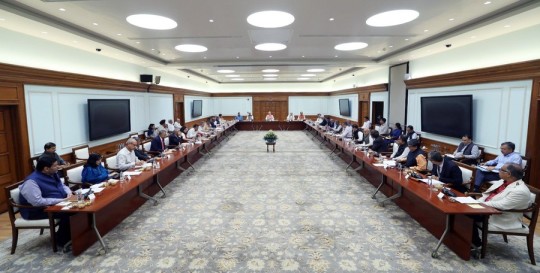
Prime Minister Narendra Modi chaired a meeting to discuss the roadmap for Next-Generation Reforms! (Image Narendra Modi, X)
Who Will Bell the Cat? Why Fiscal Prudence Must Replace Freebies for India’s Prosperity, as CAG Reports Reveal Deepening Distress.
By P SESH KUMAR
NEW DELHI, September 30, 2025 — Indian democracy is slipping into a fiscal trap of its own making. States across the political spectrum are showering voters with subsidies, cash transfers, and giveaways that drain treasuries but fatten ballot boxes.
Voters reward the largesse, rival parties up the ante, and the spiral tightens. This is no longer a quirk of a few states; it is a structural feature of India’s politics.
The Centre, once the stern referee, has joined the game with its own arsenal of subsidies, loan waivers, and cash schemes. The result is predictable: deficits financed by rising borrowings, mounting interest payments, and shrinking fiscal room.
The CAG’s decadal study and AJNIFM’s PFPI have already exposed the rot-revenue deficits entrenched, capital outlays cannibalised, and contingent liabilities ballooning. The question is not whether the cat needs to be belled, but whether anyone has the political courage to do it.
The Vicious Circle of Freebies
The language of politics today is the language of welfare promises. In Tamil Nadu it is free electricity and rice; in Karnataka, the five guarantees; in Delhi, water and power subsidies; in Telangana and Andhra Pradesh, cash transfers and loan waivers; in Maharashtra, the Mazi Ladaki Bahin Yojana.
Punjab normalised universal subsidies long ago. Even Gujarat and Uttar Pradesh, long thought to be more restrained, have built competitive giveaways into their budgets.
This is not hidden from either bureaucrats or politicians. Finance departments warn of fiscal stress, but cabinets see electoral dividends. Voters, often struggling with low incomes and weak social safety nets, embrace the immediate benefit and return the party to power.
Rivals, fearing electoral wipe-out, promise even more. The result is a political economy that values short-term electoral gain over long-term sustainability.
The Centre, once the enforcer of fiscal discipline, has been complicit: from the farm loan waivers of the 2000s to the PM-Kisan cash transfers and free food grain extensions during COVID-19, New Delhi has embraced the same populist path. India is now in a vicious circle where no party can afford to be the first to step back.
Uttar Pradesh Grabs Fiscal Headline Comfort and Hides Fragility
Who Pays the Bill? Borrowed Time, Borrowed Money
The deficits created by these schemes are not funded by magic. They are funded by borrowings. States borrow through market loans, special purpose vehicles, and guarantees to state enterprises.
The Centre borrows through treasury bills, dated securities, and small savings funds. In 2024–25, India’s total public debt-Centre and states combined-is projected to be close to 82 percent of GDP. Interest payments now consume the single largest share of central revenue, upwards of 24 percent, while in states like Punjab and Andhra Pradesh they swallow over 15 percent of their receipts.
Servicing this mountain of debt is the quiet killer. Every new loan brings with it a future obligation of interest and repayment. Already, more than half of Maharashtra’s debt is due before 2030, Karnataka’s primary deficit is rising, and Andhra Pradesh is rolling over loans just to stay afloat.
States like Kerala and West Bengal are devoting so much to salaries, pensions, and interest that little remains for discretionary development spending.
The Reserve Bank of India, acting as debt manager for both Centre and states, has so far been generous in ensuring smooth borrowing programmes. But generosity has limits.
If global interest rates harden or domestic inflation resurges, the cost of rolling over these loans will rise sharply. Unlike in the past, India’s states cannot indefinitely bank on low rates or perpetual rollover.
Why CAG and PFPI Still Matter
Skeptics argue that policymakers already know all this. True-but what the CAG’s decadal report and the AJNIFM’s PFPI bring to the table is exposure. They freeze the arithmetic in hard numbers, they compare one state against another, and they show the trajectory of decline.
When Karnataka or Maharashtra are forced to see themselves ranked alongside Punjab or Andhra Pradesh, the reputational damage is harder to spin. For voters too, these reports pierce the fog of political rhetoric, providing a clear sense that the freebies are not free, they are borrowed.
Embrace Transparency in Disclosures
The only escape from this spiral is political courage, and courage rarely comes cheap. In the short run, governments must at least publish transparent statements of guarantees, off-budget liabilities, and debt redemption calendars. That sunlight alone will force more responsible choices.
In the medium term, welfare schemes must be rationalised-targeting the needy rather than universalising benefits, linking transfers to outcomes in nutrition, education, or jobs, and phasing out those that are fiscally untenable.
In the long run, India must rediscover the value of fiscal credibility. States that once built their reputations on discipline-Tamil Nadu in the 1990s, Karnataka in the 2000s, Maharashtra for decades-must recognise that investment, growth, and jobs are worth more politically than endless doles.
The central government must also lead by example. It cannot sermonise about “revdi culture” while handing out its own populist subsidies. Reform must begin at the top: a credible medium-term fiscal strategy, tighter FRBM rules with independent oversight, and stronger incentives for states to prioritise capital investment over consumption.
Lessons learnt
India today is living on borrowed time and borrowed money. Freebies have become the coin of electoral politics, and deficits are being funded by a rising mountain of debt. Interest payments now crowd out development, but political parties have little incentive to change course. Voters reward the giveaways, and rivals promise even more. The CAG and PFPI matter because they strip away excuses and expose the arithmetic.
The real question is who will bell the cat-who will be the first government to tell voters that fiscal prudence, not endless freebies, is the path to prosperity. Until that happens, India’s fiscal story will remain one of borrowed futures and narrowing choices.
(This is an opinion piece, and views expressed are those of the author only)
Follow The Raisina Hills on WhatsApp, Instagram, YouTube, Facebook, and LinkedIn




About The Author