Silver’s Violent Crash Has Traders Asking: Was It Engineered?
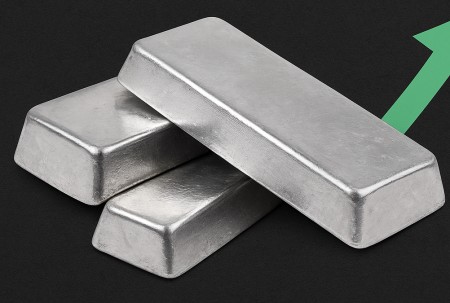
Silver rallies extend to days leading to end of 2025!(Image TRH)
From COMEX delivery data to JPM’s perfectly timed exit, market voices warn the biggest liquidity swing in history may not have been an accident
By TRH Business Desk
Mumbai, January 31, 2026 — When silver collapsed in a single, brutal move, markets were told it was just “volatility.” But the data—and the timing—are forcing traders to ask a darker question: was this a manufactured liquidity event?
Macro commentator Helin Ulker called it “the biggest liquidity swing we’ve seen in human history,” executed, in her words, like a classic pump-and-dump. That may sound incendiary. But a growing body of circumstantial evidence suggests the move was anything but random.
Consider the COMEX data.
According to market analyst JustDario, 2,514 February 2026 silver futures contracts were issued delivery notices—and every single one was accepted immediately. That alone signals unusually strong physical demand at precisely the moment paper prices collapsed.
More striking is what happened on the other side of the trade.
COMEX reports show JPMorgan closed its silver short positions almost exactly at the bottom of the crash. From that point onward, prices began stabilising and rebounding. Traders insist this was no coincidence. As JustDario put it bluntly: “This isn’t conspiracy theory. This is proof the whole Friday crash was planned.”
No single data point proves intent. But markets don’t move in isolation—and this wasn’t just a Western paper-market event.
The day after gold and silver prices imploded, China’s Shenzhen Shuibei Gold Market was packed. According to David Lee, physical buyers rushed in—but pricing exposed a widening fracture between paper and physical markets.
Retail gold was being sold at SGE+ prices equivalent to $5,640 for gold and $136.8 for silver, while buybacks tracked far lower global prices—$4,827 for gold and $91.6 for silver. In other words, physical metal was commanding a massive premium even as futures screamed “panic.”
This divergence matters. Because it suggests price discovery is no longer happening where most traders think it is.
Statistically, the move itself was extreme. Portfolio manager Kim Benni notes in a post on X that since 1970, there have been only 25 instances where silver fell more than five standard deviations in a single day. The historical aftermath is mixed—but with one terrifying outlier: October 2008, when forced liquidations triggered systemic stress.
That comparison raises the stakes.
Microeconomist Philip Pilkington adds crucial context. “The last time we saw a collapse in silver like this was in 1980,” he noted, when the Hunt brothers were forced to liquidate after effectively cornering the market. His conclusion is chilling: you don’t get a 30%+ silver collapse without a de facto monopoly player. Retail traders, hedge funds—even large CTAs—simply lack the balance sheet.
Which brings the conversation full circle.
If silver’s crash required a dominant player, and if that player exited shorts at the exact bottom, and if physical demand surged immediately afterward—then the burden of explanation now lies with the market’s gatekeepers.
This does not mean illegality. But it does mean structure matters.
In today’s markets, liquidity events are power events. Those who control leverage, clearing, and delivery timing can shape outcomes without ever breaking a rule—only exploiting asymmetry.
Silver may yet recover. Or it may fracture further between paper and physical pricing. But one thing is clear: traders are no longer debating whether something strange happened.
They are debating who benefits when price collapses create instant, forced sellers.
And that debate isn’t going away.
Gold & Silver Rally Sparks Smart Hedging Play: Lock The Gains
Follow The Raisina Hills on WhatsApp, Instagram, YouTube, Facebook, and LinkedIn




About The Author