‘Shaksgam Valley Is Ours’: MEA Warns China and Pakistan
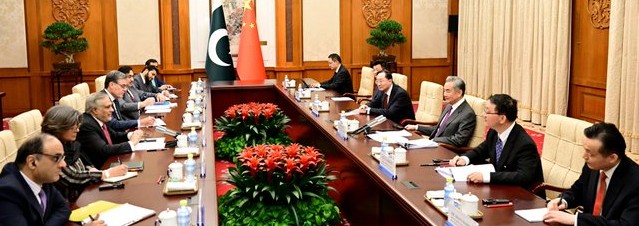
China FM Wang Yi at the Seventh Round of China-Pakistan FMs’ Strategic Dialogue (China MFA on X)
MEA spokesperson Randhir Jaiswal rejects Chinese infrastructure activity in Shaksgam Valley, calling CPEC illegal and reaffirming India’s sovereign claim over Jammu & Kashmir and Ladakh.
By TRH Foreign Affairs Desk
New Delhi, January 9, 2026 — India has issued one of its sharpest and most unambiguous warnings yet to China and Pakistan over infrastructure activity in the Shaksgam Valley and along the China–Pakistan Economic Corridor (CPEC)—a message that goes beyond diplomatic protest and signals strategic resolve.
Speaking on Friday, MEA spokesperson Randhir Jaiswal made it clear that Shaksgam Valley is Indian territory, and New Delhi has never recognised the so-called 1963 China–Pakistan boundary agreement, under which Pakistan illegally ceded the region to China. “We have consistently maintained that the agreement is illegal and invalid,” Jaiswal said, reaffirming a position India has held for decades.
At the heart of the dispute lies CPEC, Beijing’s flagship Belt and Road project, which India has repeatedly opposed. The reason is simple but fundamental: CPEC passes through Indian territory under Pakistan’s forcible and illegal occupation. By pushing ahead with infrastructure and strategic projects in these areas, China is not just investing—it is attempting to alter the ground reality in disputed land, something New Delhi considers unacceptable.
Jaiswal underscored that the entire Union Territories of Jammu & Kashmir and Ladakh are an integral and inalienable part of India—a position that has been “clearly conveyed to Pakistani and Chinese authorities several times.” India, he said, has consistently protested with the Chinese side against activities in the Shaksgam Valley.
What makes this statement particularly significant is its closing note: India “reserves the right to take necessary measures to safeguard its interests.” In diplomatic language, this is a deliberate escalation—signalling that patience has limits.
As China deepens its strategic embrace with Pakistan, New Delhi is drawing firm boundaries. The message is unmistakable: economic corridors cannot be built on disputed sovereignty, and infrastructure cannot legitimise illegal occupation.
In an era of muscular geopolitics, India is asserting that territorial integrity is non-negotiable—and that red lines, once crossed, will have consequences.
Follow The Raisina Hills on WhatsApp, Instagram, YouTube, Facebook, and LinkedIn




About The Author