Science Was Meant to Free Us. Is Social Media Trapping Us?
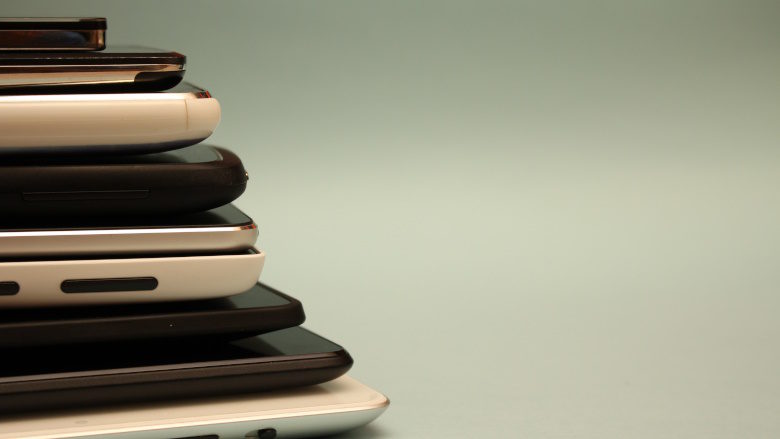
photo credit X @SecusitySoS
As dating apps decline, social media fatigue rises, and attention fragments, a deeper question confronts our hyper-connected age: have we lost control of the tools we created?
By NIRENDRA DEV
New Delhi, December 18, 2025 — Science is unquestionably good. It has liberated the human spirit, stretched imagination, and collapsed distance. But what happens when, in the age of social media, man and woman are forced into a daily struggle against the very technology meant to empower them?
Having travelled so far, we now seem unsure how to take corrective steps.
Consider the data—freely available on the internet itself. Tinder lost nearly 600,000 users in the UK between 2023 and 2024. Hinge and Bumble followed similar trajectories. Match Group’s valuation collapsed by nearly 80 per cent from its pandemic peak.
In 2024, The Economist asked bluntly: “Why have people fallen out of love with dating apps?”
Closer home, many are simply bored—if not exhausted—by Facebook and WhatsApp. The blue tick anxiety, the demand for instant replies, the needless follow-up calls—“Did you see my message?”—have turned everyday communication into a low-grade stress cycle. Mood spoilt, irritation amplified. It is happening in homes everywhere.
Once, warnings read “Smoking is injurious to health.” Today, we are far less certain how to label digital overexposure.
Social media began as a utopian experiment—billions sharing fragments of their lives, reconnecting across decades, discovering lost classmates, forming journalistic and intellectual communities. Journalism itself was reshaped; watches faded, cameras vanished, and mobile phones became everything.
But as The New Yorker recently observed, it is now difficult to believe the original promise ever fully made sense. What dominates today is an endless scroll of influencers, AI-generated content, war imagery, outrage cycles and unfiltered trolling.
Some politicians thrived in this ecosystem—Narendra Modi perhaps most strikingly—while others suffered. Manmohan Singh was reduced to memes. Rahul Gandhi’s political image took repeated digital hits. Atal Bihari Vajpayee once admitted the intoxicating pull of newspaper headlines. Social media magnified that instinct—for better or worse.
Even the Financial Times reports global social media use peaked in 2022 and fell sharply by 2024, especially among the young. Oversharing is now met with suspicion, not admiration.
Science remains good. But perhaps wisdom lies in recognising limits. As a desi neta once put it succinctly: “Ismein kya rakha hai?”
Whenever you turn a page in life, remember—someone, somewhere, has kept a copy.
(This is an opinion piece, and views expressed are those of the author only)
Mobile Addictions: ‘School Children Masturbating in Exam Hall…’
Follow The Raisina Hills on WhatsApp, Instagram, YouTube, Facebook, and LinkedIn




About The Author