SC Stops UGC Rule—A Caste Line Too Far in India’s Universities
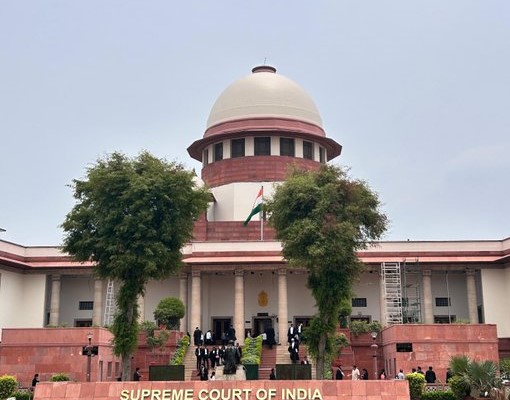
Image credit X.com
Ex-IPS officer Yashovardhan Azad says the Supreme Court UGC regulations stay exposes how caste vote-bank politics has penetrated higher education.
By AMIT KUMAR
New Delhi, January 30, 2026 — The Supreme Court’s decision to stay Article 3(C) of the UGC Regulations, 2026 may well be remembered as a moment when constitutional reason intervened before India’s universities slid into an openly segregated future.
Former IPS officer Yashovardhan Azad, reacting on X, called the provision “controversial and bizarre”—and his words resonate far beyond bureaucratic critique. At stake was not merely a regulatory clause, but the idea of whether India’s higher education system can survive without being reduced to a census of castes.
According to Azad, millions will thank the Supreme Court for stepping in where politics chose silence. That silence, he argues, is deliberate. With nearly 70 percent of the population classified as SC, ST, or OBC, political parties across the spectrum see caste not as a social challenge to be resolved, but as an electoral resource to be managed. The result is paralysis when divisive policies are framed—and applause when courts intervene.
The stayed provision, critics say, effectively excluded nearly 25 percent of the population from the officially recognised “victim group” within universities, creating a moral hierarchy among students and teachers. Azad’s question cuts deep: Can such a rule even be framed in a constitutional democracy? And more provocatively—are we drifting back to pre-Independence thinking, when identity determined entitlement?
He places the blame squarely on what he calls a “pliant” University Grants Commission—an ostensibly independent body “staffed by conformist academicians and overseen by a bureaucratic mindset.” In his view, the UGC’s attempt to hard-code caste distinctions into academic governance is not reform, but regression.
Azad’s critique widens into a damning diagnosis of Indian governance itself. Governments, he says, are now “by caste, for caste, and of caste—for votes.” Education, health, and the economy are all being permeated by identity-based regulation, not because it improves outcomes, but because it maximises political returns. Urban governance, despite being on the brink of collapse, sees no such urgency—because good governance does not translate into vote banks.
That leaves the judiciary as the last firewall. Courts are increasingly forced to issue directions on core aspects of governance, not by choice, but by vacuum. When elected governments cannot—or will not—draw ethical red lines, constitutional courts step in.
The stay on Article 3(C) is therefore more than a legal pause. It is a reminder that equality cannot be selectively engineered, and that universities cannot become laboratories for social division. As Azad bluntly puts it, India risks moving “100 years back” if caste continues to define policy rather than purpose.
For now, the Supreme Court has pressed pause. Whether politics learns anything before the next rulebook is written remains the larger, unsettling question.
(This is an opinion piece. Views expressed are author’s own.)
Follow The Raisina Hills on WhatsApp, Instagram, YouTube, Facebook, and LinkedIn




About The Author