Renaming Rights: Why VB-G RAM G Weakens MGNREGA’s Core
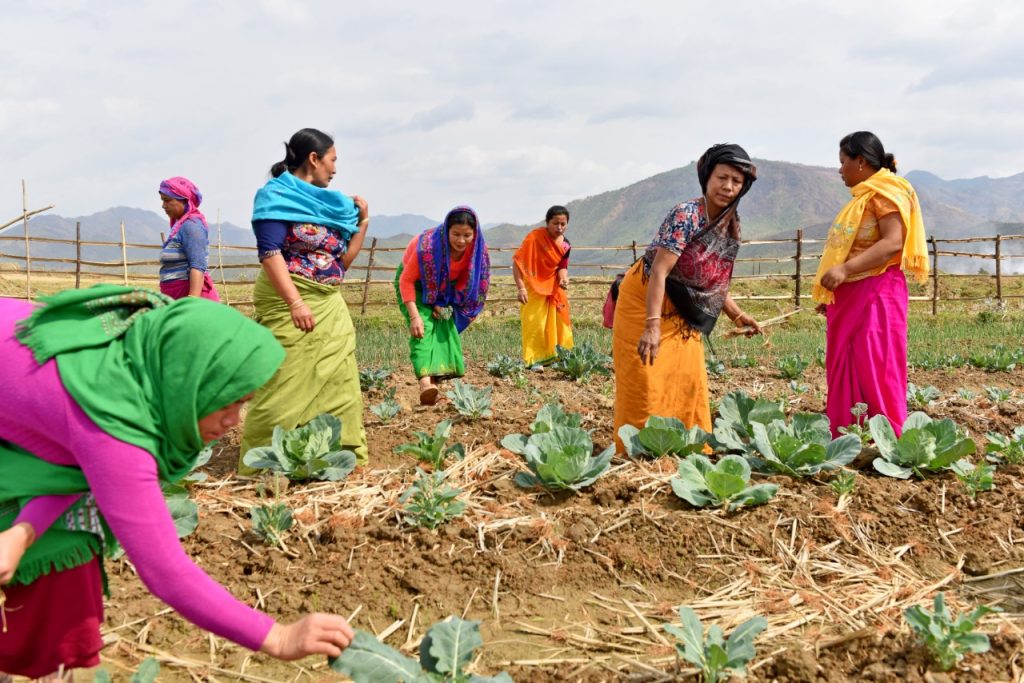
Photo credit Twitter Ministry of Rural Development
This note attempts to critically examine whether VB-G RAM G represents genuine course correction or merely a rebranding exercise that leaves the core delivery and accountability deficits of rural employment policy unresolved or inadequately addressed.
By P. SESH KUMAR
New Delhi, December 16, 2025 — The Government of India’s proposal to repeal the Mahatma Gandhi National Rural Employment Guarantee Act (MGNREGA) and replace it with the Viksit Bharat Guarantee for Rozgar and Ajeevika Mission (Gramin)-VB-G RAM G-has been projected as a reformist leap towards a modern, outcome-oriented rural employment framework aligned with Viksit Bharat 2047.
While the new framework promises expanded workdays, better asset convergence, and digital monitoring, it has simultaneously ignited sharp criticism: that it is politically motivated, fiscally regressive for states, cosmetically reformist, and structurally evasive of hard questions on independent evaluation and outcome measurement.
When MGNREGA was enacted in 2005, it was not merely another welfare scheme but a rights-based intervention, legally guaranteeing employment as a justiciable entitlement. Its moral architecture rested on three pillars: a demand-driven framework, near-total central funding, and statutory transparency mechanisms such as social audits. The inclusion of Mahatma Gandhi’s name may not have been ornamental; it symbolised dignity of labour, decentralisation, and state accountability to the rural poor.
The proposed transition to VB-G RAM G marks a philosophical and fiscal pivot. The government’s stated rationale rests on the need to modernise the programme, integrate it with infrastructure-led rural development, expand guaranteed workdays to 125, and align employment generation with durable asset creation such as water conservation, irrigation, and climate-resilient infrastructure. Digitisation, geo-tagging, and convergence with flagship schemes are offered as proof of improved governance intent.
However, the controversy surrounding the renaming cannot be brushed aside as sentimental politics. The removal of “Gandhi” from India’s largest rural employment guarantee is widely perceived as part of a broader ideological repositioning rather than a necessity dictated by administrative efficiency.
The criticism that this is “old wine in a new bottle” gains traction precisely because the substantive architecture of the scheme remains largely intact while its symbolic identity is radically altered.
More troubling than the symbolism is the shift in fiscal burden. The movement from a predominantly central sector framework to a centrally sponsored structure, with a 60:40 Centre-State funding ratio, effectively transfers financial stress to states already struggling with post-pandemic fiscal consolidation. Several states have publicly warned that this restructuring could force them to cap workdays, delay wage payments, or reduce coverage-not because demand has fallen, but because fiscal headroom has shrunk. A scheme meant to guarantee work risks becoming conditional on state solvency.
Equally concerning is the limited substantive change in how outcomes are defined and measured. While VB-G RAM G emphasises planning, convergence, and asset creation, it remains conspicuously silent on independent and effective outcome assessment. Monitoring continues to focus on expenditure, person-days generated, and assets created-metrics that measure activity, not impact.
The deeper questions remain unanswered: Have incomes stabilised? Has distress migration declined? Are assets durable and locally useful? Without rigorous answers, reform claims remain performative.
Should CAG Performance Audits Have Been Mandated as a Core Design Feature?
One of the most striking omissions in the proposed VB-G RAM G framework is the absence of a statutory mandate for periodic performance audits by the Comptroller and Auditor General of India (CAG). Given the scheme’s scale-absorbing hundreds of thousands of crores over two decades-this omission is not merely technical but systemic. Government audit purists may say that CAG alone has the statutory prerogative of deciding the manner, scope and extent of audit and its role should not be boxed into the statute of a centrally sponsored scheme.
But this argument would miss the wood for the trees. CAG could have been taken on board by Government through prior consultation and such audits incorporated into the scheme itself. Audit reports would continue to be placed in respective Legislatures including Parliament in the usual manner continuing the existing mechanism of Parliamentary financial accountability.
MGNREGA has been subjected to sporadic and infrequent performance audits by the CAG in the past, and these audits consistently exposed deep-rooted deficiencies: inflated person-days, delayed wage payments, weak asset quality, poor convergence outcomes, ghost beneficiaries, and ineffective grievance redressal. Yet these audits were episodic rather than institutionalised, often reactive rather than embedded into the scheme’s governance design.
VB-G RAM G presented a rare opportunity to correct this structural weakness by mandating CAG performance audits at fixed intervals-nationally and state-wise-with compulsory action-taken reports tabled before legislatures. Instead, the proposed framework appears to rely heavily on internal dashboards, administrative reviews, and technology-driven compliance monitoring, all of which are necessary but insufficient substitutes for independent constitutional oversight.
A programme that claims to be outcome-oriented but resists institutionalising independent outcome verification risks becoming self-referential. CAG performance audits, by contrast, examine economy, efficiency, and effectiveness-precisely the triad required to evaluate whether rural employment spending translates into real socio-economic outcomes.
Carbon Credit Trading: Blockchain Hype Can’t Mask Policy Blind
Have Lessons from Earlier CAG Audits Been Adequately Internalised?
The official narrative suggests that digitisation, geo-tagging, and direct benefit transfers couldchave addressed the systemic weaknesses flagged by earlier audits. This claim does not withstand closer scrutiny.
While technology has reduced certain forms of leakage, it has simultaneously introduced new exclusions-workers denied wages due to Aadhaar mismatches, delayed fund releases masked by digital approvals, and compliance-heavy systems that shift administrative risk onto beneficiaries.
Earlier CAG audits, however infrequent these were, repeatedly stressed that transparency tools without accountability enforcement merely repackage inefficiency in digital form.
Most importantly, past audit findings on outcome blindness-the inability of the system to distinguish between meaningful asset creation and ritualistic work execution-remain largely unaddressed. VB-G RAM G continues to prioritise inputs and outputs over impact. There is no clear framework for independent asset utility audits, post-completion evaluations, or socio-economic impact studies insulated from administrative influence.
In effect, lessons from earlier audits appear to have been selectively absorbed-those that improve optics and compliance metrics-while the harder recommendations on independent evaluation, accountability fixation, and legislative scrutiny have been quietly sidelined.
Move Beyond Symbolism and Cosmetic Reform
If VB-G RAM G is to be more than a rechristened legacy scheme, it must decisively move beyond symbolic and cosmetic reform. First, periodic CAG performance audits should be statutorily mandated, with fixed timelines and compulsory legislative follow-up.
Second, independent third-party outcome evaluations-separate from implementing ministries-must also be institutionalised to assess income stability, asset durability, and migration outcomes. Third, the funding architecture must be recalibrated to prevent states from becoming the weakest link in a nationally guaranteed entitlement.
Finally, transparency must evolve from digital compliance to democratic accountability, where performance failures trigger corrective action rather than narrative management.
A rural employment guarantee cannot survive on renaming exercises or dashboard optimism. Its credibility rests on whether it delivers predictable work, fair wages, and lasting assets to those who need it most.
Without embedding independent audit and outcome accountability at its core, VB-G RAM G risks becoming not a bold reform, but a missed opportunity.
(This is an opinion piece, and views expressed are those of the author only)
Why CAG Missed All-India Audit of Construction Workers’ Welfare
Follow The Raisina Hills on WhatsApp, Instagram, YouTube, Facebook, and LinkedIn




About The Author