Railways Budget: High-Speed Corridors Signal a Mobility Reset
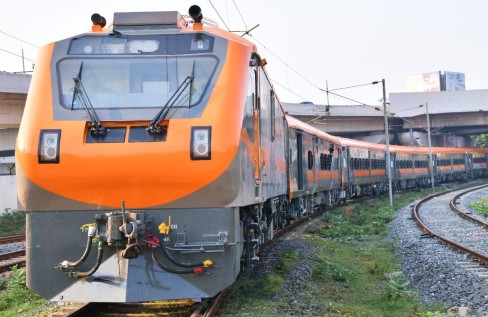
Amrit Bharat Express Train ! (Image Ministry of Railways)
As Sitharaman doubles down on rail-led growth, experts say the Budget positions Indian Railways as India’s core economic engine.
By AMIT KUMAR
New Delhi, February 1, 2026 — The Railways Budget 2026–27 marks one of the most ambitious investment cycles in the history of Indian Railways, reaffirming the sector’s central role in India’s infrastructure and economic strategy. With a record capital outlay and a strong emphasis on speed, safety and logistics, the Budget signals that railways will remain a key driver of growth rather than a supporting act.
Finance Minister Nirmala Sitharaman has proposed a capital expenditure of ₹2.78 lakh crore, up from ₹2.52 lakh crore last year, while the total outlay for the Railways Ministry stands at ₹2.93 lakh crore, the highest ever. According to railway expert Lalit Chandra Trivedi, the scale of investment is a “clear signal that the rail sector remains central to India’s infrastructure and economic strategy.”
A major highlight is the announcement of seven new high-speed rail corridors, including Mumbai–Pune, Delhi–Varanasi and Chennai–Bengaluru. These corridors are expected to cut travel time sharply and unlock new economic corridors across states. Trivedi in a note on LinkedIn stated that such projects are designed not only to improve mobility but also to “transform regional connectivity and investment potential.”
Beyond high-speed rail, the Budget focuses on comprehensive network upgrades—track doubling and quadrupling, flyovers, station redevelopment and modernisation of plants and workshops. The expansion of short-haul regional services, including 50 Namo Bharat EMUs operating at 130 km/h, reflects a push to strengthen commuter and inter-city travel.
Safety and future mobility form another pillar. Expanded deployment of the indigenous Kavach automatic train protection system and induction of next-generation rolling stock, including Vande Bharat Sleeper trains, underline a shift towards safer, modern rail operations.
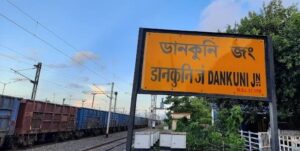
“On freight, new dedicated corridors such as Dankuni–Surat aim to boost logistics efficiency and export competitiveness. Railways is now a capex engine for India’s growth—driving connectivity, manufacturing demand, safety and sustainable mobility at scale,” added Trivedi.
Follow The Raisina Hills on WhatsApp, Instagram, YouTube, Facebook, and LinkedIn




About The Author