Power and Politics Converge for Modi Cabinet Reshuffle 2026
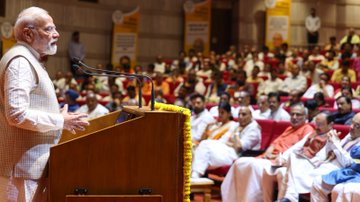
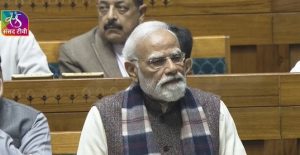
PM Narendra Modi addresses a BJP workshop! (Image X.com)
With 75 Rajya Sabha seats falling vacant, a new BJP president in place, and economic headwinds ahead, signs point to a decisive Modi cabinet reshuffle after the Budget Session
By TRH Political Desk
New Delhi, January 7, 2026 — One question is increasingly dominating Delhi’s political corridors: Will Prime Minister Narendra Modi reshuffle his cabinet in 2026? The short answer is—yes. The longer answer is more consequential, because this reshuffle may not be cosmetic. It could be structural.
“Several political, organisational, and economic forces are converging to make a cabinet reset not just likely, but inevitable. The only real debate is no longer if the reshuffle will happen—but when, how deep, and who it will redefine,” said Manish Anand in his remarks on the YouTube channel of The Raisina Hills.
Why 2026 is the midpoint moment
The year 2026 represents the mid-point of Narendra Modi’s third term. Historically, this is when strong prime ministers recalibrate—discarding underperformers, promoting execution-oriented ministers, and aligning governance with electoral and economic realities ahead.
What makes 2026 different is the scale of institutional churn already baked into the system, added Anand.
Nearly 75 Rajya Sabha seats will fall vacant during the year. A significant number of these belong to the BJP—and among those MPs are serving Union ministers, including senior figures such as Hardeep Singh Puri, whose term is ending. “This alone creates unavoidable pressure for re-induction, exits, and rebalancing,” noted Anand.
In parliamentary systems, said the political analyst, Rajya Sabha arithmetic is not procedural trivia—it shapes the cabinet.
The Nitin Nabin factor: Organisation precedes government
The reshuffle discussion cannot be separated from the appointment of Nitin Nabin as BJP’s working president. “His elevation has accelerated speculation of deeper organisational changes, with most political observers expecting him to be confirmed as full-time national president—possibly as early as January, or soon after the Budget Session,” added Anand.
Once a new BJP president is formally in place, tradition dictates that he forms his own national team of office-bearers. “That means churn at the top of the party—general secretaries, secretaries, and vice presidents,” stressed.
At just 45 years of age, Nitin Nabin is expected to favour a younger leadership profile, likely between the 40–55 age bracket, showing a generational shift within the party organisation. “This matters because BJP’s political model thrives on constant talent circulation between organisation and government,” added Anand.
A new party team, said Anand, inevitably triggers a cabinet reshuffle—to redeploy talent, manage ambitions, and synchronise governance with electoral strategy.
Elections, alliances, and a tough 2026 calendar
The BJP is also staring at a packed electoral calendar in 2026. Key states such as West Bengal, Tamil Nadu, Kerala, Assam, and Puducherry are in play. Nitin Nabin has already begun ground coordination—meeting allies like N. Chandrababu Naidu in Andhra Pradesh and strengthening alliance mechanisms.
“This organisational mobilisation suggests that the BJP is preparing not just for elections, but for course correction where required. Cabinet ministers with weak delivery records or limited political utility in these regions could find themselves sidelined,” added Anand.
Age, performance, and the quiet ticking clock
Another unspoken—but very real—factor is age. Several senior ministers are now above 70. Apart from the Prime Minister himself and a few strategic exceptions—such as those in the Cabinet Committee on Security—political chatter suggests that age, energy, and output will increasingly matter.
Names like Rajnath Singh, Hardeep Puri, Giriraj Singh, and others inevitably feature in this discussion. “While no decisions are public, the message from the top appears clear: governance performance will trump seniority,” added Anand.
Economy, geopolitics, and Modi’s return to reform mode
“Globally, 2025 has been a wake-up call. Strategic frictions with the United States, supply-chain uncertainties, and geopolitical realignments have underscored that India faces economic headwinds till at least 2029,” said Anand.
This reality is sharpening the Prime Minister’s focus on governance, reform velocity, and state capacity. “There is visible discomfort within the system about the long-term costs of revdi politics and welfare populism without productivity gains,” added Anand.
To accelerate reforms, the Prime Minister, said the analyst, will need fresh talent—ministers with domain expertise, execution skills, and administrative competence.
Rajya Sabha as the talent gateway
Here lies the biggest opportunity. Of the nearly 38–40 Rajya Sabha seats the BJP is expected to win in 2026, at least five to six could go to domain experts—professionals from economics, technology, governance, diplomacy, or business.
This is not unprecedented. Ministers with non-political backgrounds—especially in external affairs and technology-linked portfolios—have already demonstrated value.
The Rajya Sabha route allows the Prime Minister to inject competence without electoral constraints, strengthening governance while retaining political balance in the Lok Sabha.
When could the reshuffle happen?
All indicators point to a post-Budget window.
“Once the Budget is presented and Parliament breaks session—between March and May 2026—the political calendar offers the most viable opening for a cabinet reshuffle. It allows the government to reset without disrupting fiscal messaging or parliamentary workflow,” said Anand.
The bottom line
Put together—the Rajya Sabha vacancies, BJP’s organisational overhaul, electoral pressures, economic uncertainty, and Modi’s renewed reform focus—create a clear conclusion: A cabinet reshuffle in 2026 is not speculation. It is structural necessity.
“This will not be about optics. It will be about performance, preparation for 2029, and recalibrating power for governance outcomes,” added Anand.
Delhi is not asking whether change will come. “It is preparing for how sweeping that change will be,” said Anand.
(Manish Anand hosts discussions on politics and geopolitics on the YouTube channel of The Raisina Hills)
Suresh Kalmadi: Fungus of Corruption That Ate Political Credibility
Follow The Raisina Hills on WhatsApp, Instagram, YouTube, Facebook, and LinkedIn




About The Author