Pakistan’s Gen Z Time Bomb: Youth and Crisis Ahead
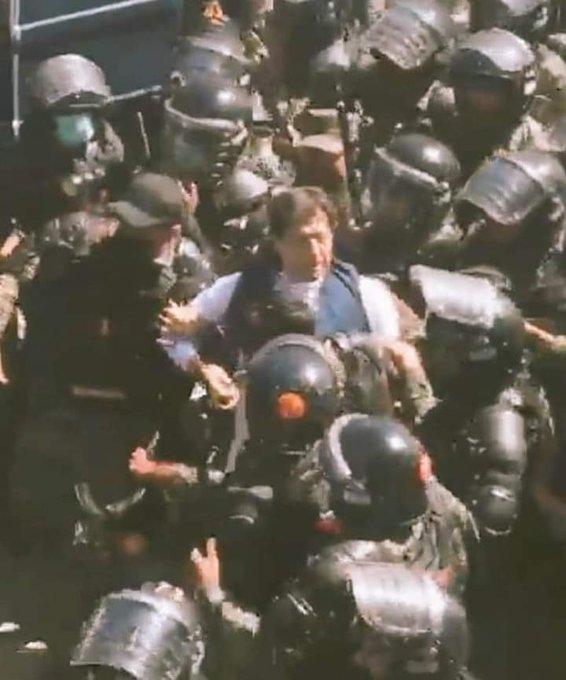
Photo credit Twitter @zartajgulwazir
Whether through Imran Khan’s banner or through a decentralized digital flashpoint, Pakistan’s Gen Z is approaching its breaking point.
By TRH Global Affairs Desk
NEW DELHI, September 25, 2025 — Analyst Derek Grossman offered a stark prediction in a comment to The Independent: Pakistan is the most obvious candidate in South Asia for a Gen Z uprising. The country, he argued, mirrors — and in some ways surpasses — the conditions that triggered mass youth-led mobilizations in Nepal, Bangladesh, and Sri Lanka.
With over 60% of Pakistan’s 240 million people under the age of 30, the generational math alone is combustible. This is a country where jobs are scarce, inflation is soaring, debt repayments dictate policy, and politics remains captive to a military establishment that has outlasted and outmaneuvered every civilian leader. For a digitally connected, economically frustrated, and politically disillusioned generation, the status quo looks less like stability and more like suffocation.
A region on fire — and Pakistan next in line
South Asia has seen this movie before. Nepal’s 2006 “People’s Movement” swept away monarchy through the sheer force of youth-led street protests. Bangladesh’s Shahbagh movement and later student uprisings rattled the political order, while Sri Lanka’s “Aragalaya” in 2022 forced the Rajapaksa dynasty from power amid an economic meltdown.
The pattern is striking: debt, corruption, elite capture, and an impatient young population collide to create movements that conventional political actors cannot control. Grossman’s warning suggests Pakistan is standing on that very fault line.
Imran Khan’s protests as a rehearsal
Pakistan already has a history of street power politics. Former Prime Minister Imran Khan turned protest into an art form. In 2014, he led months-long sit-ins in Islamabad, alleging vote rigging against Nawaz Sharif. Those protests blended spectacle, music, and political anger — drawing heavily from urban youth energized by Khan’s anti-corruption message.
The pattern repeated after his ouster in 2022 through a no-confidence vote. Khan rallied tens of thousands across major cities, clashing with police, defying bans, and harnessing social media live streams to keep momentum alive. His party, PTI, may have been battered by state crackdowns and mass arrests, but its ability to channel public anger — especially among young Pakistanis — remains unmatched.
Yet as powerful as Khan’s protests were, they were still personality-driven. A Gen Z uprising of the kind Grossman envisions could be very different: decentralized, leaderless, viral, and impossible to co-opt. Think Hong Kong’s umbrella movement, Colombo’s occupation of Galle Face Green, or the digital flash mobs of Bangkok.
Why Gen Z may be the tipping point
What makes Pakistan’s situation uniquely volatile is the generational gap. Gen Z Pakistanis have grown up entirely under the shadow of instability — US wars spilling over, terrorism, IMF bailouts, and political brinkmanship. Unlike their parents, they do not carry the same patience for elite bargains or military “guardianship.”
Economically, the numbers are grim. Inflation hovers above 20%, debt servicing eats up most of the budget, and foreign reserves remain precariously low. For a generation hustling through gig work, migration dreams, or chronic unemployment, there is little faith in promises of reform.
Digitally, Pakistan is plugged in. TikTok, Twitter, and Instagram have given young people a constant stream of global comparisons. They see how peers in Dhaka, Colombo, or Kathmandu forced accountability — and wonder why they cannot do the same in Lahore, Karachi, or Peshawar.
The military factor
No discussion of Pakistan’s political order is complete without its military. The Pakistan Army has long cast itself as the ultimate arbiter of national stability, dismissing politicians as corrupt and incompetent. But the younger generation increasingly views this dominance as part of the problem, not the solution.
Grossman’s warning is therefore not just about economic unrest but about a crisis of legitimacy. If young Pakistanis begin to see the military as the obstacle to their future, the very institution that has weathered decades of upheaval could face unprecedented dissent.
Beyond Khan, beyond politics
Perhaps the sharpest insight in Grossman’s argument is that the next Pakistani uprising may not need a political leader at all. Imran Khan may remain a lightning rod, but the demographic wave is larger than any one figure. This is not about PTI versus PML-N or Khan versus Sharif; it is about a generational demand for dignity, opportunity, and voice.
If that demand goes unmet, Pakistan risks joining the regional pattern where youth no longer wait for elections or parliaments but take to the streets. In an era of viral hashtags and mass mobilization apps, such a spark could spread faster than the state can contain.
A reckoning deferred, but not denied
For now, Pakistan’s rulers may believe they have bought time through IMF loans, repression of PTI, and elite bargains. But demography is destiny. With millions of restless young citizens confronting debt, inflation, and a political order that seems designed to exclude them, Grossman’s warning carries weight.
Whether through Imran Khan’s banner or through a decentralized digital flashpoint, Pakistan’s Gen Z is approaching its breaking point. And when it arrives, it will not only reshape Pakistan’s politics — it will test the resilience of South Asia’s most entrenched military state.
Follow The Raisina Hills on WhatsApp, Instagram, YouTube, Facebook, and LinkedIn




About The Author