


By TRH World Desk
Political analyst Michael Kugelman argues that while Pakistan shares many of the same grievances that stoked mass protests in neighbouring countries, repression, social fragmentation and the legacy of banned student unions have prevented a nationwide youth-led movement.
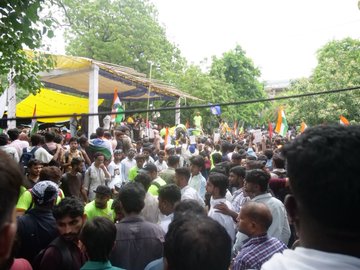
New Delhi, July 27, 2026 — As student-led protests in India forced the Narendra Modi government to concede several demands of the Cockroach Janata Party (CJP), and similar youth movements have reshaped politics in Bangladesh, Sri Lanka and Nepal in recent years, a key question is increasingly being asked: Why has Pakistan not witnessed a comparable nationwide youth uprising?
Geopolitical analyst Michael Kugelman attempted to answer that question in a detailed post on X, arguing that Pakistan possesses many of the same structural problems that have triggered mass movements elsewhere—but lacks the conditions necessary for those grievances to evolve into a unified national campaign.
According to Kugelman, Pakistan faces familiar challenges, including corruption, political repression, unemployment and growing public alienation. Yet, unlike neighbouring countries, these grievances have not translated into a broad-based youth movement demanding systemic political change.
He attributes one major reason to the country’s current political environment. Kugelman argues that Pakistan is experiencing one of its most restrictive political climates in recent years, making it extremely difficult for large-scale political mobilisation to take shape. Any attempt to organise nationwide protests, he suggests, would likely be disrupted by the country’s powerful security establishment before gaining momentum.
However, he cautions against interpreting the absence of a nationwide movement as a lack of activism.
Pakistan has a long history of organised resistance, from campaigns against military rule and the Lawyers’ Movement to farmers’ protests, the Pashtun Tahafuz Movement (PTM) and demonstrations led by Baloch activists. The issue, Kugelman argues, is that these movements largely operate in isolation rather than converging into a single national platform.
He points to Pakistan’s deep ethnic, regional and political divisions as a key obstacle to building a unified protest movement.
Another factor, often overlooked, is the legacy of former military ruler General Muhammad Zia-ul-Haq, who banned student unions during the 1980s. Although Pakistan has one of South Asia’s youngest populations, student organisations—the traditional engines of political mobilisation—have never fully recovered.
Kugelman argues that the continued absence of independent student unions has weakened the country’s capacity to generate sustained youth-led political activism, even as economic hardship and political discontent continue to grow.
His observations come at a time when youth movements have increasingly influenced political outcomes across South Asia, raising fresh questions about whether Pakistan’s structural constraints will continue to prevent a nationwide mobilisation despite mounting public frustration.
From NEP Vision to NEET Crisis: The Rise and Fall of Dharmendra Pradhan
Follow The Raisina Hills on WhatsApp, Instagram, YouTube, Facebook, and LinkedIn




