Online Gaming Ban: Endgame for India’s Skill vs Chance Debate
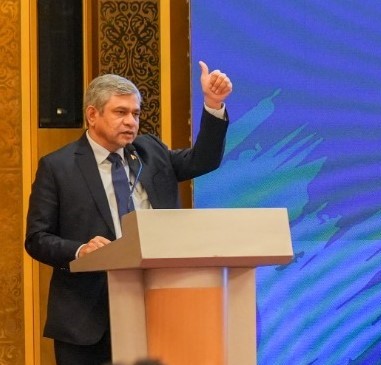
Union Minister Ashwini Vaishnaw (Image credit X @ashwinivaishnaw)
Tamil Nadu’s battle against poker and rummy is now a full-blown national clash over the future of digital entertainment.
By P SESH KUMAR
NEW DELHI, August 21, 2025 — India’s Online Gaming Bill, 2025 marks the boldest—and most disruptive—legislative strike against the fast-growing online gaming industry. By collapsing the once-sacred distinction between “games of skill” and “games of chance,” the Bill proposes a blanket nationwide ban on all money-based games.
This sweeping move directly jeopardises platforms like Dream11, the crown jewel of fantasy cricket, and PokerBaazi, India’s biggest online poker room with over ₹1,000 crore invested by Nazara Technologies.
Complicating the picture is the Tamil Nadu government’s pending appeal in the Supreme Court (against the Madras High Court’s April 2024 decision striking down its prohibition law). The SC’s eventual ruling will determine whether “skill-based games” can be constitutionally protected under Article 19(1)(g).
But the 2025 Bill, if upheld, sidesteps that debate altogether by outlawing every real-money game, irrespective of skill.
This narrative attempts to critically examine the Bill, the pending litigation, the financial and sponsorship fallout, and the existential question of whether Dream11 and PokerBaazi can survive in any recognisable form. These valid questions deserve as simple answers as possible despite the seem8ng complexities.
The Shockwave of the Online Gaming Bill, 2025
The Bill, passed by the Lok Sabha, is unambiguous: any online game where users pay money with the expectation of monetary rewards or equivalent value is illegal. The government has banned advertising and endorsements, slapping jail terms and fines on promoters and celebrity endorsers. The bill also seeks payment providers and banks to block transactions linked to such games, effectively cutting off oxygen.
The bill also empowers officials to block apps and websites and to conduct searches and seizures even without warrants.
What is critical is that the Bill abolishes the skill vs chance divide, which courts had painstakingly developed over decades to protect fantasy sports and, occasionally, rummy or poker. For the first time, the Centre is saying: it doesn’t matter if you call it skill, luck, or astrology—if money changes hands, the game is banned.
Tamil Nadu’s Appeal: The Legal Powder Keg
Against this backdrop, Tamil Nadu’s appeal of the Madras High Court’s April 2024 ruling is pending in the Supreme Court. The High Court had struck down the State’s sweeping prohibition on online rummy and poker, holding that “skill-based games” enjoy constitutional protection. Tamil Nadu insists poker and rummy are gambling, not skill, and that it has the power to prohibit them outright.
This appeal is crucial because it could produce a binding national doctrine: If the SC upholds Tamil Nadu’s appeal, States will be free to prohibit poker and rummy, and the “skill” defence collapses. If the SC rejects the appeal, poker and rummy will gain the same protection fantasy sports enjoy, and blanket State bans will become unconstitutional. If the SC adopts a middle path, States may regulate but not prohibit skill games, balancing freedom of trade with consumer protection.
But the Online Gaming Bill, 2025 threatens to make the entire litigation irrelevant. By criminalising all money-based games nationwide, the Centre sidesteps the State–Union competence battle. Only if the SC later strikes down or narrows the Bill will the Tamil Nadu case regain significance.
PokerBaazi: All-In and Busted
For PokerBaazi, the implications are brutal. Poker has never had strong judicial recognition as a predominantly skill-based game. Even under favourable jurisprudence, courts have hesitated to treat it on par with chess or fantasy sports.
With the 2025 Bill: All cash poker tournaments vanish. The Nazara Technologies stake (~₹980–1,060 crore) in its parent Moonshine Technologies faces possible write-downs. Brokerages have already flagged PokerBaazi’s valuation as “at risk of a write-off.”
Pivoting to “free-to-play” poker is commercially meaningless; poker without stakes is like a casino with no chips. PokerBaazi, in short, would be completely eviscerated once the Bill is notified. Let us now come to cricket-based APPs.
Dream11: The Fall of the Cricket Fantasy Empire
Dream11 and its peers—My11Circle, MPL Fantasy—have built billion-dollar valuations by piggybacking on the IPL, World Cups, and domestic cricket. Courts have upheld fantasy as “games of skill,” and the Supreme Court refused to interfere with that line of reasoning.
But the 2025 Bill sweeps all of this aside: Cash-entry fantasy contests will be illegal. Deposits and withdrawals will be blocked by banks and UPI providers.
Advertising and sponsorships collapse. Dream11 reportedly spends ~₹358 crore as Team India’s jersey sponsor; My11Circle’s IPL fantasy rights are worth ~₹625 crore. These contracts will be void or unenforceable, leaving a massive hole in cricket’s commercial structure. Celebrity endorsers face jail. Cricketers and film stars will flee such endorsements overnight.
Dream11 can perhaps, pivot somewhat: A “social fantasy mode” with subscriptions and no redeemable rewards might survive. Esports content and free-to-play engagement could retain users. But revenues per user will collapse compared to cash leagues. Thus, while PokerBaazi faces outright extinction, Dream11 may survive in a zombie form—visible but hollowed out.
The Cricket Economy in Freefall
The bigger casualty might be Indian cricket itself. Real-money gaming brands have become the biggest sponsor class. With their exit: BCCI, IPL franchises, broadcasters, and cricketers lose thousands of crores in sponsorship and endorsement income. Player contracts tied to fantasy and poker brands are abruptly terminated. Rights-holders scramble to find new sponsors, likely at a discount, shrinking cricket’s revenue pie. The Bill thus threatens to redraw not just the gaming landscape, but the financial architecture of Indian sport.
Possible Supreme Court Scenarios
Scenario 1: SC Upholds Tamil Nadu’s Appeal. Poker = gambling, rummy vulnerable too. Dream11’s “skill” defence weakened. Combined with the 2025 Bill, both PokerBaazi and Dream11 lose.
Scenario 2: SC Rejects Tamil Nadu’s Appeal. Skill-based games get constitutional backing. Dream11 survives State bans, but still crushed by the Centre’s ban. PokerBaazi gains temporary respite, but still doomed under the Bill.
Scenario 3: SC Crafts a Middle Path. States can regulate but not ban skill games. Centre’s Bill comes under fire for disproportionality. Dream11 has grounds to challenge the ban; PokerBaazi remains shaky.
Scenario 4: SC Clubs Cases into a Grand Doctrine. Court could assert Parliament lacks power to impose a blanket ban on skill games. If so, Dream11 could be resurrected. PokerBaazi still struggles unless poker is explicitly recognised as skill.
A Ban Too Far?
The Online Gaming Bill, 2025 is not a scalpel but a sledgehammer. It ignores nuanced jurisprudence on “games of skill,” sweeps away a billion-dollar fantasy cricket industry, jeopardises Nazara’s ₹1,000-crore poker bet, and threatens to rip sponsorship money out of Indian sport.
For PokerBaazi, the story is almost certainly fatal—poker is unlikely to find constitutional rescue. For Dream11, survival hinges on the Supreme Court. If the Court upholds skill games and strikes down or reads down the Bill, fantasy might limp on. Otherwise, Dream11 faces the same fate as PokerBaazi—extinction under law.
What began as Tamil Nadu’s battle against poker and rummy is now a full-blown national clash over liberty, federalism, and the future of digital entertainment. In banning all money-based games, the government may claim victory over gambling—but it risks driving players offshore, hollowing out sport sponsorship, and triggering years of constitutional litigation.
The Supreme Court holds the last card. The question is whether it chooses to play it, or whether India’s gaming industry must fold without a fight.
(This is an opinion piece, and views expressed are those of the author only)
Follow The Raisina Hills on WhatsApp, Instagram, YouTube, Facebook, and LinkedIn




About The Author