Odisha’s Economic Survey: Structural Challenges Sour Optimism
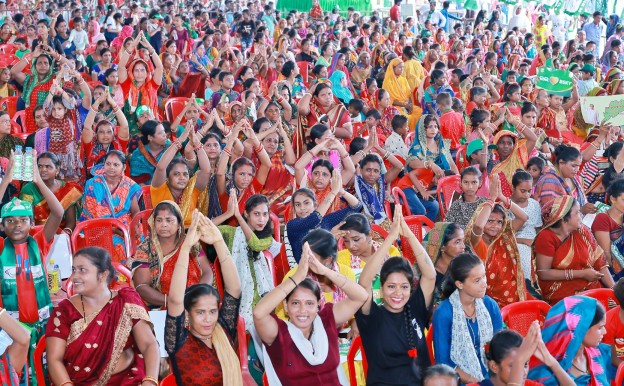
Image credit X @BJD_Odisha
Odisha’s Economic Survey 2025-26 lacks in under addressing structural imbalances
By PRADEEP KUMAR PANDA
Bhubaneswar, February 24, 2026 — The Odisha Economic Survey 2025-26, tabled ahead of the state’s budget presentation on February 20, 2026, paints a picture of resilient economic growth and strategic policy interventions under the BJP-led government.
With a projected real Gross State Domestic Product (GSDP) growth of 7.9% for 2025-26 — surpassing the national average of 7.4% — and a GSDP estimate of ₹9.88 lakh crore at current prices, the survey highlights Odisha’s transformation from a low-income state to an emerging economic powerhouse. Per capita income is pegged at ₹1,86,761, reflecting a 9.2% year-on-year increase. However, a scholarly scrutiny reveals underlying vulnerabilities: persistent sectoral imbalances, climate risks, inequality, and questions about the sustainability of growth projections.
Macroeconomic Performance: Growth Amid Convergence Gaps
The survey celebrates Odisha’s macroeconomic trajectory, noting a tenfold GSDP increase since 2005-06 and a decade-long compound annual growth rate (CAGR) of 11.2% in per capita income from 2015-16 to 2025-26. Real growth has accelerated from 7.2% in 2024-25 to 7.9% in 2025-26, driven by industrial and services sectors. The worker population ratio (WPR) stands at 62% for those aged 15 and above, exceeding India’s 57.7%, with female WPR at 47.3% against the national 39%.
Yet, these figures warrant caution. Odisha’s per capita income, while converging faster with the national average, remains below that of major states, highlighting a lag in absolute terms. The survey’s projections assume stable external conditions, but global uncertainties — such as commodity price volatility affecting Odisha’s mineral-dependent economy — could derail them. Moreover, the demographic dividend, with the working-age population projected to rise to 69.4% by 2036, risks becoming a liability without aggressive job creation. Critics argue that the survey underplays structural unemployment, as high WPR masks underemployment in low-productivity sectors like agriculture, which employs 48.6% of workers despite contributing only 19.6% to Gross State Value Added (GSVA).
Sectoral Dynamics: Imbalances and Untapped Potential
Agriculture and Allied Sectors
Agriculture’s 5.3% growth in 2025-26, with a CAGR of 5.1% over the past decade, outpaces India’s 4.7%. The survey notes crop diversification — paddy’s share dropping to 44%, millets expanding 62.7% — and irrigation gains, with cropping intensity at 165%. Livestock and fisheries show promise: milk production at 27.1 lakh MT (CAGR 3.4%), fish at 11.92 lakh MT (up 6.1%), and exports worth ₹4,708 crore.
However, these achievements are overshadowed by vulnerabilities. Per capita milk availability (159g/day) lags far behind India’s 485g/day, indicating productivity gaps. Climate change poses existential threats: rising sea levels and cyclones have disrupted crops, yet the survey’s reference to the State Action Plan on Climate Change (SAPCC) lacks quantifiable mitigation strategies. Rural-urban disparities persist, with asset ownership (e.g., two-wheelers) rising but still low in rural areas (11.9% to 44.4% non-food expenditure share). The sector’s heavy employment reliance underscores the need for mechanization and value addition, areas where the survey offers recommendations like doubling inland fish production by 2029-30 but falls short on implementation roadmaps.
Industry and Mining
Industry contributes 41.3% to GSVA, growing at 6.4% — above India’s 6.2% — with manufacturing leading at 8.3%. Investments via 275 MoUs (₹15.1 lakh crore) and mineral production (43.7% of India’s value) underscore Odisha’s resource advantage. The survey highlights labor-intensive sectors like apparel and organized enterprises employing 1.69 lakh.
Critically, the sector’s growth is uneven, concentrated in metals and mining, which exposes Odisha to global price fluctuations. The survey acknowledges export concentration (marine and rice dominating agriculture exports) but does not address environmental costs, such as mining’s impact on biodiversity. Employment in unorganized industries (13.2 lakh) suggests informalization, with limited social protections. Policy suggestions to attract non-metal industries (food, textiles) via GO-SWIFT are laudable, but without addressing ease-of-doing-business bottlenecks—Odisha ranks moderately in national indices—these may remain aspirational.
Odisha Higher Education Crisis: Syndicate System Wrath Unravels
Services Sector
Services grew at 9.3% in 2025-26, contributing 39.1% to GSVA, with IT exports surging to ₹12,900 crore. Tourism attracted 113.8 lakh visitors (up 14%), and telecom penetration improved.
Despite this, the sector employs only 59.5 lakh (CAGR 6.5%), with women’s participation skewed toward low-skill roles. The AI policy targets — 90% internet penetration by 2029, 8,000 trained annually — are ambitious, but the survey overlooks digital divides: while smartphone usage is 78.1%, rural connectivity lags. Recommendations for AI hubs and Global Capability Centres (₹1,000 crore by 2030) are forward-looking, yet they risk exacerbating urban-rural inequalities without inclusive skilling.
Fiscal Health and Social Investments: Prudence or Austerity?
Fiscal indicators are a strength: budget outlay at ₹2.90 lakh crore (29.3% GSDP), fiscal deficit at 3.5%, revenue surplus at 3.2%, and debt-GSDP ratio at 13.6% — the lowest among major states. Capital outlay at 6.6% GSDP is commendable, with social sector spending at ₹1.22 lakh crore.
However, inflation moderation to 0.1% (April-December 2025) may reflect demand suppression rather than efficiency. Public health expenditure rose to ₹19.7 thousand crore, but infant mortality (19/1,000) and maternal ratios remain high. Education’s gross enrolment ratios are improving, but dropout rates (9.8% secondary) and ST/SC retention challenges persist. Poverty alleviation via SUBHADRA (benefiting 1 crore women) shows impact — 65% report financial autonomy — but the survey’s SDG score rise to 66 masks regional disparities. Critically, declining central devolution (from 4.64% in the 14th Finance Commission to 4.42% in the 16th) strains resources, a point the survey notes but does not critique federally.
Employment, Skilling, and Challenges: The Human Dimension
Employment data is positive: female labor force participation rose to 48.7%, with education premiums yielding 5.1 times base earnings for technical graduates. Skilling infrastructure (72 ITIs, World Skill Centres) boasts >90% placements.
Yet, women’s employment is agriculture-dominated (69%), limiting empowerment. Challenges like climate disasters and inequality are acknowledged, but recommendations—e.g., 70% renewables by 2047, 500 MMTPA port capacity — lack short-term actionable plans. The survey’s long-termism echoes Keynesian critiques: focusing on 2036/2047 visions (e.g., Viksit Odisha) while immediate issues like job quality and disaster resilience falter.
Odisha’s Economic Survey 2025-26 is a comprehensive document that underscores achievements in growth, fiscal prudence, and social progress. However, its critical shortcomings lie in under addressing structural imbalances, climate vulnerabilities, and inequalities. Projections, while optimistic, may falter without bolder reforms in diversification, skilling, and federal advocacy. For Odisha to truly harness its potential, the survey must evolve from a celebratory narrative to a rigorous blueprint for equitable, sustainable development — one that bridges the gap between data and delivery.
(This is an opinion piece. Views expressed are author’s own.)
Odisha Budget: ₹3.10L Cr Outlay or ‘Full Menu in Empty Kitchen’?
Follow The Raisina Hills on WhatsApp, Instagram, YouTube, Facebook, and LinkedIn




About The Author