Octopus Doctrine: How the US–Iran Conflict Is Stuck in 1979

Israel Briefs 30 Ambassadors on Iran’s Missile Attack Damages! (image Israel MFA)
From Khamenei to Trump, from sanctions to street protests—why the US-Iran conflict looks trapped in a historical loop, with nuclear fear and regime change illusions at its core
By NIRENDRA DEV
New Delhi, January 13, 2026 — The US–Iran conflict is often presented as a contemporary crisis. In truth, it is a recurring geopolitical drama—one that began in 1979 and has never truly paused. Iran is frequently described in Western strategic language as “the head of the octopus,” a state whose tentacles stretch across the Middle East and beyond through Hezbollah, Hamas, militias in Iraq and Syria, and political influence networks as far away as Latin America.
That framing, however, hides as much as it reveals.
The roots of today’s confrontation lie in the Iranian Revolution of 1979, when Ayatollah Ruhollah Khamenei returned from exile and overthrew the Shah. The revolution electrified the Islamic world. In a region dominated by Sunni power structures, Iran’s Shia identity became politically assertive. Shia populations in Lebanon, Iraq, and the Gulf no longer accepted marginalisation. The West, especially Washington, interpreted this awakening not as political rebalancing but as ideological subversion.
From that moment, hostility hardened.
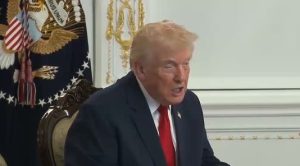
Fast forward to 2025–26, and the language has barely changed. Donald Trump has publicly declared he is “unafraid” to use lethal force against Iran, while insisting diplomacy remains the “first option.” Western media continues to link Tehran to every regional fire—from Israel–Palestine to Yemen, from Hezbollah to Venezuela—often with thin evidentiary chains but strong narrative certainty.
The nuclear question sits at the centre of this hostility. Iran insists it does not possess nuclear weapons and claims it does not seek them. Despite the formidable capabilities of US intelligence and Israel’s Mossad, no definitive proof of an Iranian bomb has ever been produced. The uncomfortable parallel is Iraq: a war justified by certainty that later dissolved into absence of evidence.
Israel’s strikes on Iranian-linked targets in 2025 caused physical damage but failed to achieve strategic transformation. Iran did not capitulate. Supreme Leader Ayatollah Ali Khamenei became more defiant, domestic repression intensified, and Israeli Prime Minister Benjamin Netanyahu openly called for regime change—an appeal that historically hardens regimes rather than topples them.
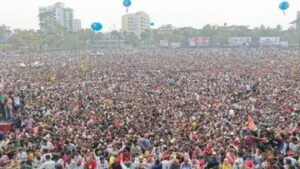
Ironically, sustained pressure may be producing the opposite of its stated goal. As protests intensify—particularly led by women—and the Iranian state responds with internet shutdowns and force, the logic of deterrence strengthens. A besieged regime is more likely, not less, to seek ultimate security guarantees.
This is where Western hypocrisy becomes visible. If the US and Israel are genuinely committed to nuclear non-proliferation, why is disarmament never discussed in Tel Aviv or Washington? The suggestion itself provokes outrage. Nuclear restraint is demanded only of adversaries, never of allies or of oneself.
Europe, for its part, has oscillated between moral posturing and strategic irrelevance. Its attempt at mediation through the Iran nuclear deal collapsed after Trump withdrew in 2018, reimposing sanctions that targeted Iran’s economy and oil exports. Trump openly declared his goal was to drive Iranian oil exports “to zero.” The economic strangulation that followed directly contributed to the instability now cited as justification for further pressure.
By 2026, the West speaks of unrest as proof of regime weakness. Tehran sees it as foreign orchestration. Both narratives coexist, neither fully explaining the complexity on the ground.
What we are witnessing today is not a new crisis, but a replay of 1979—fear replacing understanding, sanctions replacing strategy, and moral certainty replacing realism. Iran remains an avoidable tragedy for the West, but one it refuses to avoid.
History teaches a brutal lesson: global crises often appear inevitable only because wiser options were dismissed earlier. The US–Iran conflict persists not due to lack of power, but due to absence of imagination.
Why Iran Chaos Not Soaring Oil to $100: 160-Million-Barrel Worry
Follow The Raisina Hills on WhatsApp, Instagram, YouTube, Facebook, and LinkedIn




About The Author