No New Cess, No Extra Tax on Tobacco: FM in Rajya Sabha
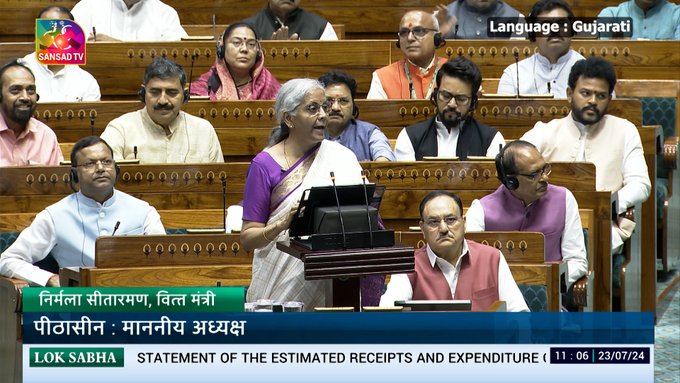
Image credit X.com @Sansad TV
Finance Minister says compensation cess on 28% GST items was extended only to repay Covid-era loans to states and will now flow back to the divisible pool.
By TRH News Desk
New Delhi, December 3, 2025 — Finance Minister Nirmala Sitharaman told the Rajya Sabha that the proposed excise changes on tobacco and tobacco-related products do not introduce any new tax or cess, but merely restore the Centre’s right to collect excise duty that was temporarily given up at the time of the introduction of the Goods and Services Tax.
Responding to concerns raised by Opposition members, the Finance Minister said the compensation cess on tobacco — which falls under the 28% GST slab — was always meant to be a temporary arrangement to compensate states for revenue losses after GST was rolled out in 2017.
What Happened to the GST Compensation Cess?
Explaining the background, Sitharaman said:
- When GST was introduced in 2017, the Centre gave up its right to levy excise on certain items, including tobacco, and allowed the GST Council to collect a compensation cess on goods taxed at 28%.
- This cess was meant to be collected for five years (2017–2022) and was entirely distributed to the states to make up for revenue shortfalls.
- During the Covid-19 years, collections fell sharply, and states could not be fully compensated as promised.
- After seeking legal opinion, the GST Council decided to extend the cess beyond 2022, not as a new tax, but to repay the loans borrowed to compensate states during the pandemic.
- An outer limit of March 2026 was fixed for this extended collection.
“Whatever compensation cess was collected till 2022 went into the hands of the states. It was given to them exactly as promised under the law,” Sitharaman stressed.
Why Excise Is Now Reverting to the Centre
The Finance Minister clarified that with the compensation mechanism nearing its end, the taxation right is now reverting to the Centre:
- The excise duty on tobacco existed before GST.
- It was only temporarily ceded by the Centre to facilitate compensation to states.
- With the compensation period ending, the levy is naturally reverting to the Centre.
- This excise collection will now go into the divisible pool of taxes, from which 41% will again be shared with states as per the Finance Commission formula.
“This is not a cess. This is not a new tax. This is not something the Centre is taking away from the states,” Sitharaman said firmly.
Rebuts Opposition Charge of “Backdoor Cess”
Several MPs had alleged that the government was bringing back a cess in disguise to corner more revenue at the Centre’s level. Rejecting the charge, Sitharaman said:
- A cess is non-shareable with states.
- What is being restored is excise duty, which is shareable through the divisible pool.
- “When a cess comes, I will stand up and say it is a cess. But this is not that,” she told the House.
She added that misleading the House by branding the move as a new cess was incorrect and ignored the legal and fiscal structure created at the time of GST’s launch.
Why Tobacco Is Key to the Debate
Tobacco and related products remain among the highest-taxed items under GST at 28% plus additional levies, making them a major revenue source. The transition from compensation cess back to excise duty has major implications for:
- Union revenues
- State fiscal transfers
- Public health taxation policy
- GST federal balance
The government maintains that the shift is purely procedural and legal, not a fresh tax burden.
Follow The Raisina Hills on WhatsApp, Instagram, YouTube, Facebook, and LinkedIn




About The Author