‘No Beef for Rajbongshi Christians’: Pastor on Cultural Continuity
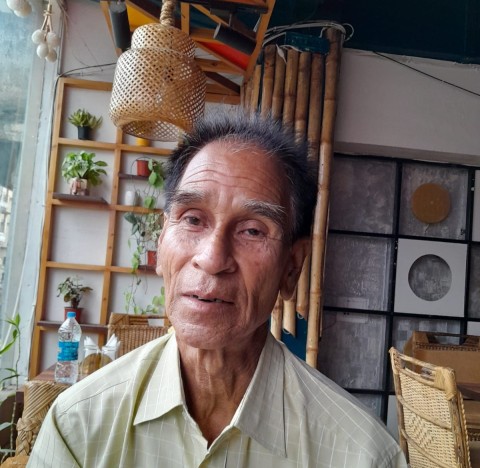
Pastor Saroj Roy in Coochbehar in West Bengal (Image Nirendra Dev)
Rajbongshi Christian pastor’s remarks in Coochbehar highlight faith without cultural rupture amid election-season debates
By NIRENDRA DEV
Coochebehar (West Bengal), January 22, 2026 — As West Bengal enters an election season marked by sharp identity debates, a prominent voice from the Rajbongshi community has drawn attention for stressing cultural continuity over confrontation.
Pastor Saroj Roy, a senior Protestant leader from Coochbehar, told this correspondent that beef consumption is neither a religious mandate nor a social practice among Rajbongshi Christians in the region.
“Beef eating is hardly an issue. We Rajbongshi Christians do not take beef,” Roy said, underscoring that faith conversion has not altered traditional food habits within the community.
Rajbongshis are an influential socio-political group spread across North Bengal and Assam, making them a critical constituency during elections. In Coochbehar and surrounding areas, a small section of the community follows Christianity, often blending religious practice with local cultural norms.
Explaining this syncretism, Roy said Rajbongshi Christians do not follow Western styles of worship. “We do not conduct prayers sitting on chairs and tables. Our prayer session is called Upasana. We sit on the floor like our Hindu brothers and pray before the Cross,” he said.
He added that candles and agarbattis are lit during prayers. “The most important thing is prayer itself. How we pray is secondary.”
Roy, 69, was baptised on July 9, 1968, and is a first-generation Christian. He noted that his wife, Pratibha Roy, embraced Christianity much later, in 2000, after years of practising Hinduism.
“She used to read the Bible alongside her Hindu practices. Over time, she became deeply articulate about Christian teachings—sometimes more than me,” he said.
Roy emphasised that Rajbongshi Christians remain socially integrated. “During birthdays of Hindu children, my wife is often invited by Hindu neighbours to pray for them,” he said.
He also recalled that his father-in-law, a disciple of the Ramakrishna Mission at Chowdhury Haat, admired Christian teachings but chose not to convert. “I did not encourage him. He and my mother-in-law died as Hindus,” Roy said.
Quoting biblical ethics, Roy added, “No one has instructed us on what to eat. My faith teaches me that if something I eat causes discomfort to my neighbours, I should avoid it.”
According to him, nearly 80 Christian families come under his local Church of God congregation. “To my knowledge, no Rajbongshi Christians in Coochbehar or North Bengal consume beef,” he said.
The Rajbongshi—also known as Rajbanshi or Koch-Rajbongshi—are spread across North Bengal, Assam, Bihar, Nepal’s Terai, northern Bangladesh, and Bhutan. The community speaks Kamatapuri and is categorised as Scheduled Caste in West Bengal.
Roy concluded by stressing harmony over numbers. “We may be a microscopic minority, but we live in communal amity. Changing faith does not mean changing culture.”
He added that his team published the first New Testament Bible in the Rajbongshi language in 2022, with Old Testament translation currently underway.
Follow The Raisina Hills on WhatsApp, Instagram, YouTube, Facebook, and LinkedIn




About The Author