Nitish Kumar Pulled Hijab: Power and Paternalism in Bihar

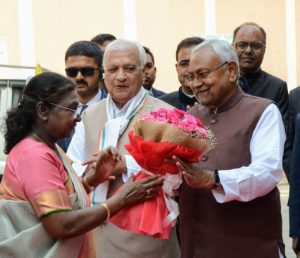
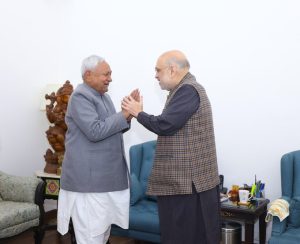
Bihar Chief Minister Nitish Kumar pulls down veil of an Ayush doctor in Patna. (Image RJD on X)
What was framed by some as concern and by others as control has reignited a national debate on consent, dignity, and the casual normalisation of public humiliation by power.
By AMIT KUMAR
Patna, December 16, 2025 — A brief gesture at a government event in Bihar has triggered a national argument far larger than the moment itself. Bihar Chief Minister Nitish Kumar pulling down the face covering of a newly appointed Muslim woman doctor has split public opinion—not just on intent, but on power, consent, and dignity.
Journalist Nabila Jamal offered a charitable reading. Calling Kumar’s approach “wrong but well-intentioned,” she argued that he appeared like a “father figure,” clumsily encouraging a young professional to show her face and claim her space with dignity. Jamal went further, suggesting the controversy exposes India’s lack of clear rules on full face coverings in public spaces—an issue Parliament should debate, though political will may be absent.
But that framing has met fierce resistance. Politician Swati Chaturvedi rejected the paternal argument outright. “It is her dignity and knowledge of being an equal that makes her stand there,” she said, adding that no CM, PM, father, brother, or husband has the right to publicly humiliate an adult, educated woman for her choice of dress.
Former Jammu and Kashmir Chief Minister Mehbooba Mufti was sharper. Having known Nitish Kumar personally, she said she was “shocked” by the act and questioned whether it reflected age-related decline or the growing normalisation of publicly humiliating Muslims. What unsettled her further, she noted, was the crowd’s silence—watching the episode unfold “as entertainment.” Her verdict was blunt: perhaps it is time for Nitish Kumar to step down.
Author and political commentator Sanjay Jha raised a different question—why the silence? In any corporate setting, he argued, such behaviour would have triggered an inquiry and resignation. Why, he asked, do politicians operate under a separate moral code?
PDP leader Iltija Mufti echoed that charge. Power, she said, does not give anyone the right to touch or remove a woman’s hijab. “If you’re not well, please step down,” she remarked, underscoring concerns about authority unchecked by accountability.
At the heart of the debate lies a simple principle: intent does not override consent. Whether framed as reformist concern, cultural discomfort, or misplaced paternalism, physically intervening in a woman’s appearance—especially a Muslim woman’s—by a constitutional authority crosses an ethical boundary.
This is not merely about dress, religion, or generational attitudes. It is about who gets to decide, in public, what dignity looks like—and whether power in India still comes with consequences.
Follow The Raisina Hills on WhatsApp, Instagram, YouTube, Facebook, and LinkedIn




About The Author