National Mathematics Day: Why Ramanujan’s 1729 Still Matters
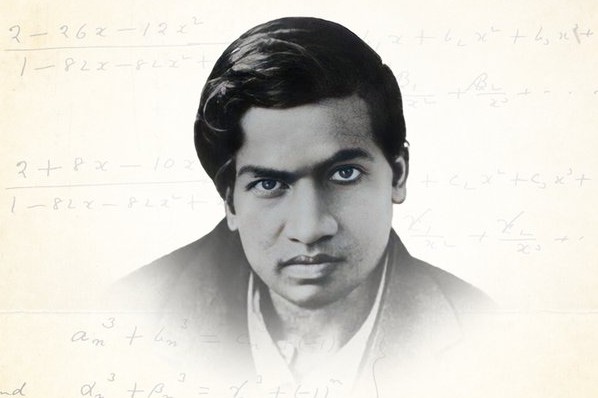
Mathematics legend Srinivasa Ramanujan. (Image X.com)
On National Mathematics Day, a Indian Railways engineer revisits Srinivasa Ramanujan’s timeless numbers—and shows how curiosity can still create new mathematics.
By TRH Features Desk
New Delhi, December 22, 2025 — December 22, observed as National Mathematics Day, is more than a ceremonial tribute. It is a reminder of how one self-taught Indian genius reshaped global mathematics with nothing but intuition, imagination, and relentless curiosity. Srinivasa Ramanujan, who left behind nearly 3,900 original results before dying at just 32, remains unmatched in the way he made numbers speak.
Perhaps no anecdote captures this better than the story of “1729.” When British mathematician G. H. Hardy visited Ramanujan in hospital and casually dismissed his taxi number as “dull,” Ramanujan instantly corrected him. 1729, he explained, is the smallest number expressible as the sum of two cubes in two different ways: 10³ + 9³ = 12³ + 1³.
That spontaneous brilliance transformed an ordinary number into the famous “Hardy–Ramanujan number,” and into a symbol of mathematical elegance.
As Shyam Sunder Gupta, a Railway official, notes, such numbers are not curiosities frozen in time. Mathematics continues to grow outward from Ramanujan’s ideas. Other examples—like 65 as a sum of squares in two ways, or the enormous 635318657 as a sum of fourth powers—show how patterns repeat, deepen, and sometimes stop altogether. Notably, no such solution is known for powers greater than four, wrote Gupta on LinkedIn.
The fascination does not end there. Gupta highlights remarkable properties of numbers linked to Ramanujan’s legacy: palindromic cube sums, triangular numbers with dual cube representations, and the unique charm of 1729 as a product of a number and its reverse.
Most strikingly, inspired by Ramanujan, Gupta introduces new numerical classes— “Equal Product of Reversible Numbers” and “Rare Numbers”—demonstrating that discovery is not confined to universities or centuries past.
National Mathematics Day reminds us of this enduring truth: Ramanujan did not just leave answers. He left a way of thinking. And that may be his greatest gift to India—and the world.
Follow The Raisina Hills on WhatsApp, Instagram, YouTube, Facebook, and LinkedIn




About The Author