Naravane Memoir: Does privilege override copyright protections?
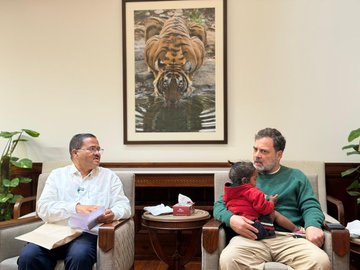
Leader of the Opposition Rahul Gandhi meets a delegation of tribal leaders at his residence (Image Gandhi on X)
“No copies… have been published”: Opposition vs Speaker showdown raises questions on privilege, propriety and political intent
By NIRENDRA DEV
New Delhi, February 11, 2026 — If you ask for rain, you must prepare for mud. Indian politics is witnessing precisely that moment.
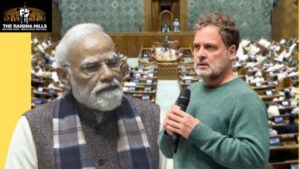
The Naravane Memoir Controversy has pushed Parliament into rare turbulence. What began as an attempt by Leader of Opposition Rahul Gandhi to cite excerpts from former Army Chief General M.M. Naravane’s memoir Four Stars of Destiny has now spiralled into a constitutional confrontation.
The opposition has served notice for a resolution seeking the removal of Lok Sabha Speaker Om Birla. In response, Birla has chosen not to preside over proceedings until the matter is settled — even though the rules do not mandate his absence. Under Article 96(1) of the Constitution, however, a Speaker cannot preside when a resolution for removal is under active consideration.
The core of the dispute lies in one explosive assertion by Penguin Random House India, the publisher holding sole rights to the memoir: “No copies of the book – in print or digital form – have been published, distributed, sold, or otherwise made available to the public.”
General Naravane reinforced this clarification by sharing the publisher’s statement and remarking, “This is the status of the book.”
Yet Rahul Gandhi displayed what he described as a copy of the memoir and argued that either the former Army Chief or the publisher must be incorrect. “Both cannot be telling the truth,” he said.
This is not merely about one book. It is about boundaries. Can unpublished material be cited in Parliament? Does privilege override copyright protections? And should defence-related claims based on an unreleased manuscript be aired in the House?
Congress leaders allege democratic suppression, pointing to suspensions of opposition MPs and denial of speaking opportunities. The BJP counters that unverified material cannot become a political weapon, especially when it concerns national security narratives.
Beyond the procedural wrangle lies a broader question: in an era shaped by information warfare and narrative battles, are such controversies organic democratic churn — or elements of a larger political strategy?
The mud is thick. The rain continues. And Parliament stands at the centre of the storm.
(This is an opinion piece. Views expressed are author’s own.)
Parliament as a Narrative Battlefield: Politics vs Accountability
Follow The Raisina Hills on WhatsApp, Instagram, YouTube, Facebook, and LinkedIn




About The Author