‘My Boss’: Why PM Modi’s Praise for Nitin Navin Shook Bihar
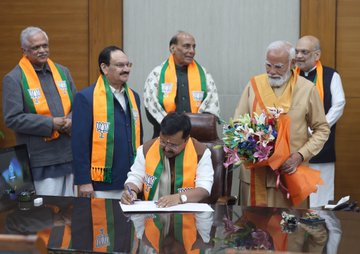
Prime Minister Narendra Modi oversees Nitin Nabin taking charge of the BJP (Image BJP)
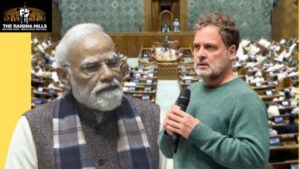
A single remark by Prime Minister Narendra Modi did more than energise BJP workers—it highlighted the stark leadership and trust deficit inside Congress and opposition parties.
By RAJESHWAR JAISWAL
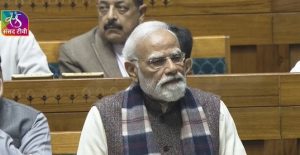
Patna, January 21, 2026 — When Prime Minister Narendra Modi publicly referred to Bihar BJP leader Nitin Navin as “my boss,” the remark instantly travelled beyond the stage, beyond social media, and deep into the political bloodstream of Bihar.
It was not a slip. It was a message.
For years, critics have argued that nothing moves inside the BJP without the Prime Minister’s nod—that not even a leaf stirs without his approval. Yet, in one unscripted, open-hearted moment, Modi chose to energise his workers by doing the unthinkable in Indian politics: publicly elevating a party functionary, without insecurity, without hesitation.
The effect was electric.
Nitin Navin himself appeared visibly stunned. Bihar, as a state, felt momentarily proud. For BJP workers watching from below the power pyramid, the message was unmistakable: your day can come too. Loyalty, work, and commitment will be seen—and acknowledged.
This is not how politics traditionally works in India.
Across parties, the assumption is simple: what the top leader wants, happens. And yes, in the BJP too, direction flows from the top. But what set this moment apart was trust. Modi was not surrendering authority; he was reinforcing organisational confidence. Nitin Navin will implement decisions, but the symbolism was larger than the individual.
Now contrast this with the opposition.
Why doesn’t such political generosity exist in the RJD? Why not in the Samajwadi Party? And most glaringly—why not in the Congress?
In Congress, the belief persists that what Rahul Gandhi wants, what Priyanka Gandhi wants, what Sonia Gandhi wants—that alone prevails. Even the party president rarely enjoys the kind of public endorsement Modi extended to a state-level BJP leader.
The contrast is stark in Bihar today. Congress, despite winning six MLAs, appears unsure whether its own legislators will remain loyal. Meetings are being called in Delhi. Assurances are being offered. Positions are being promised. The fear of defection looms large.
This is the politics of insecurity.
Meanwhile, the BJP witnesses a steady rush of aspirants eager to join. History explains part of it—power attracts ambition. But power alone does not sustain loyalty. Confidence does.
India’s political history—and world history—shows that people bend towards authority. But what defines a party’s strength is how it treats its own people when power is already secured.
That is the real story behind a Prime Minister calling someone else “my boss.”
It wasn’t humility for the cameras. It was a signal of organisational strength—and a mirror held up to an opposition that no longer trusts its own shadow.
(This is an opinion piece. Views expressed are author’s own)
Follow The Raisina Hills on WhatsApp, Instagram, YouTube, Facebook, and LinkedIn




About The Author