Morgan Stanley Forecasts $5 Trillion Humanoid Robot Mkt by 2050
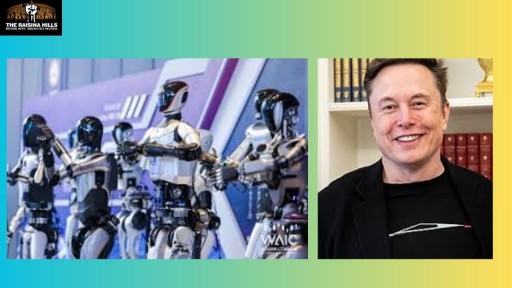
China's humanoid robot and Elon Musk of Tesla (Images credit X.com)
Morgan Stanley Forecasts Tesla as Key Player in Emerging Humanoid Robot Market
By S Jha
NEW DELHI, May 13, 2025 – Morgan Stanley has released a forecast projecting the humanoid robot market to reach $5 trillion in annual revenue by 2050. It claimed that Tesla is positioned as a leading contender to capitalize on this growth.
The report, titled “The Humanoid 100,” highlights the transformative potential of embodied AI. It also spotlights the geopolitical and economic implications of US-China trade relations in accelerating this sector’s development.
According to the Morgan Stanley report, the humanoid robot market could see 1 billion units deployed globally by 2050. The US alone accounting for a $3 trillion market impacting wages (Morgan Stanley, August 2024).
The firm estimates that by 2040, the US may have 8 million working humanoid robots, contributing $357 billion to wage impacts, a figure that could rise to 63 million units by 2050 (Morgan Stanley, April 2025).
“The physical embodiment of AI touches a $60 trillion TAM, global GDP, and the meaning of work,” the report states, emphasizing the scale of this opportunity (Morgan Stanley, May 2025).
Tesla’s Optimus humanoid robot is a focal point of the forecast. Morgan Stanley analysts note that Tesla’s full-stack integration of hardware, software, and AI positions it as a top contender, with the company potentially producing 5,000 Optimus units this year said CNBC in a report earlier.
Elon Musk has been vocal about Optimus’s potential, stating at Tesla’s Q1 2025 All Hands meeting that the company aims to produce 10,000 to 12,000 units this year, a goal Musk reiterated could make Optimus “the biggest product of all time”.
The report also underscores the role of US-China trade dynamics in shaping the humanoid robot market. CNBC quoted Morgan Stanley analysts Adam Jonas and Zhong writing, “A more cooperative and open trading relationship between the US and China can help accelerate the next phase for Tesla beyond sales of human-operated EVs”. However, trade tensions pose challenges. Rest of World reported that US tariffs on Chinese imports and export controls on advanced chips, such as Nvidia’s H20, could hinder production for both American and Chinese companies.
Chinese firms, which dominate 63% of the humanoid robot supply chain, particularly in hardware components, face barriers to accessing cutting-edge chips. US firms like Tesla struggle with increased costs due to tariffs, said Morgan Stanley in February this year.
Follow The Raisina Hills on WhatsApp, Instagram, YouTube, Facebook, and LinkedIn




About The Author