Mokama Murder Rekindles Bihar’s Bahubali Legacy
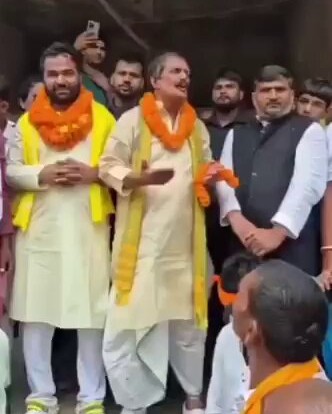
Dularchand Yadav of Mokama (Image video grab on X)
With Mokama strongman Anant Singh’s arrest in connection with Dularchand Yadav’s killing, Bihar’s long and bloody history of bahubali politics—from Shahabuddin to Pappu Yadav—returns to the spotlight, exposing how muscle, money, and political patronage still shape the state’s power corridors.
By AMIT KUMAR
Patna, November 2, 2025 — The arrest of Mokama’s strongman leader Anant Singh in connection with the murder of Dularchand Yadav has once again thrust Bihar’s old nexus of crime and politics back into public memory. Singh, a controversial figure long known as “Chhote Sarkar,” faces charges of involvement in the killing—charges he denies, but which evoke familiar echoes of Bihar’s bahubali past.
For decades, Bihar’s politics has been shaped, scarred, and sustained by bahubalis—local strongmen who turned their criminal clout into electoral capital. Names like Mohammad Shahabuddin in Siwan, Taslimuddin in Araria, Anand Mohan Singh in Saharsa, and Pappu Yadav in Purnea became synonymous with power built on fear, guns, and patronage.
These men, and hundreds of smaller enforcers across districts, dominated not just the ballot boxes but entire regions—sometimes just a few villages, sometimes entire districts. Their control extended from land deals to policing, often bypassing the state’s authority altogether.
In the 1990s, during what came to be called Bihar’s “Jungle Raj,” crime and politics were inseparable. Polling booths turned into battlegrounds, voters fled in fear, and muscle power ensured electoral victories. The state’s image as India’s crime capital took deep root, driving talent and investment away and leaving Bihar economically and socially scarred.
The Siwan killing of JNU Students’ Union president Chandrashekhar in 1997 remains one of the darkest chapters of that era. The idealistic student, who had dared to raise his voice against Shahabuddin’s terror, was brutally murdered—a moment that symbolized the collapse of law and order in Bihar.
Though the Lalu-Rabri era ended, the ghosts of that time never fully disappeared. Many bahubalis reinvented themselves as “Robin Hoods” — distributing money, mediating local disputes, and cultivating mass appeal. Some, like Anand Mohan, even returned to political mainstream after serving prison sentences.
Today, the Nitish Kumar government faces the irony of battling bahubali politics within its own ranks. Anant Singh, a JD(U) legislator, has been repeatedly in and out of jail, yet retains strong influence in Mokama. His arrest underscores both the persistence of muscle power and the limitations of Bihar’s political cleansing efforts.
However, the Bihar of 2025 is not the Bihar of the 1990s. With social media, viral videos, and digital vigilance, blatant violence faces instant exposure. The ecosystem that once protected bahubalis is no longer impenetrable.
Still, their political relevance endures. Every major party—RJD, JD(U), BJP, and Congress—has courted musclemen during elections, seeking their networks and local dominance to secure seats. As one analyst quipped, “In Bihar, bahubalis don’t retire—they rebrand.”
The Mokama case serves as a grim reminder that while Bihar’s democracy has evolved, its undercurrent of muscle politics still tests the strength of the rule of law. Whether Nitish Kumar’s administration can finally dismantle this old order remains to be seen.
(This is an opinion piece, and views expressed are those of the author only)
Follow The Raisina Hills on WhatsApp, Instagram, YouTube, Facebook, and LinkedIn




About The Author