Modi’s Condolence to Khaleda Zia’s Son Signals a Quiet Reset
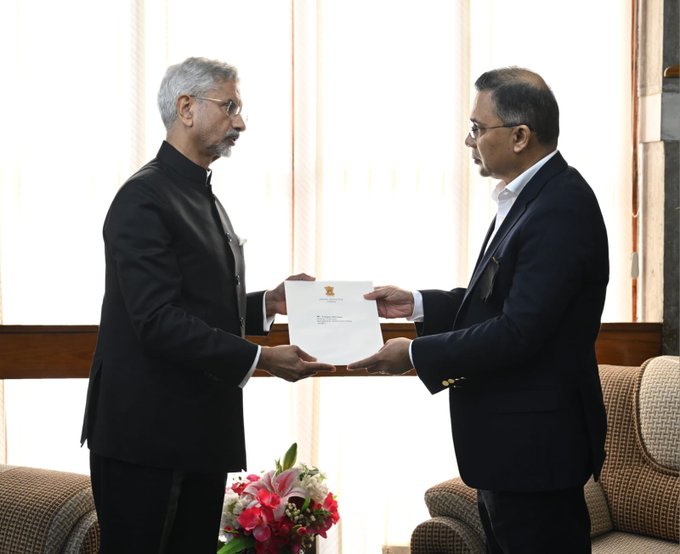
EAM S Jaishankar met BNP acting chairperson Tarique Rehman in Dhaka (Image Jaishankar on X)
Prime Minister Narendra Modi’s personal letter on Khaleda Zia’s passing carries messages far beyond sympathy. It hints at India’s calibrated outreach to Bangladesh’s opposition.
By TRH Foreign Affairs Desk
New Delhi, December 31, 2025 — India’s diplomacy often speaks loudest not through summits or statements, but through carefully chosen words. Prime Minister Narendra Modi’s condolence letter to Tarique Rahman, following the passing of former Bangladesh Prime Minister Khaleda Zia, is one such moment—quiet in tone, but heavy with geopolitical subtext.
The letter goes beyond routine protocol. Modi not only acknowledges Khaleda Zia as Bangladesh’s first woman Prime Minister, but credits her with strengthening India–Bangladesh relations and shaping Dhaka’s political journey.
In doing so, New Delhi publicly recognises the legacy of a leader long viewed through a prism of rivalry and tension in bilateral ties. External Affairs Minister S. Jaishankar handed over PM’s letter to Rehman.
More telling is Modi’s expression of confidence in Tarique Rahman’s leadership of the Bangladesh Nationalist Party (BNP). For India, which has largely worked with Sheikh Hasina’s Awami League for over a decade, this line stands out.
It suggests a conscious effort to keep channels open with Bangladesh’s opposition at a time of political churn, questions over democratic space, and growing external influence—particularly from China.
By invoking shared democratic traditions, national unity, and historic partnership, the Prime Minister’s message subtly reframes India’s posture: not partisan, but pan-Bangladesh. It also reflects strategic realism—South Asia’s politics are fluid, and New Delhi cannot afford to be seen as aligned with only one political camp in Dhaka.
In South Asian diplomacy, condolence letters rarely remain just condolence letters. This one reads like a signal: India is watching Bangladesh’s transition closely—and is prepared to engage, whoever carries its future forward.
1971, Dharmyudh and Dhaka’s Drift: Bangladesh Faces Fire Test
Follow The Raisina Hills on WhatsApp, Instagram, YouTube, Facebook, and LinkedIn




About The Author