MNREGA: A Living Memorial to Congress Failures and Poverty
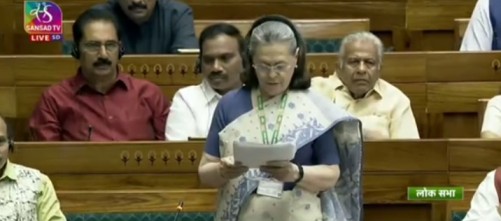
Former Congress president Sonia Gandhi in the Lok Sabha
As Parliament clears the G RAM G Bill, a long-overdue correction begins to dismantle a Left-liberal scheme that institutionalised stagnation in rural India
By NIRENDRA DEV
New Delhi, December 18, 2025 —The Mahatma Gandhi National Rural Employment Guarantee Act (MNREGA) stands today as a living memorial to Congress failures—a scheme born not out of a vision for development, but from a Left-liberal obsession with glorifying poverty.
Designed during the UPA’s decade in power (2004–2014), MNREGA reflected the worldview of a government remote-controlled by Sonia Gandhi and intellectually steered by the National Advisory Council, a conclave of armchair Leftists. Their governing philosophy was simple: preserve poverty, manage it politically, and showcase it as compassion. Development, productivity, and aspiration were secondary concerns.
MNREGA institutionalised this mindset. Popularly reduced to “gadda khodna”, the scheme specialised in creating non-durable assets—roads washed away after the first monsoon, ponds dug and refilled year after year, and labour deployed merely to exhaust job quotas. Between 2006 and 2024, the programme cost the exchequer an estimated ₹12.2 lakh crore, with little commensurate asset creation.
Corruption thrived. Fake job cards, siphoned funds, manipulated muster rolls, and bloated bureaucratic layers became routine. NGO intermediaries—the infamous jhola-wallahs—entered the ecosystem early, especially when payments were cash-driven. Instead of empowering rural workers, MNREGA became a tool of political handouts and vote-bank maintenance.
The damage extended to agriculture itself. Easy MNREGA wages during peak sowing and harvesting seasons led to labour shortages, hurting farmers and distorting rural work incentives. Dependency replaced skill-building; stagnation replaced mobility. Studies even showed workers preferring MNREGA’s low-productivity work over higher-paying urban employment—an alarming signal of arrested aspiration.
Prime Minister Narendra Modi captured this reality bluntly in 2015 when he called MNREGA a “living memorial” to Congress governance—proof that after years in power, the party could offer the poor nothing more than a few days of ditch-digging.
The newly passed G RAM G Bill marks a structural break. It allows a 60-day pause in rural employment during peak agricultural seasons, introduces shared Centre-State funding, and shifts employment generation to pre-approved Viksit Gram Panchayat Plans aligned with national infrastructure goals. Accountability, asset creation, and cooperative federalism now replace open-ended entitlement.
MNREGA belonged to old India—where poverty was managed, not defeated. The G RAM G Bill reflects a new philosophy: dignity through productivity, not dependency through handouts.
(The views expressed are personal.)
Follow The Raisina Hills on WhatsApp, Instagram, YouTube, Facebook, and LinkedIn




About The Author





Absolute balderdash wrapped in baloney