Mark Tully: The BBC’s ‘Voice of India’ and a Journalism Icon
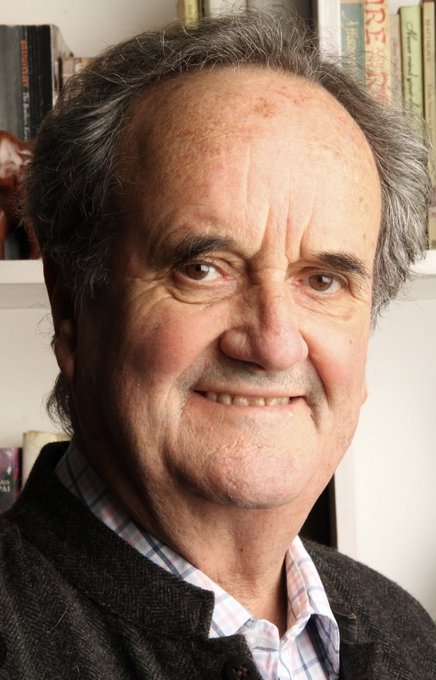
Former BBC India broadcaster Mark Tully (Image William Dalrymple on X)
From Parliament Street to South Asia’s biggest crises, Mark Tully shaped how millions understood India—long before algorithms replaced authority.
By NIRENDRA DEV
New Delhi, January 25, 2026 — Sir William Mark Tully—journalist, chronicler, and for millions across South Asia, the BBC’s unmistakable voice of India—is no more. He passed away on Saturday at the age of 90. Born on October 24, 1935, Tully leaves behind not just a body of work, but an entire journalistic tradition that modern newsrooms are fast forgetting.
I interviewed Mark Tully once at his Nizamuddin house in Delhi. It was an ordinary professional instinct—speaking to a journalist whose work defined credibility itself. Yet I was promptly pulled up by PTI bosses: “Who gave you the idea of interviewing Mark Tully?” That question revealed more about institutional insecurity than about the interview. Tully didn’t belong to competition. He belonged to journalism.
For decades, Tully was BBC India. His World Service dispatches—broadcast in English and rebroadcast in Hindi, Urdu, Tamil, Nepali and Bengali—were the most trusted source of unfiltered news for millions across India, Pakistan and Bangladesh. In societies with low literacy and limited access to print, radio and television were not supplements; they were lifelines. Tully understood this instinctively.
So singular was his presence that he earned a rare colonial-era honorific: “Tully Sahib.” The Far Eastern Economic Review once called him a “cult figure.” Any foreign correspondent landing in India would be asked just one hopeful question: “BBC? Tully Sahib?”
Tully served as the BBC’s New Delhi Bureau Chief for nearly 20 years and worked with the broadcaster for over three decades before resigning in 1994. His journalism covered some of South Asia’s most turbulent chapters: the Emergency, the birth of Bangladesh, military rule in Pakistan, the Sri Lankan civil war, and the Soviet invasion of Afghanistan.
Born in Tollygunge, Bengal, during the British Raj, Tully spent his early childhood in India before being sent to boarding school—first in Darjeeling, then England. Educated at Marlborough College and Trinity Hall, Cambridge, he studied theology and briefly considered priesthood before choosing journalism—a vocation that would allow him to explore faith, power, and humanity in the real world.
His books remain essential reading. Amritsar: Mrs Gandhi’s Last Battle (1985), co-authored with Satish Jacob, remains one of the most serious journalistic accounts of Operation Blue Star. Raj to Rajiv traced four decades of India’s independence, while No Full Stops in India captured the country’s contradictions with rare empathy. Even The Heart of India, his lone work of fiction, read like reportage of the soul.
Tully was expelled from India during the Emergency in 1975, only to return 18 months later and stay for life. He was as comfortable in a kurta as in a suit, equally at ease among villagers and prime ministers. He gave voice to ordinary Indians without romanticising them—and critiqued power without posturing.
In the 1990s, Tully fell out with the BBC’s changing corporate culture. In a famous speech, he accused then director general John Birt of running the organisation through “fear.” It marked the end of his institutional journey, but not his broadcasting life. He continued presenting Something Understood on BBC Radio 4, returning to questions of faith and meaning.
Mark Tully belonged to an era when authority came from reporting, not reach; from trust, not trends. His death is not just the passing of a journalist—it is the fading of a standard.
Follow The Raisina Hills on WhatsApp, Instagram, YouTube, Facebook, and LinkedIn




About The Author