Khaleda Zia Is Dead: The End of Bangladesh’s Enduring Rivalry
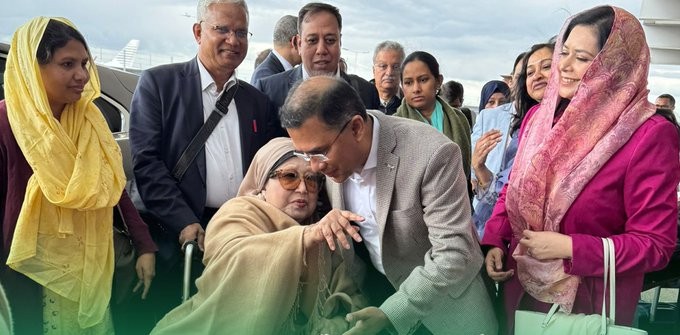
Former Bangladesh Prime Minister Khaleda Zia (Image BNP on X)
From a “shy housewife” to a twice-elected prime minister, Khaleda Zia’s death closes a turbulent chapter in Bangladesh—marked by resilience, rivalry with Sheikh Hasina, prison, acquittal, and unanswered questions
By TRH Foreign Affairs Desk
New Delhi, December 30, 2025 — The death of Begum Khaleda Zia, former Prime Minister of Bangladesh and one half of the most consequential political rivalry in the country’s history, marks more than the passing of a leader. It signals the end of an era defined by bitterness, endurance, and a nation perpetually caught between two towering women.
Khaleda Zia, who died at 80, was not merely Sheikh Hasina’s rival; together, they were Bangladeshi politics for nearly four decades. Their feud shaped governments, paralysed institutions, and often pushed democracy to the brink. With Zia’s passing, that defining axis finally collapses.
“She lived an extraordinary life and was a symbol of hope and resilience for many at their darkest times,” said diplomat Jon Danilowicz in a post on X, summing up what supporters long believed but critics often dismissed.
Born into no political dynasty of her own, Khaleda Zia entered public life after tragedy. Her husband, Ziaur Rahman—president from 1977—was assassinated in 1981. Then described by the BBC as a “shy housewife” devoted to her sons, Zia defied expectations by taking over leadership of the Bangladesh Nationalist Party (BNP) and winning power twice, in the 1990s and early 2000s.
Her years in office were marked by fierce street politics, military shadows, and relentless confrontation with Hasina’s Awami League. Corruption allegations followed, culminating in long prison terms that Zia and her party described as “politically motivated vendetta.”
That narrative appeared vindicated in January 2025, when Bangladesh’s Supreme Court acquitted her in the final corruption case—legally clearing her to contest elections scheduled for February. It was a dramatic personal and political reversal, arriving after a 2024 uprising swept Sheikh Hasina from power.
Yet even in death, controversy refused to leave her. For weeks before the announcement, rumours of Khaleda Zia’s failing health—and even her death—circulated widely. Journalist Sahidul Hasan Khokon in a post on X captured the unease: “Not a single photograph was released. Even after her son Tarique Rahman’s return, nothing. Is this level of secrecy about a three-time prime minister normal?”
The silence only deepened speculation, reinforcing a central truth of her life: Khaleda Zia was never allowed a private exit from public scrutiny.
In the brutal theatre of Bangladeshi politics, she was alternately lionised and vilified, imprisoned and vindicated. To supporters, she symbolised defiance against “authoritarianism.” To detractors, she embodied stagnation and confrontation.
History will argue over her legacy. But one fact is indisputable: without Khaleda Zia, modern Bangladesh cannot be explained.
Her death closes a chapter—but it also leaves behind unresolved questions about justice, reconciliation, and whether Bangladesh can finally move beyond the politics of personal rivalry that consumed a generation.
1971, Dharmyudh and Dhaka’s Drift: Bangladesh Faces Fire Test
Follow The Raisina Hills on WhatsApp, Instagram, YouTube, Facebook, and LinkedIn




About The Author