Kaleshwaram Under the CBI Lens: When a ‘Lifeline’ Turns Liability
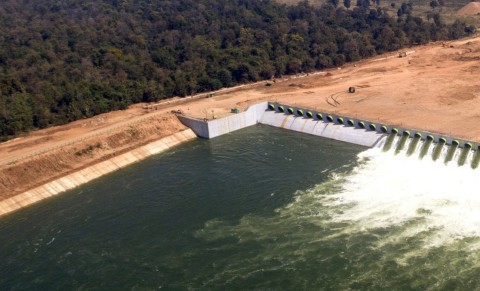
Kaleshwaram project in Telangana! (Image X.com)
From engineering bravado to sinking piers, the Kaleshwaram Lift Irrigation Project exposes how mega-project politics can fracture India’s accountability chain—from planning to audit to prosecution
By P. SESH KKUMAR
New Delhi, January 13, 2026 — The Kaleshwaram Lift Irrigation Project (KLIP) was conceived as Telangana’s civilisational leap: water lifted uphill, drought pushed back, prosperity delivered at the flip of a switch. Marketed as a world-scale engineering marvel, it became a political symbol of speed, ambition, and state pride. Today, that same “lifeline” stands under the CBI lens, accused—by a judicial commission, safety regulators, and the Comptroller and Auditor General (CAG)—of embodying how mega-project glamour can overwhelm due diligence, transparency, and fiscal sobriety.
Kaleshwaram’s fall hurts because it was sold as pride. When a project is marketed as inevitability, its failure becomes humiliation—and humiliation in politics rarely remains technical.
From Colossal Dream to Question Mark
The controversy did not begin with the dramatic sinking of Medigadda barrage piers in October 2023, but that night turned unease into outrage. Images of structural distress in a barely commissioned barrage shattered the aura of invincibility. What cracked was not just concrete; it was credibility.
Critics had long warned that KLIP—an ambitious re-engineering of the earlier Pranahitha–Chevella idea—had expanded scope, altered locations, and escalated costs at breakneck speed. The CAG’s performance audit (Report No. 1 of 2024) put numbers to those warnings: costs inflated, benefits overstated, annual costs understated, and the Benefit–Cost Ratio (BCR) collapsing to levels that render the project economically irrational at likely costs. When an audit says a rupee yields barely half a rupee in returns, it is not quibbling—it is indicting the economics.
That verdict reframes the central question. This is no longer about engineering hiccups. It is about whether the public was told the truth.
Debt by Design, Debate by Omission
Kaleshwaram’s financing reveals the politics of illusion. The CAG flagged extensive off-budget borrowings, routed through a project corporation. Off-budget financing may be legal, but it blunts legislative scrutiny. It keeps debt off the visible ledger while shifting repayment to the future—interest included. Legislatures exist to debate trade-offs. Hiding the mortgage corrodes that debate.
Procurement choices compounded the problem. The audit noted works awarded before DPR approvals, contract features leading to avoidable payments, and design volatility that diluted accountability. Mega-projects are rarely corrupted by a single bribe; they are corrupted by systems—splitting approvals, normalising post-tender tweaks, and treating contractors as partners in speed rather than parties accountable for outcomes. “Finish fast, explain later” quietly invites impunity.
When Engineering Becomes Electoral Theatre
Kaleshwaram’s symbolism made it campaign fodder. After Medigadda, hydrology gave way to rhetoric. One side proclaimed “engineering marvel,” the other “colossal scam.” Nuance drowned. In such climates, even sober technical debate becomes collateral damage.
Formal inquiry followed. A judicial commission headed by Justice Pinaki Chandra Ghose submitted its report by mid-2025, intensifying political contestation. Judicial commissions shape belief but cannot prosecute. Their power lies in agenda-setting.
The real pivot came on September 1, 2025, when Telangana moved the case to the CBI. That transfer changed the grammar of accountability—from inquiry and blame to crime and proof. The CBI must now convert allegations into evidence: decision trails, financial flows, and intent. Its strength—statutory power—also invites politicisation. Every step will be read as vendetta or vindication.
Did the Watchdog Bark Too Late?
The uncomfortable question persists: Was the CAG late? Performance audits are retrospective by design; they rarely stop the first rush. The KLIP audit could not prevent early re-engineering or hurried awards. On prevention, it arrived after the horse had bolted.
But audits are not futile because they are late. They are catalytic. The CAG put official numbers to what critics alleged without proof—BCR collapse, off-budget reliance, benefit inflation, and procurement-linked avoidable payments. It restructured the debate and supplied an evidentiary base that now underpins inquiry and investigation.
Yet timeliness is also about what happens next. Constitutionally, CAG reports flow to legislative scrutiny via the Public Accounts Committee (PAC)—recommendations, Action Taken Notes, systemic fixes. In high-voltage scandals, PAC scrutiny often melts under political heat: delays, polarisation, or the convenient shield of “sub judice.” The more serious the scandal, the weaker the follow-through. Audit becomes television fodder rather than administrative reform.
Why Early Warning Failed
Kaleshwaram exposes a structural flaw. Performance audit is built for post-mortems, not early warnings. Add political impatience—speed as virtue, scepticism as sabotage—and early scrutiny becomes unwelcome. Authority was not the binding constraint; fragmentation was. Corporations, instalment sanctions, shifting designs, and layered consultants make it hard to capture the project as a single auditable risk early on.
Risk assessment failed too. Red flags were visible long before Medigadda: massive off-budget debt, repeated design changes, awards before DPR finalisation, soaring energy assumptions, diluted contracts. Any one should have triggered intrusive scrutiny. Together, they screamed for it. The audit’s eventual depth shows competence was not missing—deployment timing was.
Early audit is disruptive; late audit is deniable. Systems tolerate the latter more easily.
The Last Mile Problem
Even devastating audits can die quietly. PAC paralysis, parallel criminal probes, and partisan theatre sap the audit’s preventive potential—first by late entry, then by weak follow-through. The result: impeccable diagnosis, tragic timing.
What Reform Looks Like
Kaleshwaram is not just a scandal; it is a warning. Reform must be practical:
- Concurrent performance audits for mega-projects, with mandatory publication of DPR versions, benefit assumptions, and independent technical peer reviews.
- Off-budget borrowing triggers: beyond a threshold, guarantees must compel explicit legislative debate.
- Audit-proof contracting: no post-tender “afterthoughts,” robust benchmarking for high-value equipment, especially with limited competition.
- Dam safety with teeth: enforceable compliance, not advisory rituals.
- PAC revival: time-bound scrutiny, mandatory government responses, public dashboards tracking Action Taken Notes to completion.
- CBI focus: avoid politicisation and selectivity; pursue watertight cases that address systems, not just faces.
The Lesson
Kaleshwaram shows accountability is a chain, not a single link. When planning scrutiny fails, procurement probity weakens, and safety oversight reacts late, the CAG arrives as coroner rather than doctor—documenting failure superbly, unable to prevent it.
Citizens may forgive delays. They do not forgive deception—especially when the bill arrives as debt and the monument begins to sink.
(This is an opinion piece. Views expressed are author’s own)
Telangana’s Fiscal Freefall: From Surplus to Existential Crisis
Follow The Raisina Hills on WhatsApp, Instagram, YouTube, Facebook, and LinkedIn




About The Author