Is US Backing Israel for Regime Change in Iran?
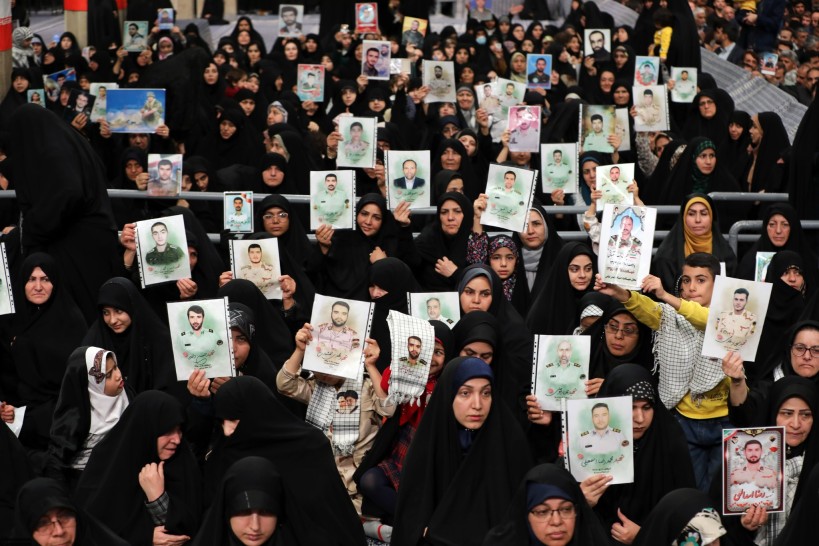
Image credit X.com @Khamenei_m
Israel’s Strikes on Iran Fuel Speculation of Regime Change Agenda
By TRH News Desk
NEW DELHI, June 16, 2025 – Geopolitical experts are intensifying speculation that Israel, with tacit US support, is pursuing regime change in Iran amid escalating military strikes. Reports quoting intelligence sources earlier stated that the US shot down an alleged Israeli plan to kill Iran’s supreme leader Ayatollah Ali Khamenei.
Experts have noted that Israel’s deliberate attempt to broaden conflicts with Iran by attacking Iranian nuclear facilities, energy infrastructure, and military leadership is aimed to drag the US in the war against Tehran. The US has reportedly sent oil refuelling tankers to the Middle East in an apparent bid to help Israel.
Exiled Iranian Crown Prince Reza Pahlavi and analysts like Major General (Ret.) Shashi Asthana are being cited in discussions, pointing to a broader strategy to topple the regime of Supreme Leader Ayatollah Ali Khamenei.
Israel’s operation “Rising Lion,” targeted critical Iranian assets, including the Shahran oil depot near Tehran, a missile base in Kermanshah Province, and five senior nuclear scientists, alongside high-ranking Islamic Revolutionary Guard Corps (IRGC) commanders like Maj. Gen. Hossein Salami and Maj. Gen. Mohammad Bagheri.
The strikes, which killed at least 80 people, prompted Iran’s retaliatory missile barrage, escalating the conflict to its most intense phase in history. Iran’s ballistic missiles hit facilities near Israel’s Haifa Port, besides settlement areas in West Bank. Residential towers in Tel Aviv have also been hit per reports.
Major General (Ret.) Asthana, an Indian military strategist, claimed on social media: “Who says that USA or Israel is not trying for regime change in Iran? All actions indicate that they may or may not get rid of all nuclear facilities but attempt seems to be to orchestrate regime change and possibly try to install Shah of Iran descendants or any puppet regime.”
Asthana’s comments reflect a growing sentiment among analysts that Israel’s strikes aim to weaken the regime’s infrastructure and provoke internal unrest, potentially paving the way for a leadership change. Incidentally, some of the key aides of Khamenei have been eliminated in strikes by Israel.
In a recent BBC interview, Reza Pahlavi, the exiled son of Iran’s last Shah, Mohammad Reza Pahlavi, described the current moment as a pivotal opportunity for the Iranian people. “The Iranian people are now energized and motivated, viewing this as the best opportunity to remove the Islamic regime,” Pahlavi stated.
He urged Iranians to launch mass protests and a general strike, framing the conflict as “Khamenei’s war and the Islamic Republic’s war,” not the will of the Iranian people.
Pahlavi lives in exile since the 1979 Islamic Revolution. He called on Iran’s military and security forces to “join the people” against the regime, emphasizing a vision for a secular, democratic Iran.
Pahlavi’s remarks align with his ongoing advocacy for regime change, as seen in his 2023 visit to Israel, where he praised the potential for restored Iran-Israel relations. His supporters, often seen waving the pre-revolutionary Iranian flag at pro-Israel rallies, view him as a unifying figure, though critics like Iranian activist Reza Khandan have called him “opportunistic” and disconnected from grassroots movements.
Vali Nasr, a Middle East expert at Johns Hopkins University, told PBS News that Israel’s strikes, which targeted civilian areas and killed nearly 100 Iranians, suggest a broader aim to “degrade the institutional basis of the state” and pave the way for regime collapse.
Nasr cautioned, however, that the regime’s stability is not yet at immediate risk unless further escalation occurs.
The Atlantic Council’s William F. Wechsler warned that while Israel may see regime change as a path to a “new and better day,” a post-theocratic Iran could initially lead to a more hardline IRGC-dominated government, potentially intensifying conflict.
The BBC reported that Israel’s desired outcome may be an uprising led by a “friendly force,” with Pahlavi or the controversial Mujahideen-e Khalq (MEK) as potential alternatives. However, the outlet noted the fragmentation of Iran’s opposition, citing the failure of coalitions formed during the 2022 “Woman, Life, Freedom” protests to unify under a single leader or vision.
The MEK, despite US support from figures like Mike Pompeo during Trump’s first term, remains unpopular in Iran due to its collaboration with Saddam Hussein during the Iran-Iraq War.
The Trump administration’s role remains ambiguous. While President Trump reportedly cautioned Netanyahu against assassinating Khamenei, Israeli sources claim coordination with the US was deeper than publicly acknowledged. Trump’s social media post urging Iran to “cut a deal before there is nothing left” suggests a push for diplomatic capitulation, though nuclear talks have stalled following the International Atomic Energy Agency’s non-compliance vote against Iran.
Follow The Raisina Hills on WhatsApp, Instagram, YouTube, Facebook, and LinkedIn




About The Author