“Iran Regime Tottering” — Implications Go Beyond the Middle East
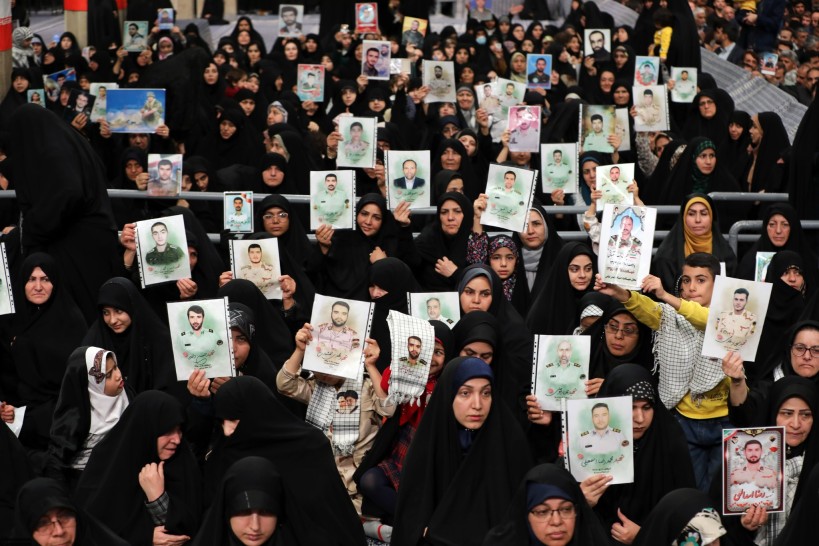
Image credit X.com @Khamenei_m
Analyst Douglas Murray tells CBS News Iran’s collapse would dismantle the world’s foremost state sponsor of terror
By TRH World Desk
New Delhi, March 1, 2026 — As the Islamic Republic of Iran reels from the assassination of Supreme Leader Ayatollah Ali Khamenei, Israel has opened a new front in the information war — hacking a popular Iranian prayer app to send messages directly to members of the Revolutionary Guard urging them to put down their weapons and, in the app’s words, liberate their country.
The Wall Street Journal first reported the operation. Speaking to CBS News, British commentator and author Douglas Murray placed it in immediate context: “It’s a tactic that the Israelis have used elsewhere — they’ve used it in Gaza, they’ve used it against Hezbollah in Lebanon. So it’s a familiar tactic.”
Murray noted that “the message itself is simply reiterating what US President Trump said in his late-night message: to request that the Revolutionary Guards and others put down their weapons.”
The analyst stated that “Trump said last night — now is the time to do that. Otherwise there’s another route further down the road.”
Murray argued on CBS that the current moment represents a genuine rupture with the post-1979 order in the Middle East — one with consequences that will reverberate well beyond the region.
“Since 1979, the Iranian revolutionary government has been repressing the Iranian people. It’s been colonizing the entire region — Iraq, Lebanon, Syria, Yemen. And of course it’s been the world’s foremost sponsor of terror.”
Murray said the apparent decapitation of that regime — and its seeming instability in the aftermath — meant the world was likely to see a fundamentally different Middle East take shape. But he stressed the significance extended far beyond the region’s borders: “Don’t forget that the terrorism this regime has been spreading has not been limited to the Middle East. The regime spread terror to South America.”
Murray claimed that the Iranian regime “tried to carry out assassinations in New York of dissidents. It tried, only a couple of years ago, to kill a former American Secretary of State and a former National Security Adviser in Washington, DC.”
“So the fact that that foremost sponsor of terror is now seemingly on its last legs — that’s something that’s going to have huge implications way beyond the Middle East,” he added.
Pressed by CBS on the timing — given that many of these facts about the regime have been true for years — Murray pointed to a shift in American strategic calculus under President Trump: “It seems to me that the moment presented itself. If you consider what happened last summer — in the 12-day war, decapitation of the regime, specifically the targeting of the Ayatollah, was not on the table.”
That seemed to be the one thing absolutely not on the table, he added. Murray stressed that “taking out the nuclear sites was the main objective then, but not regime decapitation.”
“Something has changed in the last year. Possibly it’s simply President Trump’s realization of the intractable nature of the Iranian revolutionary government,” Murray told the US broadcaster.
He argued that “they have strung on negotiating team after negotiating team from the West, from the international community, for decades, on every one of these issues.”
Israel’s use of hacked civilian communications infrastructure to deliver psychological operations messages has become a documented feature of its recent conflicts. During the Gaza campaign, Israeli forces sent mass warnings via SMS and social media. Against Hezbollah in Lebanon, similar digital infiltration tactics were employed. The targeting of a prayer app — a culturally intimate and trusted platform — represents a significant escalation of that approach, directed now at the Islamic Republic’s own security forces on Iranian soil.
Iran’s Supreme Leader Assassinated: Iranian Defiance of US Over?
Follow The Raisina Hills on WhatsApp, Instagram, YouTube, Facebook, and LinkedIn




About The Author