Iran or Persia? The Story Behind the Name Change of 1935
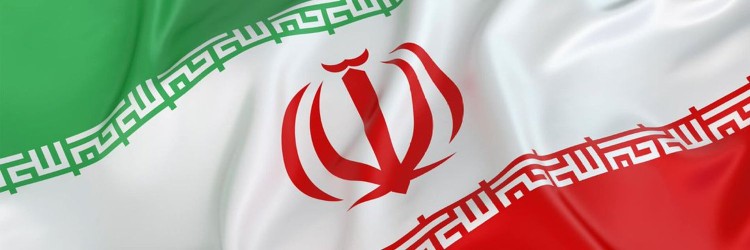
Iran Image credit X.com
Iran’s Identity in the Age of Modern Conflict: Why the Name Iran Still Matters Today
By NIRENDRA DEV
New Delhi, March 3, 2026 — In 1935, under Reza Shah Pahlavi, the Iranian government formally asked the world to stop using the name “Persia” in diplomatic dealings — and to use “Iran” instead.
Centuries of foreign chronicles, travelogues, and diplomatic correspondence had deeply entrenched the name Persia in international usage. But behind this request lay millennia of identity, sovereignty, and self-determination.
The Name Iran: Ancient Roots, Modern Claim
Before March 1935, the exonym “Persia” served as the official name of Iran in the Western world. Yet within the country itself, the people had called their land Arya, Iran, Iranshahr, Iranzamin — meaning Land of Iran — or Aryānām, its equivalent in proto-Iranian languages, since the time of Zoroaster, approximately 1000 BC or even earlier.
The term Arya has been used by the Iranian people, as well as by the rulers and emperors of Iran, from the age of the Avesta — one of the oldest religious texts in the world.
The 1935 Name Change: A Declaration of Sovereignty
On 25 December 1934, the Persian Ministry for Foreign Affairs addressed a circular memorandum to all Foreign Diplomatic Missions in Tehran. It formally requested that the terms “Iran” and “Iranian” be used in official correspondence and conversation from 21 March 1935 onward, replacing “Persia” and “Persian” that had long been in common international use.
The name change was not merely cosmetic. Scholars and historians regard it as a declaration of sovereignty. Iran resonated with a deeper cultural and civilisational provenance — a lineage not confined to a single province, but spanning a broader linguistic and cultural world stretching across millennia.
Iran anchored the modern nation in an indigenous matrix of continuity, rather than in an externally imposed label. The name carried the full weight of empires, revolutions, and nation-building — and it was the name Iranians had always used for themselves.
Persia in the Modern Lexicon
Even after 1935, the name Persia did not vanish. It has lingered in cultural contexts, in the language of history, and in the romance of the ancient world. But the political and legal identity of the country has remained — and remains today — Iran.
The Pahlavi dynasty later opened the door to using either name interchangeably in certain contexts. In formal statehood and international law, however, it is Iran that endures.
Churchill’s Request During World War II
There is a lesser-known but telling anecdote from this period. During the Tehran Conference in World War II, to avoid confusion between the two neighbouring countries of Iran and Iraq — both occupied by the Allies — Winston Churchill requested that the Iranian government allow the old name “Persia” to be used by the United Nations, meaning the Allied powers, for the duration of the war. The Iranian Foreign Ministry approved the request immediately.
The Americans, however, continued using “Iran,” as they had little direct involvement in Iraq at that stage and faced no such confusion.
History in the Age of Crisis
The urgency of present-day events — attacks that have shaken capitals, drawn international condemnations, and sparked fears of wider regional conflict — brings the layered history of Iran into sharp relief. It is paradoxical that at a moment when drones and missiles cross the skies over Tehran, as coordinated strikes and retaliatory fire reshape the geopolitical landscape, the world finds itself speaking once more of the land that was Persia.
The echoes of that ancient name resonate with astonishment and curiosity. But historians remind us that Iran was never a sudden reinvention. It was a reaffirmation — of an identity long spoken within its own hearth, long before the outside world learned to listen.
The name matters. Because it carries the weight of everything that came before.
Books That Explain Iran: Essential Reading on the US-Iran Conflict
Follow The Raisina Hills on WhatsApp, Instagram, YouTube, Facebook, and LinkedIn




About The Author