Iran on the Brink but Not Breaking: ‘Regime Delays Funeral’
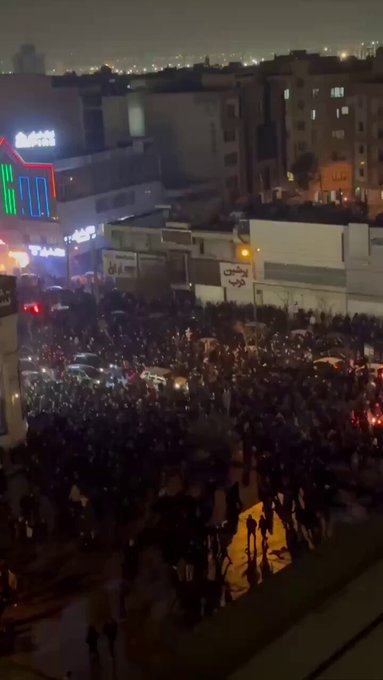
Protestors in Iran raise slogans against Supreme Leader Ayatollah Khamanei (Image video grab)
GZERO founder Ian Bremmer warns that Iran’s protests are bloodier than reported, US strikes may come—but regime collapse remains unlikely for now
By TRH World Desk
New Delhi, January 13, 2026 — Iran is once again at the centre of global attention—but not for the reasons many in the West might expect. According to Ian Bremmer, founder of GZERO Media and one of the world’s most influential geopolitical analysts, the Islamic Republic is facing its most intense internal unrest in years, even as the likelihood of a dramatic regional war remains low.
In a stark assessment, Bremmer says Iran is witnessing “very significant demonstrations all over the country”, met by a regime that has shown itself historically willing to repress—“brutally.” Credible reports suggest well over 500 protesters have been killed, along with dozens of police and soldiers. And that, Bremmer cautions, may be an undercount.
“Some sources inside the Trump administration say they have good information privately on what’s going on—and that the violence is a lot worse than what we are consuming in the media,” Bremmer notes.
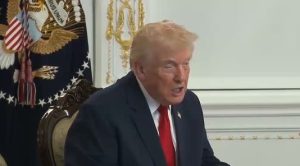
US President Donald Trump, he adds, has publicly warned that the United States could take action to “rescue Iranian protesters.” What might that mean in practice? Bremmer is clear: this would not be a regime-change war.
Instead, Washington appears prepared for limited military strikes—possibly targeting Basij headquarters, IRGC-linked paramilitary units, and local police command centres directly involved in crushing protests.
“This is not to take out the Supreme Leader,” Bremmer emphasises. “It’s about showing that the Americans are directly on the side of the protesters.”
Iran, for its part, has threatened retaliation—against Israel and US bases in the region. But Bremmer calls these threats largely not credible from Trump’s perspective. History matters here.
Iran Regime Change Is a Dangerous Illusion, Warns Podcast Host
He recalls that after “Trump ordered the assassination of Qassem Soleimani, Iran’s response was virtually nothing.” During the so-called 12-Day War, Israel and the US significantly degraded Iran’s nuclear and missile programmes, he claimed. Tehran retaliated symbolically, killing some Israeli civilians—but avoided meaningful action against the United States.
“That’s what really matters to Trump,” Bremmer says. “He certainly doesn’t see the Iranian threats as having real recourse.”
Crucially, Bremmer also dismisses fears of Iran shutting down the Strait of Hormuz, the one move that could spike global oil prices.
“In an oversupplied environment with weak demand, Trump doesn’t see that risk as real,” added the analyst.
Could Iran escalate if it feels cornered? “Possibly—but not yet,” noted the analyst.
Bremmer agrees with Iran analyst Karim Sadjadpour, who recently wrote in The Atlantic that “brutality can delay the regime’s funeral, but it’s unlikely to restore its pulse.” Still, delaying the funeral, Bremmer argues, is exactly what Tehran is playing for.
And as long as that is the strategy, dramatic military escalation remains unlikely, he noted.
There are deeper structural limits to regime change. Bremmer points out that Iran’s protests lack central leadership, unlike Venezuela. There is no visible fragmentation within the military or security forces. Supreme Leader Ayatollah Ali Khamenei, though elderly and ailing, has personally appointed loyalists across the power structure—and there are no signs they are ready to abandon him.
“It doesn’t feel like an imminent collapse,” Bremmer says plainly.
Ironically, Bremmer suggests the endgame may still involve negotiation. If Iran absorbs limited strikes without retaliation, Washington may pivot to talks—much as it has done with “Venezuela’s brutal regime,” prioritising compliance over ideology.
That could mean allowing nuclear inspectors back in, dismantling nuclear and ballistic missile programmes, and halting proxy support—in exchange for sanctions relief, the only lever capable of easing Iran’s crippled economy and addressing the economic roots of the protests.
Externally, Bremmer sees little meaningful intervention. Europe, he says, is offering little more than “thoughts and prayers.” Russia is unhappy but unlikely to act. China is playing the long game, positioning itself as a stable alternative to an increasingly unilateral United States.
The verdict from Bremmer is sobering: Iran’s regime is weaker, bloodier, and more isolated—but not finished.
Long term, he agrees, the clerical state is living on borrowed time. Short term, however, it is surviving through fear.
And for now, survival—not collapse—is the story unfolding on Iran’s streets.
Follow The Raisina Hills on WhatsApp, Instagram, YouTube, Facebook, and LinkedIn




About The Author