


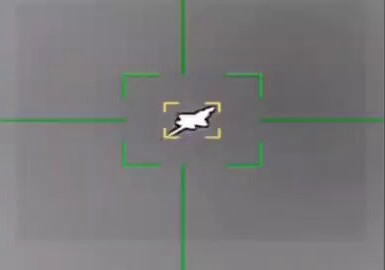
Al Jazeera’s bombshell confirmation that Iran is deploying an advanced, undisclosed air defence system capable of targeting F-35s, F-15s, and F/A-18s has shattered the assumption that US stealth aircraft operate freely over Iranian skies — and raised urgent questions about every loss attributed to friendly fire.
By TRH World Desk
New Delhi, March 2026 — The 2026 Iran war has exacted a toll on US and allied aviation that military analysts say is without precedent in the post-9/11 era — not from Iranian air defences alone, but from the chaotic complexity of a multi-nation battlespace saturated with missiles, drones, and allied aircraft flying in overlapping corridors.
That assessment, however, is now being sharply revised. Al Jazeera has confirmed that Iran is deploying a highly advanced, undisclosed air defence system that has successfully targeted American F-35s, F-15s, and F/A-18s. The disclosure — the most significant battlefield intelligence revelation of the conflict so far — has fundamentally collapsed the narrative that Iran’s skies were effectively defenceless against fifth-generation stealth aircraft. The United States, it is now clear, is more vulnerable in this theatre than publicly acknowledged.
The Kuwait friendly fire incident
The most dramatic single confirmed loss came on the war’s third day. Three American F-15E Strike Eagles were shot down over Kuwait in what CENTCOM described as a “friendly fire incident,” with all six aircrew ejecting safely and recovering in stable condition, confirmed on March 2. The incident occurred at 11:03 p.m. ET on March 1, during active combat that included Iranian aircraft, ballistic missiles, and drone attacks.
People familiar with the matter told Air & Space Forces Magazine that at least one Kuwaiti F/A-18 is believed responsible — surface-to-air fire was initially suspected but is “no longer the leading theory.” A former US Air Force fighter pilot called the incident “perplexing,” noting that allied pilots are specifically trained to prevent such errors.
Joint Chiefs Chairman Gen. Dan Caine acknowledged the loss at a Pentagon press briefing but offered few details. “I am aware of the loss of three US Air Force F-15Es overnight in the region. I am grateful for the safety of the crews, and we know that this was not from hostile enemy fire,” he said, adding that the matter was under investigation.
That conclusion may now warrant re-examination. With Al Jazeera’s confirmation of an Iranian air defence capability capable of engaging F-15s, investigators have not ruled out whether some attributed “friendly fire” losses may reflect Iranian intercepts not yet publicly acknowledged by CENTCOM.
Tankers, drones, and damage at Prince Sultan
The F-15 losses were not isolated. On March 13, two CENTCOM officials reported five USAF KC-135 Stratotanker refuelling aircraft were moderately damaged by an Iranian missile strike at Prince Sultan Air Base in Al-Kharj, Saudi Arabia. Days before that, a KC-135 crashed following a refuelling incident over western Iraq in what CENTCOM described as an apparent mid-air collision with another KC-135, killing all six crew on board.
Israel’s losses have been concentrated in drones. Multiple Israeli Elbit Hermes 900 surveillance drones were shot down over Iranian territory between February 28 and March 10, with wreckage filmed and posted by Iranian forces. Iran had earlier claimed two Israeli F-35s were downed during the 2025 Twelve-Day War — a claim Iran’s own military subsequently admitted was false.
That retraction now looks considerably less straightforward. Al Jazeera’s reporting suggests Iran possesses an air defence system capable of engaging stealth platforms — raising the possibility that the earlier claim, while officially disowned, was not entirely without basis.
On the ground, fifteen aircraft were damaged or destroyed at Mehrabad International Airport in Tehran by Israeli strikes, including Iranian F-14 Tomcats, cargo transports, and Iran’s presidential Airbus A340.
The hidden shield: what Al Jazeera’s revelation changes
The strategic implications of Iran’s undisclosed air defence system are significant and immediate.
For the duration of this conflict, the US and its allies have operated on the working assumption that Iranian air defences — while capable against older platforms — posed limited threat to stealth-equipped F-35s. Mission planning, sortie rates, and corridor assignments have all reflected that assumption.
Al Jazeera’s confirmation that F-35s, F-15s, and F/A-18s have all been successfully targeted by this system upends that calculus entirely. It raises urgent questions: How many confirmed losses attributed to friendly fire or mechanical failure may in fact reflect Iranian intercepts? What is the system’s origin — Russian, Chinese, or indigenously developed? And critically, how long has it been operational without detection?
Pentagon and CENTCOM officials have not yet responded publicly to the Al Jazeera report.
Historical comparison
The scale of these losses, while still modest against historical benchmarks, is acquiring a different character. During the 1991 Gulf War, the US-led coalition lost 75 aircraft in 43 days — roughly one per 1,000 sorties. Vietnam saw far heavier attrition: over 10,000 US aircraft of all types lost across the conflict, including more than 2,200 fixed-wing jets to hostile fire.
The 2026 losses were initially notable less for their volume than for their apparent cause — friendly fire and mechanical incidents accounting for the bulk of confirmed US fixed-wing losses. That framing may no longer hold. If Iran’s air defence system has been engaging coalition aircraft throughout the conflict, the true loss picture could look materially different from what has been publicly confirmed.
The broader cost
According to the Center for Strategic and International Studies, the first 100 hours of Operation Epic Fury cost the US approximately $3.7 billion, mostly unbudgeted. The US has employed more than 20 distinct weapons systems across the operation, including Tomahawk cruise missiles, F/A-18s, F-35s, B-2 stealth bombers, MQ-9 Reaper drones, and the Precision Strike Missile used in combat for the first time.
As of this writing, CENTCOM states it has struck more than 5,000 Iranian targets and damaged or destroyed more than fifty Iranian ships in ten days of war. The Iranian government has not collapsed, the war continues — and the battlespace just became considerably more dangerous than advertised.
Follow The Raisina Hills on WhatsApp, Instagram, YouTube, Facebook, and LinkedIn




